Boyfriend’s Heroic Battle Against a Monster Alligator Claims Young Woman’s Life in Shallow Florida River.
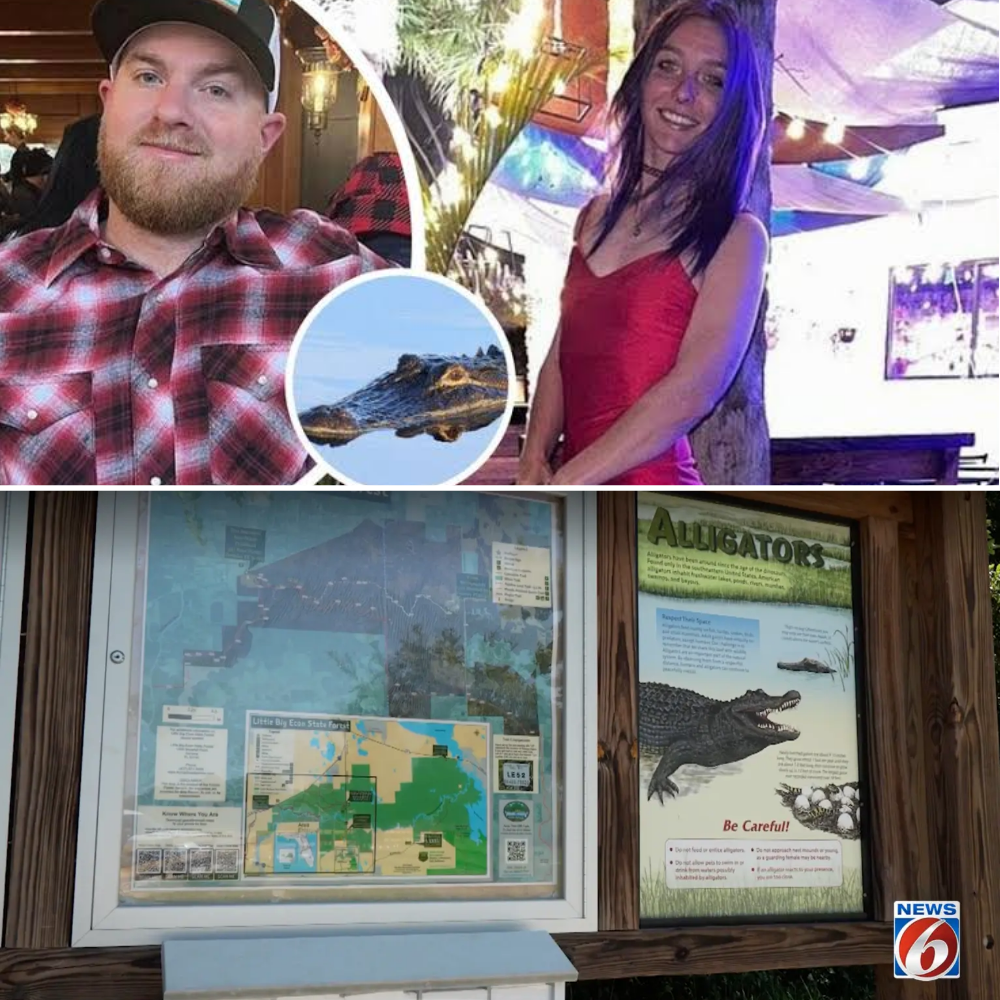
A sunny afternoon hike in Florida’s Little Big Econ State Forest ended in pure tragedy when 31-year-old Brittany Clark was brutally attacked by a massive alligator while cooling off in the Econlockhatchee River. What should have been a refreshing dip in shallow waters became a fight for survival, highlighting the raw power of nature and the unbreakable bond of love in the face of unimaginable horror.
On June 28, 2026, around 1:30 p.m., Brittany, her boyfriend Chance Allison, and her best friend were enjoying a hike in the scenic state forest near Orlando. Seeking relief from the heat, the group stopped at the river and waded into about three feet of water—conditions that seemed perfectly safe but proved deadly. Without warning, a large alligator lunged, clamping its powerful jaws onto Brittany’s arms. Eyewitness accounts and official reports describe the chaos that followed as her boyfriend heroically intervened.
Chance desperately tried to wrench Brittany free from the alligator’s grip. According to medical examiner details and 911 transcripts, the reptile initiated a violent “death roll,” dragging both into deeper struggles underwater. He risked his own life, prying at the beast’s jaws even as it switched from one arm to the other. One arm was completely severed, while the other hung by a thread. The 911 calls capture the raw panic: “Bad, real bad please, hurry… she’s losing a lot of blood,” Chance could be heard saying while still fighting. Her friend added in horror, “One of her arms is completely off. One is attached barely.”
Despite their frantic efforts to stem the bleeding and rush her to safety, Brittany succumbed to her injuries on the way to the hospital. First responders faced a remote location, adding precious minutes to the desperate rescue. Florida Fish and Wildlife Conservation Commission (FWC) officials later captured and euthanized two massive alligators in the area—a 13-foot specimen right at the scene and a 12.5-foot one nearby. DNA testing was underway to confirm the culprit, but the incident underscores the ever-present risks in Florida’s waterways.
Brittany Clark was remembered by loved ones as a “fun-loving spirit,” an amazing and caring person who didn’t deserve such a fate. Originally from California, she had built a life in Orlando filled with adventure. She was an avid bike rider and deeply loved her dog. Her boyfriend Chance described her as “the strongest person he knew” in emotional statements, calling the event a nightmare. A GoFundMe has been established by family to return her remains to her parents in California, emphasizing her vibrant soul and the void left behind.
This tragedy isn’t isolated. Florida sees occasional alligator encounters, especially in areas like blackwater rivers popular with hikers and kayakers. Experts note a confluence of factors: active alligators during warmer months, drought-lowered water levels making shallow spots deceptive, and human activity overlapping with wildlife habitats. While attacks are statistically rare—accounting for a handful of fatalities over decades—they serve as stark reminders. Officials stress respecting posted warnings, avoiding swimming in unmarked natural waters, and understanding that alligators are apex predators in their domain.
In reflecting on Brittany’s story, one can’t help but feel the weight of life’s fragility. A simple decision to cool off on a hot day, surrounded by friends and love, turned fatal in seconds. Chance’s bravery highlights human resilience and the depths of devotion—fighting a prehistoric force to protect someone he cherished. Yet it also prompts deeper questions about our relationship with the wild. How do we balance adventure and exploration with the respect nature demands? In an era of increasing human encroachment on habitats, incidents like this force us to confront the boundaries we sometimes blur.
Brittany’s friends and family now navigate profound grief. Her best friend’s wails on the 911 call—”Please hurry, that’s my best friend”—echo the heartbreak shared by many. Beyond the immediate horror, this story invites us to cherish moments with loved ones and advocate for better education on wildlife safety. FWC continues streamlining responses for large gator removals in high-use areas, but personal vigilance remains key.
As we process this loss, Brittany’s legacy as a caring, outgoing soul who embraced life fully stands out. Her story isn’t just about a tragic end but a call to live mindfully—honoring the joy she brought while heeding nature’s warnings. May her memory inspire safer adventures and greater empathy for those facing the unexpected.