Volunteers and Sailor Identified After Fatal Rescue Vessel Capsize in Treacherous Conditions Off Ballina – But Even More Heartbreaking Is What Police Found at the Scene
The victims have been identified as Marine Rescue volunteers William “Bill” Ewen, 78, and Frank Petsch, 62, along with the solo yachtsman they rushed to save, 54-year-old Matthew Clayton. Their deaths have shattered the tight-knit coastal town of Ballina, where the sea is both livelihood and constant threat. Tributes are pouring in for the two volunteers, hailed as everyday heroes who never hesitated to put their lives on the line. Yet as the investigation deepens, police have revealed a chilling detail at the recovery scene that has turned grief into gut-wrenching questions: the sailor they died trying to rescue was found washed up on the sand – without a life jacket.
It was around 6:15pm on that fateful evening when a good Samaritan on the South Ballina breakwall spotted the 7.5-metre yacht in serious trouble, battered by towering swells near the infamous Ballina Bar. No mayday call crackled over the radio. No emergency beacon pinged from the vessel. Not a single flare lit up the sky. The alarm came only from the sharp eyes of a bystander watching the drama unfold from shore.
Within minutes, the dedicated crew from Marine Rescue Ballina scrambled aboard their vessel, determined to reach the stricken yacht. These weren’t rookies – they were seasoned volunteers with years of experience navigating the treacherous Richmond River bar, a stretch of water infamous for its sudden, savage waves and shifting sands. Conditions that night were beyond brutal: a pounding 2.5-metre easterly swell, howling winds, and seas so chaotic that even the most experienced mariners would think twice. But these men didn’t hesitate. Duty called, and they answered.
As the rescue boat powered toward the bar, the ocean had other plans. Eyewitness accounts and police reports paint a scene of pure chaos. The vessel was slammed by a monstrous wave while attempting to cross the bar. In an instant, it rolled violently, then capsized completely. Some crew members were violently ejected into the churning water. Others were trapped inside the upturned hull, fighting for air as the sea closed in. Panic and heroism collided in those freezing, dark moments.
Rescuers from multiple agencies – NSW Police, ambulance crews, State Emergency Service volunteers, the Westpac Lifesaver Rescue Helicopter, and even an AMSA Challenger jet – launched a frantic search. The helicopter winched one crew member to safety amid the maelstrom. Others battled their way to shore, battered but alive. Four survivors, including Ballina’s own Citizen of the Year, 75-year-old skipper Geoff Hutchinson, were rushed to hospital with serious injuries – broken bones, chest trauma, and the kind of shock that lingers long after the physical wounds heal. Hutchinson, a beloved local figure known for his community spirit, is expected to recover, but the emotional scars on the entire team run deep.
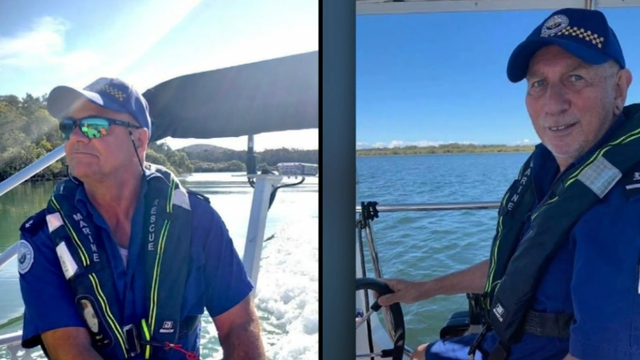
Tragically, not everyone made it. Bill Ewen’s body was recovered by the rescue helicopter; Frank Petsch was found washed up on the sand. Both men had given everything to save a stranger. Marine Rescue NSW Commissioner Todd Andrews called it “the darkest night in our history,” his voice heavy with sorrow. “These men launched with a single mission – to save lives on the water,” he said. “They’ve made the ultimate sacrifice.” NSW Premier Chris Minns echoed the sentiment, praising the volunteers who “put their own lives on the line to protect complete strangers – for no money, in their spare time.” Emergency Services Minister Jihad Dib described the loss as one felt across the entire state.
Ballina Mayor Sharon Cadwallader spoke for the devastated community: “These volunteers show courage and commitment every single day. All they were doing was acting with their normal professionalism and bravery to save lives.” Floral tributes now blanket the Marine Rescue base and the South Ballina breakwall – bouquets, notes, and candles left by locals who knew these men not as headlines, but as neighbors, fathers, grandfathers, and mates who spent weekends and evenings keeping the coastline safe.
But as the initial shock gives way to investigation, police have uncovered details that make the tragedy even more heartbreaking. The sailor the crew died trying to reach – Matthew Clayton – was recovered from the shoreline. He was alone on his yacht. And crucially, he was not wearing a life jacket. In the unforgiving waters off Ballina, that simple piece of safety equipment could have made the difference between life and death. No distress signals. No EPIRB activation. No flares. Nothing to alert authorities until it was too late.
Police Superintendent Joe McNulty laid out the grim facts: the yacht had slammed into the breakwall, broken apart, and sunk. Debris washed up for days afterward. “Some of the Marine Rescue crew were trapped in the hull, some were ejected from the vessel, and unfortunately two lives have been lost,” he said, paying tribute to the “heroic actions” of the crew who risked everything. Now, questions swirl like the currents around the bar: Why was the yacht even in such a dangerous spot? What led Clayton to be out there without basic safety measures? Why no call for help?
Divers are preparing to examine the sunken wreck later this week, hoping to piece together the final moments. SES volunteers have scoured beaches for evidence. The state coroner will ultimately decide what happened, but for now, the community is left grappling with the “what ifs.” What if the sailor had activated his beacon? What if conditions had been just a fraction calmer? What if the volunteers had turned back before punching into those killer waves?
The Ballina Bar has claimed lives before – it’s a place locals warn newcomers about, where calm waters can turn deadly in minutes. On this night, the sea showed no mercy. The rescue vessel, a relatively new addition to the fleet, now lies salvaged and under scrutiny as part of the probe. Marine Rescue’s base remains closed, with neighboring units stepping up to cover patrols. The surviving crew members face not only physical recovery but the heavy emotional burden of losing comrades mid-mission.
Friends and colleagues remember Bill Ewen and Frank Petsch as the backbone of Ballina’s volunteer rescue family – men who trained rigorously, patrolled tirelessly, and lived for the call that could save a life. Ewen, in his late seventies, brought decades of wisdom and calm leadership. Petsch, a fit and dedicated 62-year-old, was known for his reliability and quiet strength. Together, they embodied the spirit of volunteerism that keeps Australia’s vast coastline safe.
Matthew Clayton’s story remains more mysterious for now. A 54-year-old solo sailor, he set out on what should have been a routine voyage – or perhaps one last adventure. His final hours are now the focus of intense scrutiny. The absence of a life jacket has stunned investigators and locals alike. In an age of mandatory safety gear and modern beacons, it feels like an unthinkable oversight that cost not only his life but triggered a chain reaction that claimed two more.
As the sun rises over Ballina’s beaches in the days since, the town mourns in silence broken only by the crash of waves. Families of the fallen cling to memories. Survivors recount the terror of being tossed like ragdolls in the surf. And the wider Marine Rescue community across NSW stands in solidarity, reminding everyone that these volunteers are ordinary people doing extraordinary things – until the sea takes its toll.
This tragedy is a stark reminder of the thin line between heroism and heartbreak on the water. Six men boarded that rescue boat to save one life. Three never came home. The sailor they rushed toward was found without the one piece of equipment designed to keep him afloat. In the end, the ocean claimed them all.
Ballina will never forget that night. The flowers will fade, but the stories of courage – and the painful questions left in the wreckage – will linger for years. These volunteers didn’t just risk their lives; they gave them, in the ultimate act of selflessness. And in the quiet moments when the bar is calm once more, locals will look out to sea and whisper thanks to the heroes who never made it back to shore.