Country Music Isn’t Knocking on the Super Bowl Door Anymore — It’s Already Inside the Stadium
Country music has officially arrived. No longer content with being the genre that gets occasional nods or opening-act slots, it is commanding massive stages, breaking attendance records, dominating streaming charts, and generating cultural moments that rival any other style in America today. The proof was on full display recently at Bryant-Denny Stadium in Tuscaloosa, Alabama, where Morgan Wallen brought the house down during his Still The Problem Tour — and when he invited rising star Ella Langley to join him for the live debut of their new duet “I Can’t Love You Anymore,” the roar from the crowd wasn’t just hype. It was momentum. Pure, undeniable proof that country music has the audience, the demand, and the star power to own the biggest stages in the world.
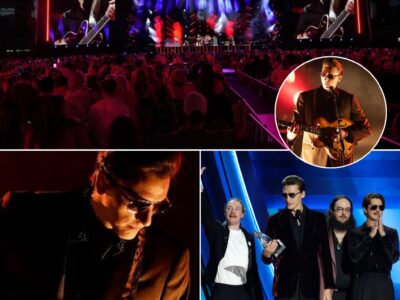
The night in Tuscaloosa felt historic from the start. Bryant-Denny Stadium, home to the Alabama Crimson Tide, hadn’t hosted a major concert in nearly 34 years. When Wallen took the stage for what became the first show there in decades, the energy was electric. Fans packed the stands, creating a sea of cowboy hats, boots, and raised phones. But the real showstopper came when Ella Langley — the fast-rising Alabama native whose breakout hits have made her one of the hottest new voices in country — stepped out to join him.
Their chemistry was immediate and natural. The pair didn’t just perform; they connected. As they premiered “I Can’t Love You Anymore,” a raw, uptempo track about messy love and emotional push-pull, the stadium shook with applause and sing-alongs. The song, which officially dropped shortly after, captured the blend of modern edge and classic country storytelling that both artists represent so well. Wallen’s signature raspy drawl paired perfectly with Langley’s fresh, powerful delivery, turning the debut into a moment fans felt they were witnessing in real time — not just another staged collaboration, but something organic and exciting.
This wasn’t an isolated event. It was a snapshot of where country music stands right now: established superstars like Morgan Wallen filling football stadiums night after night, while rising talents like Ella Langley bring fresh energy and crossover appeal that keeps the genre evolving. Wallen’s tours have consistently shattered records, with multi-night stands in massive venues drawing hundreds of thousands of fans. His streaming numbers remain among the highest in any genre, and his catalog continues to dominate playlists and radio. Langley, meanwhile, has been making history of her own with chart-topping singles that have spent weeks at No. 1, earning her recognition as one of the breakout stars of the year and proving that new voices can still break through with authenticity and strong songwriting.
Together, they represent the best of what country is becoming — a genre that honors its roots while embracing broader appeal. Wallen brings the established catalog, sold-out stadium experience, and larger-than-life presence. Langley adds youthful fire, emotional depth, and a relatable perspective that resonates with younger audiences and female fans in particular. Their joint moment in Tuscaloosa wasn’t manufactured for clicks; it felt like two artists genuinely enjoying the stage together, feeding off the crowd’s energy and delivering something memorable.
This kind of live connection is exactly why the conversation about country music and the Super Bowl halftime show has grown louder than ever. For years, fans have wondered why the NFL’s biggest stage — watched by over 100 million people globally — has rarely featured country artists in a headlining capacity. The last full country halftime show dates back decades, and while individual performers have appeared in group lineups or as guests, the genre has largely been absent from the main spotlight despite its massive commercial and cultural footprint.
The numbers tell the story. Country music dominates streaming charts, sells out arenas and stadiums across the country, and creates cultural phenomena that cross over into mainstream conversations. Artists like Wallen don’t just sell tickets — they create events. Stadium shows become community gatherings, with fans traveling from across states to be part of the experience. The demand is undeniable. When a single stadium performance can generate the kind of roar that shook Bryant-Denny, it raises an obvious question: if country can command that level of live energy on its own, why not on the world’s biggest sporting stage?
A Super Bowl halftime featuring country music wouldn’t just be entertainment — it would be a statement. Imagine Morgan Wallen anchoring a set with his biggest hits, bringing the kind of high-energy production that turns football stadiums into concert venues. Pair him with rising stars like Ella Langley for fresh collaborations, and you have a show that bridges generations within the genre while appealing to a national audience. It would celebrate the genre’s current dominance while honoring its storytelling tradition.
The timing feels right. Country music is experiencing a surge in popularity, with artists consistently topping all-genre charts and influencing fashion, lifestyle, and even sports culture. Fans are vocal about wanting representation on the Super Bowl stage, especially after recent halftime shows that leaned heavily into other genres. With Wallen frequently mentioned in early betting odds and discussions for future slots, and artists like Langley proving that new talent can deliver on big stages, the pieces are already in place.
Of course, putting country at the center of the Super Bowl would come with expectations. The performance would need to capture the genre’s diversity — blending traditional sounds with modern production, emotional ballads with high-energy anthems, and perhaps even surprise guests to keep the energy high. Wallen and Langley together could perfectly symbolize that balance: established superstar power meeting fresh, authentic rising talent.
The Tuscaloosa show proved the appetite is there. When the duo hit that first note of their new song, the reaction wasn’t polite applause — it was a roar that said the audience was fully invested. That same energy, amplified on a global stage with millions watching, could create one of the most memorable halftime shows in recent memory.
Country music has spent years building this moment. It has filled stadiums, dominated playlists, and created stars who speak to millions. The audience isn’t just waiting — it’s demanding. The question is no longer whether country belongs on the biggest stage. It’s why it hasn’t been there sooner.
Super Bowl 2027 could be country’s time. With artists like Morgan Wallen and Ella Langley leading the charge — one representing proven stadium-filling power, the other bringing the excitement of what’s next — the genre is ready to deliver a performance that feels natural, electric, and unmistakably country.
The roar in Tuscaloosa was just a preview. On the biggest stage in sports, that sound could shake the entire world.