In the dim glow of our screens, as the world outside churns with division, disinformation, and disillusionment, a familiar cadence echoes once more: the rapid-fire walk-and-talks, the principled debates in dimly lit corridors, the unyielding belief that government can be a force for good. After a five-year exile from Netflix—departing in 2020 amid the streaming wars and pandemic upheavals—”The West Wing” has reclaimed its throne on December 9, 2025. This isn’t just a nostalgic homecoming; it’s a lifeline. In a political landscape scarred by polarization, eroded trust, and the relentless grind of cynicism, Aaron Sorkin’s masterclass in moral clarity feels less like vintage television and more like a whispered promise of what could be. With President Jed Bartlet’s steadfast ethical north star and Press Secretary C.J. Cregg’s unbreakable resilience, the series delivers the idealism we’ve been collectively gasping for—a reminder that politics, at its best, isn’t a blood sport but a noble pursuit of the common good.
The timing couldn’t be more poignant. As 2025 unfolds in the shadow of a bitterly contested 2024 election, where truth became a casualty and compromise a relic, “The West Wing” arrives like a cool breeze through a stuffy room. We’ve spent years marinating in the toxicity of social media echo chambers, where every headline screams apocalypse and every leader seems more interested in spectacle than service. Cable news cycles spin outrage into ratings gold, while real crises—climate catastrophe, economic inequality, global instability—languish unresolved. Into this void steps the Bartlet administration, a fictional Democratic White House that operates with the precision of a Swiss watch and the heart of a revival tent. It’s not naive escapism; it’s aspirational therapy. In seven seasons and 154 episodes, the show doesn’t shy away from the messiness of power. Scandals erupt, loyalties fracture, and tough calls exact personal tolls. Yet, through it all, it insists on a radical notion: decency endures. Leaders can be brilliant and flawed, policy can be forged through empathy, and yes, even in Washington, hope isn’t a punchline.
To understand why this return hits so hard, rewind to the show’s genesis. Launched on NBC in 1999, “The West Wing” was Sorkin’s love letter to American democracy, born from his frustration with the era’s political malaise. Fresh off the impeachment of Bill Clinton and the rise of partisan gridlock, Sorkin envisioned a White House where intellect trumped ideology, where staffers quoted scripture alongside statistics, and where the Oval Office was a crucible for moral reckoning rather than mere maneuvering. Drawing from his own family’s Democratic roots and consultations with real insiders like former Clinton aide Dee Dee Myers (who served as a consultant), Sorkin crafted a world that felt intimately authentic yet impossibly elevated. The pilot episode, “Pilot,” plunges us into a day of controlled chaos: a leaked memo ignites a firestorm, a pro-life demonstrator’s assassination attempt rattles nerves, and Bartlet himself delivers a thunderous dressing-down of his own team for compromising their values. It’s a manifesto in motion, declaring that public service demands not just savvy, but soul.
At the helm stands President Josiah “Jed” Bartlet, portrayed with rumpled gravitas by Martin Sheen. An economist, Nobel laureate, and New Hampshire governor turned reluctant commander-in-chief, Bartlet is the show’s moral lodestar—a man whose relapsing-remitting multiple sclerosis mirrors the vulnerabilities he navigates in office. Hidden from voters during his campaign, his condition becomes a season-two bombshell, forcing a national conversation on transparency and trust. But Bartlet’s unwavering compass isn’t about perfection; it’s about accountability. In episodes like “Two Cathedrals,” the season-two finale, he stands alone in the National Cathedral amid a torrential downpour, railing at God in Latin for the death of his secretary and confidante Mrs. Landingham. “I can’t do this job without music,” he confesses earlier, quoting Mahalia Jackson, but here, stripped bare, he recommits to his faith and duty. It’s a scene of raw vulnerability, where grief doesn’t paralyze but propels ethical resolve. Bartlet agonizes over interventions in fictional hotspots like Equatorial Kundu, weighing genocide against geopolitical fallout, always circling back to a deceptively simple creed: “What’s right is what’s right.” In an age of leaders who dodge accountability with deflections and denials, Bartlet’s compass—forged in personal loss and intellectual rigor—offers a blueprint for governance that prioritizes humanity over headlines.
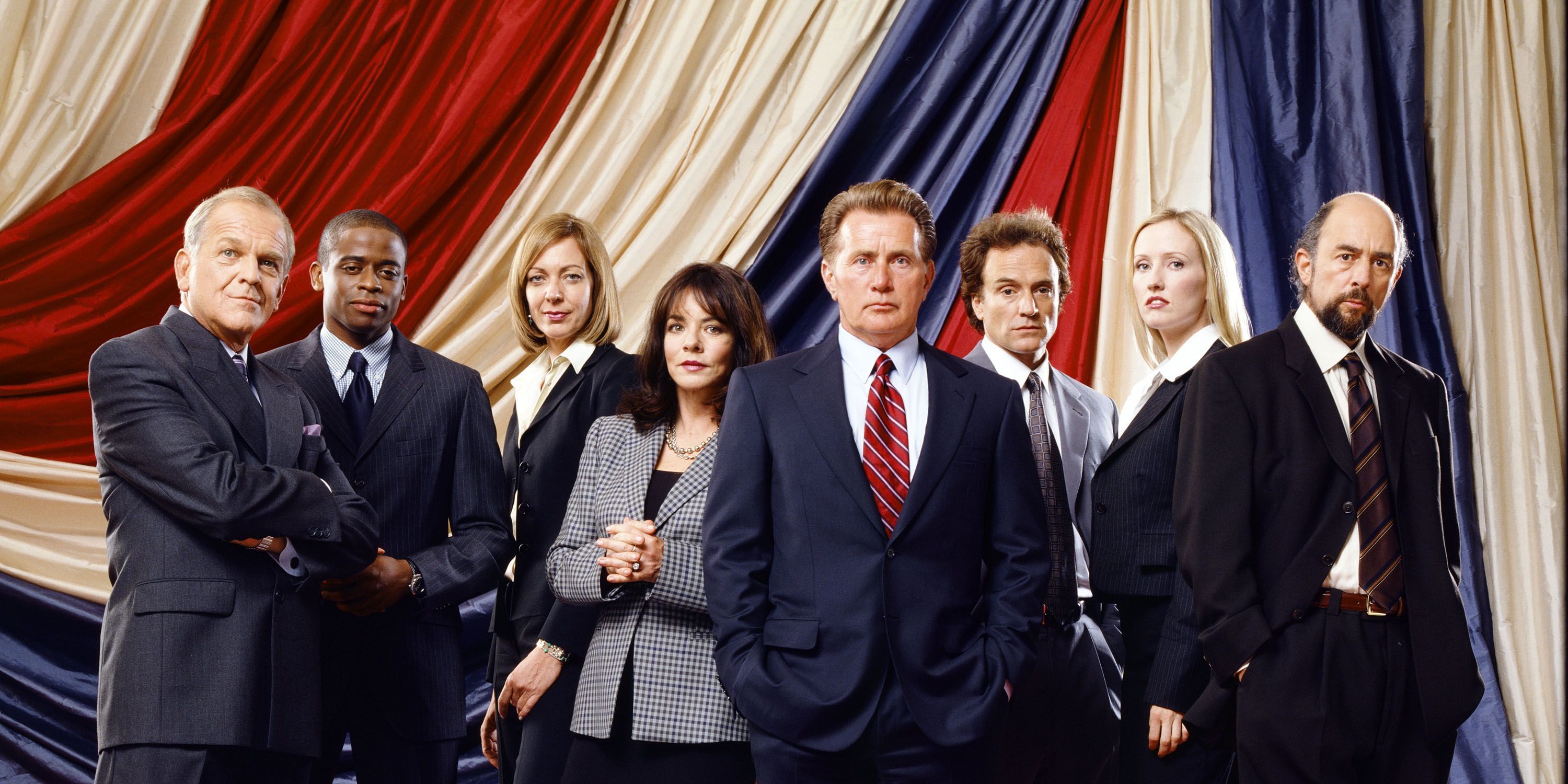
No less vital is C.J. Cregg, the White House Press Secretary who evolves from briefing-room battler to chief of staff, embodied by Allison Janney’s towering, Oscar-worthy performance. C.J. is strength incarnate: a former public defender turned communications powerhouse, she fields fusillades from reporters with wit sharp as a stiletto and poise that borders on superhuman. Her arc is a testament to the quiet heroism of women in male-dominated arenas, navigating sexism with strategic grace while shielding the administration from its own missteps. Remember “The Leadership Breakfast” from season three, where she orchestrates a high-stakes summit amid personal exhaustion? Or “365 Days,” where she grapples with the ethics of leaking classified intel to avert a crisis? C.J.’s fortitude isn’t flashy; it’s the steel thread weaving through the show’s fabric, reminding us that power without empathy is brittle. As she ascends to chief of staff in the final seasons, her evolution underscores a core truth: true leadership isn’t about barking orders but building bridges, even when the opposition is baying for blood.
These characters don’t exist in isolation; they’re part of an ensemble as richly drawn as any in television history. Deputy Chief of Staff Josh Lyman (Bradley Whitford) brings manic energy and unshakeable loyalty, his PTSD from an assassination attempt in season one humanizing the toll of the job. Communications Director Toby Ziegler (Richard Schiff) is the brooding poet of policy, penning speeches that blend Shakespearean flourishes with policy wonkery. Chief of Staff Leo McGarry (John Spencer), the grizzled warhorse with a history of addiction, dispenses wisdom like “Politics is like war—sometimes you have to do a bad thing to stop a worse thing.” And then there’s the First Lady, Abbey Bartlet (Stockard Channing), a sharp-tongued physician who challenges her husband’s decisions on everything from stem-cell research to family dynamics. Together, they form a surrogate family, their banter crackling with affection and intellect. The show’s signature “walk and talks”—those kinetic, overlapping dialogues as characters hustle through the West Wing’s labyrinthine halls—capture the exhilarating rhythm of crisis management, where ideas collide and alliances solidify in real time.
Thematically, “The West Wing” is a paean to idealism amid pragmatism. Sorkin doesn’t whitewash the sausage-making of legislation; episodes dissect filibusters, budget battles, and foreign-policy quagmires with granular detail. Yet, woven throughout is an unapologetic optimism: government as a grand experiment in collective uplift. Season four’s “20 Hours in America” follows the staff on a whistle-stop tour, encountering everyday Americans whose stories fuel their resolve. It’s a love song to civic engagement, countering the apathy that plagues modern discourse. Even in darker turns—like the post-9/11-inflected season four premiere “20 Hours in L.A.,” which grapples with terrorism’s shadow—the show affirms that moral clarity can pierce the fog of fear. Key installments, such as “Let Bartlet Be Bartlet,” urge the president to shed poll-tested caution for authentic leadership, a message that resonates fiercely in 2025’s post-truth milieu.
Why does this matter now, in a year when democracy feels like it’s on life support? The 2024 election left scars: record-low trust in institutions, viral deepfakes eroding facts, and a surge in populist fervor that prizes disruption over deliberation. We’ve watched as debates devolve into shouting matches, alliances fracture along tribal lines, and global threats—from AI ethics to authoritarian creep—demand nuanced responses we rarely see. “The West Wing” doesn’t pretend these fractures don’t exist; it confronts them head-on, offering clarity through characters who argue passionately but listen intently. Bartlet’s moral compass cuts through the noise, insisting on evidence-based empathy over emotional appeals. C.J.’s strength models how to communicate amid chaos, briefing the press with transparency that builds rather than burns bridges. In a fractured world, where “alternative facts” have become commonplace, the show’s idealism isn’t Pollyannaish—it’s provocative. It challenges us to demand better, to envision a politics where vulnerability is valor and compromise is courage.
The cast, now silvered but no less passionate, echoes this sentiment in reflections that span decades. Martin Sheen, who infused Bartlet with echoes of his own activism, has long viewed the role as a call to service, quipping in recent gatherings that the show’s legacy is “reminding people that politics can be fun again.” Allison Janney, speaking at a 2024 reunion, marveled at how C.J.’s poise still inspires women in power, from Capitol Hill aides to corporate boardrooms. Bradley Whitford, ever the witty provocateur, jokes that rewatching Josh’s frenetic days feels “like therapy for anyone who’s ever yelled at their TV during a filibuster.” Their bonds—forged in 14-hour shoots and Sorkin’s relentless rewrites—mirror the familial loyalty they portrayed, with reunions at the White House and Emmy tributes underscoring the show’s ripple effects. Even as real-world politics veers toward dystopia, these actors carry the torch, advocating for causes from voting rights to mental health, proving that art can ignite action.
Yet, for all its uplift, “The West Wing” isn’t without critics who decry its liberal bent or rose-tinted lens. Fair enough—Sorkin’s White House skews Democratic, with Republican foils like Senator Arnold Vinick (Alan Alda) serving as noble adversaries rather than villains. But that’s the point: bipartisanship blooms from mutual respect, not forced equivalence. In 2025, as we navigate the aftershocks of division, this vision feels revolutionary. Binge-watching the series now—perhaps starting with the MS revelation in “17 People” or the election-night triumph of “Election Day, Part II”—isn’t mere comfort food; it’s a recalibration. It rekindles the yearning for leaders who quote Yeats in budget meetings, who treat opponents as worthy foes, who govern as if lives depend on it because they do.
As the credits roll on that final episode, with Bartlet handing off to President Matt Santos amid tears and toasts, one line lingers: “The streets are filled with music, a pure and sweet music—let it fill your soul.” In our fractured world, “The West Wing” is that music—a symphony of clarity and conviction. Five years away only amplified its potency. Stream it, savor it, and let it stir something dormant: the belief that tomorrow can be better if we fight for it with heart, head, and unyielding moral fiber. This political drama isn’t just entertainment; it’s exactly what we need now—a breath of fresh air, urging us to exhale the despair and inhale the possible.