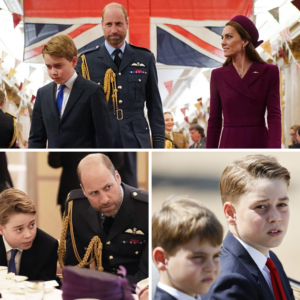
In a series of explosive revelations shaking the British monarchy, royal biographer Andrew Lownie has claimed that Prince William is determined to fully “deal with” his disgraced uncle, Prince Andrew (now known as Andrew Mountbatten-Windsor), before King Charles III‘s death. Speaking in late December 2025 interviews promoting his book Entitled: The Rise and Fall of the House of York, Lownie described William’s mindset as wanting to “clean the stables”—a metaphor for eliminating lingering controversies to ensure a smooth transition when he ascends the throne.
Lownie told outlets like Page Six and The Sun that Andrew is acutely aware of his precarious position. “He’s worried about what’s going to happen,” the author said. “He’s going to be no longer protected. William is going to deal with him.” The urgency, Lownie alleges, stems from Charles’ ongoing cancer treatment, diagnosed in 2024 and continuing into 2026. William, 43, reportedly views Andrew’s scandals—primarily tied to his association with convicted sex offender Jeffrey Epstein—as a toxic burden he refuses to inherit.

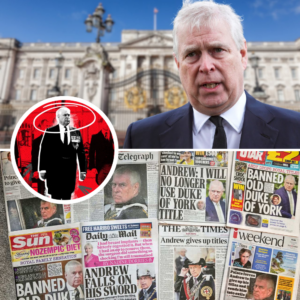
Andrew’s fall from grace accelerated in 2025. Following persistent scrutiny, King Charles stripped him of his “Prince” title, HRH style, and remaining honors in October, rendering him a private citizen. He was also evicted from Royal Lodge, his 30-room Windsor mansion of over two decades, with a reported deadline of January 31, 2026, though delays pushed it to Easter (April 5, 2026) due to renovations on his new Sandringham estate property. Sources describe Andrew resisting, demanding a substantial home with extensive staff—a gardener, driver, housekeeper, and cook—highlighting his reluctance to downsize.
Lownie predicts Andrew will “go kicking and screaming,” resisting concessions. The biographer also noted fractures in Andrew’s personal life, claiming his ex-wife Sarah Ferguson has distanced herself, viewing him as “toxic” and planning a rebrand. Losing the “Prince” title devastated Andrew, who once prioritized it above his naval career or marriage.
William’s alleged push aligns with his vision for a slimmed-down, modern monarchy. Experts note his “no-nonsense” approach, contrasting Charles’ softer handling due to fraternal loyalty. Earlier reports from 2025 suggested tensions between father and son over Andrew, with William advocating firmer action to protect the institution. As Charles, 77, focuses on health and duties—including a planned U.S. state visit in April 2026—William has quietly assumed more responsibilities, modernizing operations amid scandals.
Andrew’s Epstein ties remain the core issue. Despite denying wrongdoing and settling a 2022 civil suit with accuser Virginia Giuffre (who died in 2025), fresh allegations surfaced in posthumous memoirs and media. Parliament scrutinized Royal Lodge’s lease, prompting the Crown Estate inquiry. Andrew’s Christmas 2025 exclusion from family events—while daughters Beatrice and Eugenie attended—underscored his isolation.
Public opinion favors resolution. Polls show declining monarchy support partly due to perceived leniency. Lownie’s claims amplify debates: Can Andrew be removed from succession (eighth in line)? Experts say no, without parliamentary act across Commonwealth realms—unlikely given his position behind William’s children and Harry’s.
Yet William’s reported ruthlessness signals a new era. Biographers describe him as “calling shots” to safeguard the Crown’s relevance. With Charles’ reign shadowed by health and family rifts (including Harry), resolving Andrew is seen as pivotal for stability.
As 2026 dawns, Andrew’s move looms—potentially to a modest Sandringham home amid renovations. Temporary homelessness risks arise if timelines slip. Royal watchers predict this as the monarchy’s bid to “draw a line” under 2025’s turmoil.
William’s strategy—pragmatic, forward-looking—aims to usher a scandal-free inheritance. Whether Andrew complies gracefully remains uncertain, but the future king’s resolve appears unwavering. In Lownie’s words, the “stables” must be cleaned for the monarchy to thrive.