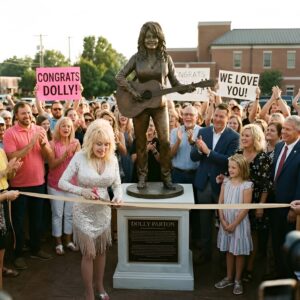
In the cavernous glow of Universal Studios’ Stage 13, where the echoes of countless vocal showdowns still linger like ghosts in the rafters, a hush fell over the audience on December 5, 2023. It was semifinals night on The Voice Season 24, a whirlwind episode crammed with powerhouse ballads, coach showdowns, and the kind of high-stakes drama that keeps Tuesday nights glued to NBC screens across America. The coaches—Niall Horan with his boyish charm, John Legend’s soulful gravitas, Gwen Stefani’s pop polish, and Reba McEntire’s unyielding country grace—sat poised in their spinning red chairs, ready to critique and console. But as the clock ticked toward the Top 9 reveal, the production pivoted from competition to communion. Fog machines hissed to life, swirling ethereal mists across the polished black floor like morning dew on Oklahoma plains. Behind the stage, digital projections bloomed: a forest of autumnal trees, their leaves a riot of crimson and gold, swaying gently in an unseen breeze. And there, rising from her chair like a red-haired phoenix, stood Reba McEntire—not as mentor, but as messenger. What followed was seven minutes that transcended television: a raw, resolute performance of “Seven Minutes in Heaven,” a song she’d penned as a love letter to her late mother, Jacqueline. In that spotlight, grief wasn’t just sung; it was sanctified, transforming a routine live show into a cathedral of country soul.
Reba, at 68, glided center stage in a gown of midnight blue sequins that caught the lights like stars on the Chisholm Trail—elegant yet earthy, a nod to the cowgirl who’d traded rodeo arenas for Opry spotlights. Her band assembled like old comrades: pedal steel crooning low and lonesome, a grand piano whispering preludes, and a trio of violins carving arcs of ache through the air. No pyrotechnics, no dancers—just Reba, mic in hand, her voice a vessel for the unspoken. The opening lines emerged soft, trembling yet anchored: “If I had seven minutes in Heaven / I know just what I’d do / Take a walk down those golden streets / And find a quiet corner booth.” The lyrics, co-written with Liz Hengber and Tommy Lee James in the shadow of loss, painted a heaven not of harps and halos, but of heartfelt hangs—a celestial dive bar where the jukebox spins Patsy Cline and the stools bear the weight of what-ifs. As she sang of skipping chats with Johnny Cash or Elvis—”I wouldn’t waste a second on the King / Or ask JFK what he was thinking”—the fog thickened, the trees glowed warmer, and the audience leaned in, breaths collective and caught.
Jacqueline McEntire’s shadow loomed large in every note, a presence as vivid as the black-and-white portrait that would soon flicker to life on the massive LED screen behind her. Born in 1929 in the hardscrabble hills of Southeastern Oklahoma, Jackie (as family called her) was the steel-spined matriarch who raised three musical prodigies amid the dust of a working ranch. Reba, the eldest, arrived in 1955, followed by siblings Susie and Pake, in a home where supper tables doubled as song circles and the radio was gospel. Jackie’s voice—a clear soprano honed in church choirs—wove through their childhoods, teaching harmonies to “How Great Thou Art” while irons pressed Sunday bests. She wasn’t just mom; she was manager, chauffeur, cheerleader. By the late ’70s, as Reba’s star ascended with “Fancy” and “Whoever’s in New York… Just Found Out,” Jackie hit the road too, booking gigs and beaming from front rows. “Mama was my North Star,” Reba would later say in her 2023 memoir Not That Fancy, her words laced with the twang of gratitude. “She’d say, ‘Sing like you mean it, Reba girl,’ and I’d try, every damn time.”
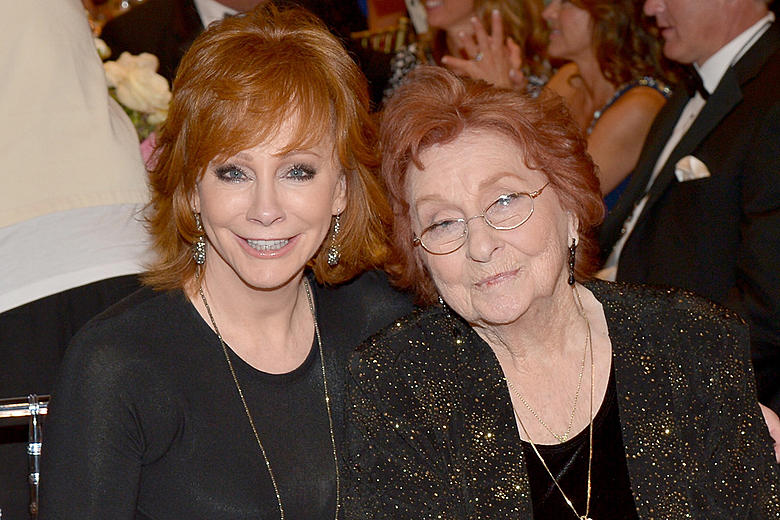
The cancer came stealthy in 2019, a diagnosis that hit like a prairie twister just as Reba headlined the ACM Awards. Jacqueline, ever the fighter, endured chemo with quiet grit—knitting scarves for grandkids between treatments, insisting on family Thanksgivings even as her frame thinned. Reba postponed tours, flying commercial from Vegas to Oklahoma City weekly, her private jet grounded for “Mama time.” They shared last laughs over bootleg videos of Reba’s early rodeo days, Jacqueline teasing, “You sang better than you roped, honey.” But March 24, 2020, brought the cruelest isolation: COVID lockdowns sealed hospital doors, stranding Reba in Nashville as Jackie slipped away at 90. No bedside goodbyes, just a phone line humming with “I love yous” and a funeral streamed to empty pews. “The pandemic stole more than her breath,” Reba confided in a tearful People interview months later. “It stole our closure. That’s why this song… it’s my seven minutes stolen back.”
“Seven Minutes in Heaven” wasn’t born in studios slick with session pros; it gestated in grief’s quiet corners. Recorded for Reba’s 2019 album Stronger Than the Truth—a rootsy return to her red-dirt beginnings, produced by Pat McMakin in a Nashville barn converted to a tracking room—the track arrived as a demo from Hengber, who’d lost her own father young. Reba heard it and wept: the chorus, a plea to “spend them all with you,” echoed her own unspoken bargain with the divine. Jacqueline lived to hear it, her frail hand squeezing Reba’s during a backyard playback, whispering, “That’s us, baby—booth by the window, talking till closing.” The song became a sleeper hit, climbing to No. 37 on Billboard’s Country Airplay in 2020, its sparse arrangement—acoustic guitar plucks like rain on tin roofs, harmonies layered like family quilts—resonating in a year of collective mourning. Fans flooded Reba’s socials with stories: a Texas widow playing it at her husband’s grave, an Iowa farmer etching lyrics on a headstone. By 2023, reimagined acoustically for Not That Fancy, it surged anew, its video—a ethereal vignette of Reba wandering pearly gates, silhouette of a Jackie stand-in waiting in that booth—garnering 10 million YouTube views.
Back on The Voice stage, the performance unfolded like a private vigil made public. Reba’s voice, that five-octave wonder honed on rodeo circuits and Broadway runs, trembled on the verses—”How’s the fishing up there? / Do they serve Shiner up in Heaven? / ‘Cause I’m gonna need one”—yet held resolute, a testament to the “queen of country” moniker she’d earned over 50 No. 1s and 75 million records sold. The pedal steel wept in the bridge, violins soaring like doves released at a funeral, as she imagined mundane miracles: swapping recipes for Jackie’s legendary cornbread, quizzing on grandkids’ milestones. The coaches, usually quippy, sat transfixed—Gwen swaying gently, John nodding with closed eyes, Niall’s grin fading to reverence. Contestants in the wings, from Team Reba’s Jordan Rainer to Legend’s Mara Justine, wiped cheeks mid-rehearsal. The studio audience—300 strong, a microcosm of Middle America in graphic tees and light-up sneakers—didn’t cheer; they communed. A young dad in row three clutched his toddler, whispering the chorus like a bedtime story; an elder couple in the balcony linked pinkies, tears carving silent paths.
As the final chorus crested—”If I had seven minutes in Heaven / I’d spend them all with you”—Reba’s gaze lifted to the screen. There, materializing in sepia tones, Jacqueline’s portrait: a 1970s snapshot, her smile wide as the Red River, red curls framing eyes that sparkled with mischief. Reba’s voice cracked—a single, human fracture—on “you,” her hand rising as if to touch the glass. “I miss you, Mama,” she breathed into the mic, the words barely amplified yet booming through hearts. The fog cleared, trees fading to twilight, and silence reigned: seven seconds, maybe ten, of pure, aching void. Then, catharsis—a swell of applause that built to a “Re-ba!” chant, the crowd on its feet, strangers embracing in the aisles. Back at her chair, coaches swarmed: John enveloping her in a hug, Gwen murmuring, “That’s family, right there.” Niall, voice thick, added, “You just showed ’em what soul means, Reba.”
The moment didn’t end with the credits. Clips exploded across socials—NBC’s YouTube racking 5 million views in 48 hours, #SevenMinutesWithReba trending nationwide. Fans dissected it like scripture: TikToks syncing the portrait reveal to user eulogies, X threads sharing “Mama stories” from Reba’s catalog—”Is There Life Out There,” “The Greatest Man I Never Knew.” Nashville paused: SiriusXM’s The Highway looped the track nonstop; the Ryman Auditorium, where Reba headlined her 2023 residency, dedicated an encore to Jackie. Even in Oklahoma, Kiowa High School—Reba’s alma mater—lit a candlelit vigil, students singing “Fancy” under starlit skies. For Reba, it was reclamation: grief, once a thief in pandemic shadows, now a gift shared. “Mama taught me to sing through the hurt,” she’d say post-show, sipping sweet tea in her green room. “This? It’s her encore.”
Reba’s tapestry with loss is woven tight. Her father, Clark—a world-champion steer roper inducted into the National Rodeo Hall of Fame—rode off in 2014, inspiring “Just Like Them Horses,” a ballad of galloping goodbyes where Jackie’s cameo in the video bridged generations. Brother Pake’s ranching life, Susie’s songbird soul—they’re threads in the McEntire quilt. But Jacqueline? She was the warp, the steady hand guiding Reba from 1970s Opry debuts to Annie Get Your Gun revivals, from Reba sitcom laughs to Broadway’s roar. Post-loss, Reba channeled it into activism: $500,000 to Oklahoma wildfire relief in 2021, echoing Jackie’s community suppers; her Reba’s Ranch Resort, a wellness haven opening in 2024, with yoga pavilions named for Mama’s gardens. And on The Voice, her third coaching stint, she mentors with maternal fire—nurturing underdogs like 16-year-old Kaylee Bell, whose grit mirrors a young Reba’s.
As the fog dissipated that December night, with confetti settling like fallen leaves and the Top 9 taking bows, Reba lingered stage-side, eyes on the empty screen. Seven minutes in heaven, broadcast to millions, had bridged the unbridgeable: a daughter’s longing, a mother’s legacy. In country’s canon of heartbreak anthems—from “Whiskey Lullaby” to “If I Die Young”—this stood singular: not a dirge, but a dialogue, grief gilded in grace. Reba McEntire didn’t just pour her heart out; she invited us in, turning personal ache into universal balm. And in that booth on golden streets, somewhere beyond the veil, Jacqueline smiled—knowing her girl’s song, like her spirit, endures.