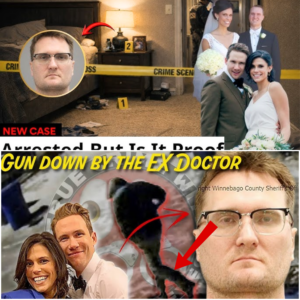
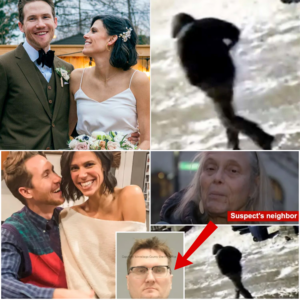
The chilling case of Michael David McKee, a respected vascular surgeon accused of executing his ex-wife Monique Tepe and her husband Spencer Tepe in their Columbus, Ohio, home, has drawn intense scrutiny from true crime experts. In a recent segment on KOMO News’ “Criminally Obsessed,” investigative reporter Anne Emerson and forensic criminologist Dr. Laura Pettler dissected the murders in their signature “Murder Room” analysis, probing victimology, suspectology, and potential motives behind the December 30, 2025, double homicide that left two young children orphaned.
The tragedy unfolded in the quiet Weinland Park neighborhood, where the Tepe family lived in a modest home on North 4th Street. Monique Tepe, 39, and Spencer Tepe, 37, were discovered fatally shot after a concerned friend performed a wellness check and called 911 around 10 a.m. The call captured raw panic: a voice describing Spencer “laying next to his bed, off of his bed in this blood,” unable to approach closer amid the horror. Both victims suffered gunshot wounds, ruled homicides by the Franklin County Coroner’s Office. Remarkably, their children—a 4-year-old and a 1-year-old—were found unharmed inside, a detail that underscores the targeted nature of the attack.
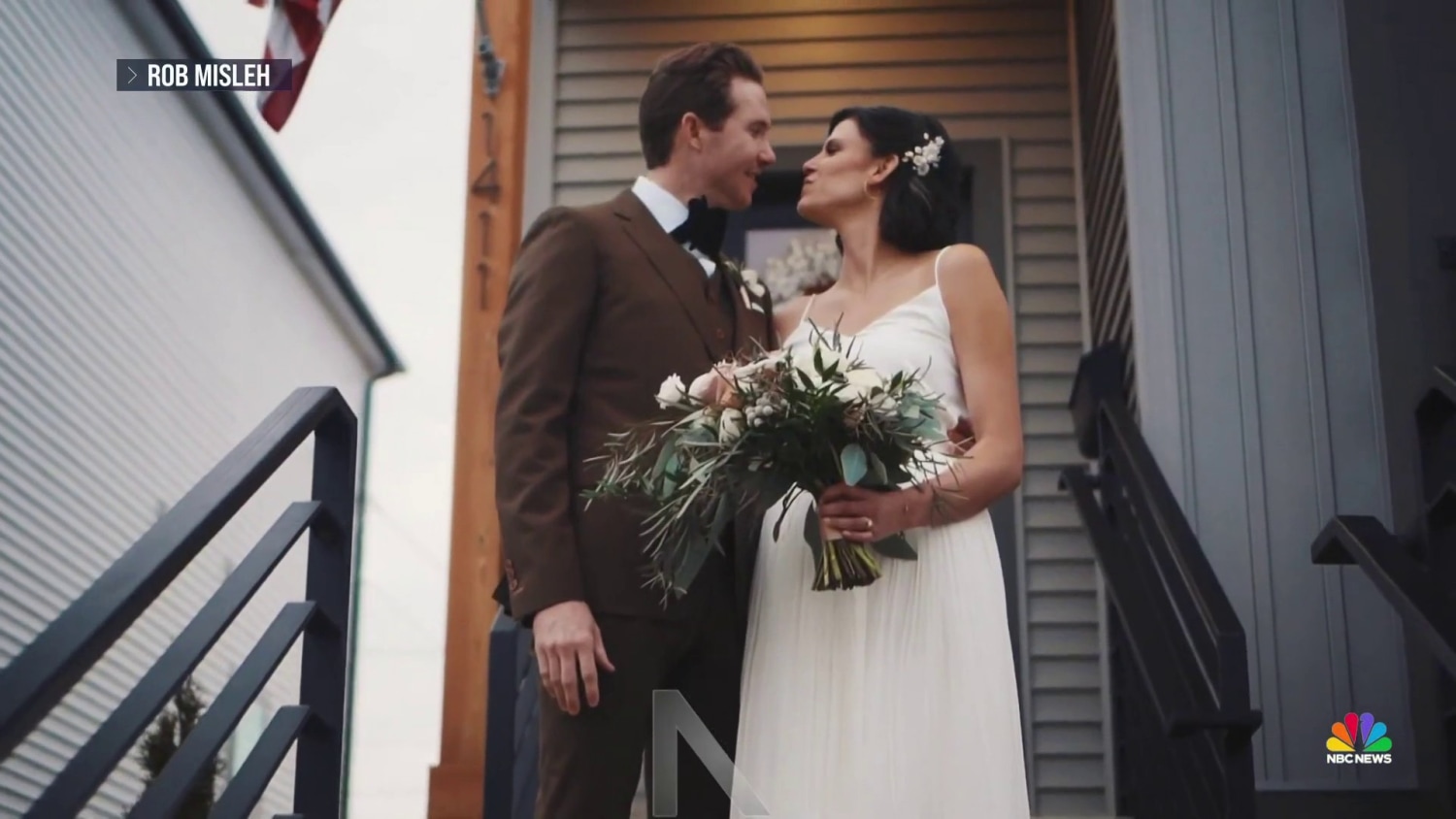
Monique and Spencer represented a story of second chances and enduring love. Monique, previously married to McKee from August 2015 until their divorce in 2017, had moved on to build a fulfilling life with Spencer, a compassionate dentist known for easing patients’ fears with his gentle demeanor. Family tributes painted Spencer as deeply empathetic, someone who loved children fiercely—ordaining himself to officiate weddings, playing endlessly with cousins, and embracing fatherhood with joy. Monique brought warmth, humor, and strength to the family, described as an “amazing mom” whose presence completed their circle. Their home buzzed with routine joys: morning dog walks, family gatherings, and plans for a fifth anniversary just weeks away.
McKee, 39, emerges as the central figure in this unfolding nightmare. A licensed vascular surgeon with training across Virginia, Nevada, Maryland, and Illinois, he practiced in the Rockford area, handling complex life-saving procedures. Yet beneath this professional facade lay a troubled personal history. Family members later told media outlets that McKee had been “emotionally abusive” toward Monique during their marriage, though the 2017 divorce proceeded amicably with no children or reported violence in public records. No restraining orders or prior incidents surfaced, making the leap to alleged premeditated murder all the more shocking.
:max_bytes(150000):strip_icc():focal(749x0:751x2)/michael-mckee-court-tepes2-11226-da912d6f11d54664ad739608809f88ee.jpg)
The investigation accelerated with public release of surveillance footage showing a person of interest in a dark coat and light pants walking an alley near the Tepe home during the early morning hours. A vehicle linked to the timeline—arriving shortly before and departing after the suspected shooting window—was traced to McKee in Illinois. After a 12-day search, authorities arrested him without incident on January 10, 2026, at his Rockford residence. Charges initially two counts of murder upgraded to two counts of aggravated murder with premeditation, signaling evidence of “prior calculation and design” under Ohio law—a classification that opens the door to life imprisonment or, in rare cases, the death penalty.
In the “Criminally Obsessed” segment, Emerson and Pettler delved into the psychological layers. Pettler, a renowned forensic criminologist specializing in staged crime scenes and domestic violence homicides, analyzed the case through victimology (studying the victims’ lives to understand risk factors) and suspectology (profiling the perpetrator’s mindset). They highlighted how Monique’s life post-divorce—thriving marriage, children, stability—may have represented an unbearable loss of control for McKee. Pettler often describes “anger-retaliatory” killers who act out of perceived betrayal, where the new partner’s presence fuels rage. The segment referenced a possible connection to Monique’s past vows or writings about “wrong relationships” and a “waterfall of tears,” speculating these alluded to lingering pain from her time with McKee, though police have released no official motive.
Emerson pressed on the “why now” question. Pettler explained that in ex-partner homicides, triggers often involve milestones—anniversaries, remarriages, or seeing the ex flourish. The timing near the Tepes’ anniversary could suggest symbolic retaliation. Pettler emphasized patterns in such cases: the killer may stalk, plan meticulously, and target both the ex and the new partner to eliminate the “replacement” entirely. The children being spared aligns with some profiles where the focus remains on punishing the adults rather than indiscriminate violence.
The experts dissected potential evidence trails. Surveillance tying McKee’s vehicle and the alley figure, combined with travel records from Illinois to Ohio, likely forms the core. Pettler noted that in premeditated cases, digital footprints—phone pings, searches, or communications—often seal the narrative. The absence of forced entry suggests the attacker knew the routine, perhaps waiting for Spencer during his early morning dog walk, a detail speculated in online discussions.

Community shock in Columbus ran deep. Weinland Park, undergoing revitalization with new parks and neighborly bonds, now bears the scar of intrusion. Residents installed extra cameras and formed watch groups, while leaders pushed for domestic violence resources. The Tepe family’s statement after McKee’s arrest expressed measured relief: “Today’s arrest represents an important step toward justice for Monique and Spencer… We will continue to honor their lives and the light they brought into this world.” Spencer’s cousin Nikki Forte shared vivid memories of his kindness, from holding newborns to officiating weddings, underscoring the void left behind.
McKee’s January 12 court appearance in Winnebago County, Illinois, unfolded with stark composure. Shackled in a yellow jumpsuit, he waived extradition through public defender Carie Poirier, who stated he planned to plead not guilty and believed swift return to Ohio would aid his defense. A status hearing followed, with transport expected soon to Franklin County. There, arraignment awaits in the jurisdiction where the crimes occurred.
The legal battle looms large. Prosecutors must prove premeditation beyond doubt, leveraging timeline evidence and forensic links. Defense strategies may challenge identification, motive reconstruction, or introduce alternatives. Ohio’s aggravated murder statute demands rigorous proof, but the upgraded charges signal confidence in the case.
Broader implications resonate. This case highlights ex-partner risks, where emotional abuse can escalate years later. National statistics show intimate partner violence as a top homicide cause for women, with separation heightening danger. Pettler and Emerson’s analysis serves as a cautionary framework, urging recognition of red flags: control, jealousy, obsession.
For the Tepe children, trauma therapy and family support become paramount. Their future hinges on healing amid grief, with relatives vowing protection. The Weinland Park home, once alive with love, now stands silent—a reminder that betrayal can shatter even the strongest bonds.
As McKee faces Ohio justice, questions linger: What snapped in a man trained to save lives? How did surveillance become the unraveling thread? The “Criminally Obsessed” segment captures the haunting puzzle, blending facts with expert insight to illuminate shadows of motive and rage.
This double murder transcends headlines. It probes human darkness, resilience, and the quest for accountability. Monique and Spencer’s legacy endures through memories, their children’s futures, and a community’s resolve. In the heartland, where trust defines daily life, this tragedy demands vigilance, compassion, and unwavering pursuit of truth.