The 1986 blockbuster Top Gun catapulted Tom Cruise to superstardom as the daring naval aviator Pete “Maverick” Mitchell. With its high-octane aerial sequences and iconic soundtrack, the film became a cultural phenomenon, boosting Navy recruitment and grossing over $350 million worldwide. However, behind the glamour of fighter jets and beach volleyball scenes lay real dangers that pushed the cast and crew to their limits.
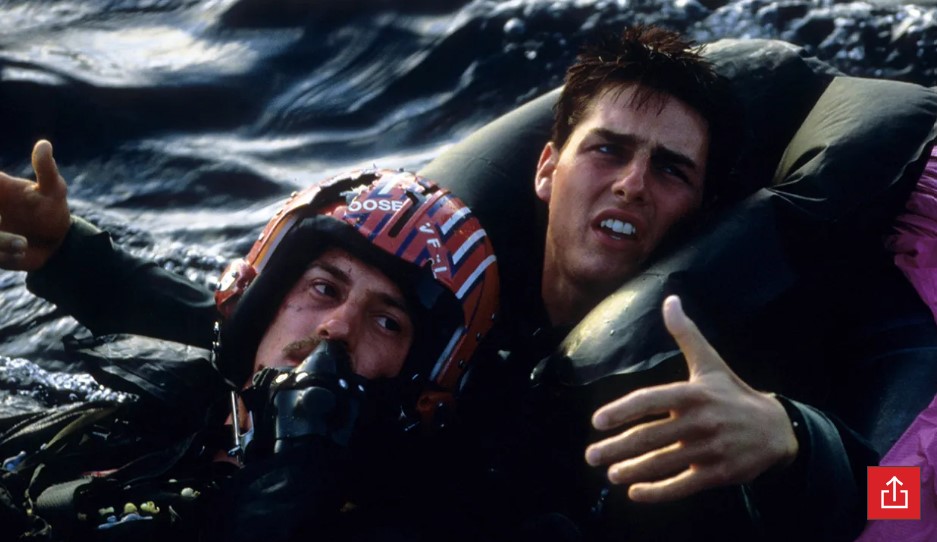
One of the most harrowing moments occurred during the filming of the tragic sequence where Maverick cradles the body of his fallen co-pilot, Goose (played by Anthony Edwards), in the ocean after a mid-air catastrophe. What appeared as a dramatic, emotional scene on screen nearly turned deadly for Cruise himself.
Barry Tubb, who portrayed radar intercept officer “Wolfman” in the film, later recounted the incident in detail. While Cruise was in the water, performing the emotionally charged rescue attempt, water began accumulating inside his parachute canopy. Unnoticed at first, the filling parachute acted like a heavy weight, pulling the young actor downward. Tubb described it as the closest anyone had come to dying on a set he’d ever witnessed.
The crew was momentarily distracted, reloading cameras or adjusting equipment, when a vigilant Navy frogman in a nearby helicopter spotted the parachute ballooning unnaturally. Reacting swiftly, the diver leaped into the water and cut Cruise free just as he was about to sink beyond recovery. Had the rescue been delayed even seconds longer, Cruise could have been dragged to the ocean floor, lost forever in the depths.
:max_bytes(150000):strip_icc()/Lady-Gaga-Top-Gun-2-2589a2acd706453baf5bdfdf677bea11.jpg)
This near-miss highlighted the inherent risks of filming Top Gun. Director Tony Scott insisted on authenticity, incorporating real Navy pilots and aircraft for many sequences. The production faced multiple challenges, including extreme G-forces during flight training that left actors physically drained. Cruise, then in his early 20s, embraced the intensity, performing many of his own stunts to capture the raw adrenaline of naval aviation.
The ocean scene’s dangers stemmed from the practical effects used—no CGI back then. Parachutes were real, water was cold and unpredictable, and safety protocols, while present, couldn’t eliminate every hazard. This incident foreshadowed Cruise’s lifelong commitment to high-risk action, seen in later franchises like Mission: Impossible, where he’s dangled from planes, scaled skyscrapers, and held his breath underwater for minutes.
Top Gun not only defined 1980s action cinema but also cemented Cruise’s reputation as a fearless performer. Decades later, the 2022 sequel Top Gun: Maverick revisited these themes with even more advanced real-flight footage, proving Cruise’s dedication hasn’t waned. Yet, stories like Tubb’s serve as a reminder: the thrill on screen often comes at a steep personal cost. Cruise emerged unscathed, delivering one of cinema’s most memorable performances—but it was a close call that could have altered Hollywood history forever.