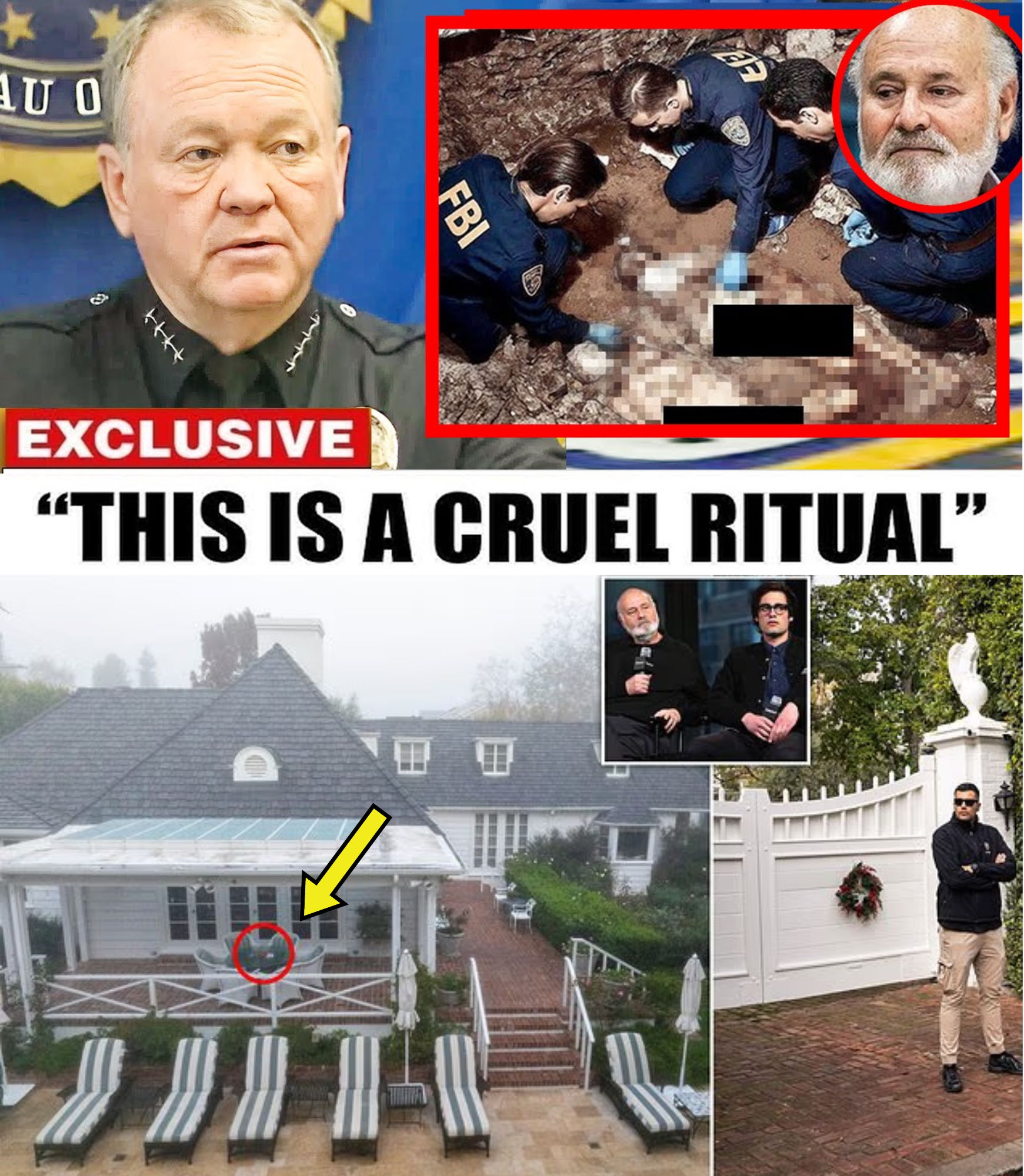
The Hollywood community remains in shock following the brutal murders of legendary director Rob Reiner and his wife, Michele Singer Reiner, in their Brentwood mansion on December 14, 2025. The 78-year-old filmmaker, celebrated for classics like “The Princess Bride” and “When Harry Met Sally,” and his 70-year-old photographer spouse were found with multiple sharp force injuries, their throats slashed in a frenzy of violence. Authorities quickly zeroed in on their 32-year-old son, Nick Reiner, who was arrested hours later and charged with two counts of first-degree murder. Now, as details emerge from the investigation, shocking findings in the family home have painted a chilling portrait of Nick’s escalating insanity, raising questions about long-buried family demons.
Investigators, including insights from FBI behavioral experts, have delved into the crime scene, uncovering evidence that highlights Nick’s erratic and dangerous behavior. The mansion, a sprawling estate in one of Los Angeles’ most exclusive neighborhoods, revealed signs of a chaotic struggle. Blood spatter analysis suggested the attacks occurred in the early morning hours, shortly after a heated argument at Conan O’Brien’s Christmas party the night before. Witnesses described Nick as “freaking everyone out,” acting abnormally and clashing with his father over inappropriate conduct. Rob reportedly chastised his son, but the family had grown accustomed to such outbursts, dismissing them as part of Nick’s ongoing issues.
Nick’s history of mental health struggles and addiction is well-documented. Starting drug use in his early teens, he entered rehab at 14 and cycled through 18 programs by 2016, even experiencing homelessness. He co-wrote and starred in “Being Charlie,” a 2015 semi-autobiographical film directed by his father, which chronicled a young man’s battle with addiction. In interviews, Nick admitted to pretending to be “crazy” to obtain medications, hinting at manipulative tendencies. Over the years, police were called to the Reiner home multiple times due to incidents involving Nick, indicating a pattern of volatility that culminated in tragedy.
The mansion search yielded disturbing items: traces of methamphetamine, which experts link to psychosis-induced rages, and personal effects suggesting Nick’s deteriorating state. Surveillance footage from nearby showed him wandering aimlessly post-murder, displaying no remorse—laughing and joking with officers upon surrender. An FBI profiler analyzed his behavior, questioning if schizophrenia or drug-fueled insanity played a role, potentially paving the way for a not-guilty-by-reason-of-insanity plea. Defense attorney Alan Jackson has highlighted “complex issues,” while prosecutors eye special circumstances for multiple murders, which could mean life without parole or the death penalty.
The Reiner siblings—Jake, Romy, and Tracy—issued a statement mourning their parents as “best friends,” expressing unimaginable pain. As arraignment looms on January 7, 2026, the case exposes the dark underbelly of fame: how addiction and untreated mental illness can shatter even the most iconic families. Rob’s legacy endures, but the revelations from his mansion serve as a stark warning about the hidden horrors behind closed doors.