As the festive glow of Christmas fades and the new year approaches, many viewers crave a shift from holiday cheer to something darker and more absorbing. Enter Land of Sin, Netflix’s latest five-part Swedish crime drama that’s quickly emerging as the ultimate post-Christmas obsession. Dropping all episodes on January 2, this taut Scandi noir plunges into the brutal murder of a teenager, unraveling a generations-old family feud in the rural heart of southern Sweden. With its unforgiving atmosphere, unpredictable lead detective, and relentless twists, the series captures the raw essence of human nature—fear, loyalty, survival instincts, and the blurred boundaries between justice and vengeance. It’s a gripping blend of classic whodunit tension and modern psychological depth, making it impossible to stop watching once you start.
Created and directed by Peter Grönlund, known for his unflinching portrayals in films like Goliath and the series Beartown, Land of Sin (originally titled Synden) pushes beyond conventional crime formulas. Grönlund delves into the lives of people on society’s edges, exploring themes of shame, violence, and unbreakable family ties in a patriarchal rural community. Set against the stark beauty of the Scanian countryside and the Bjäre peninsula, the story begins with the discovery of teenager Silas’s body at a remote farmhouse. What initially appears as a tragic isolated incident soon exposes a web of fierce loyalties, buried grudges, and dark secrets that have festered across decades.
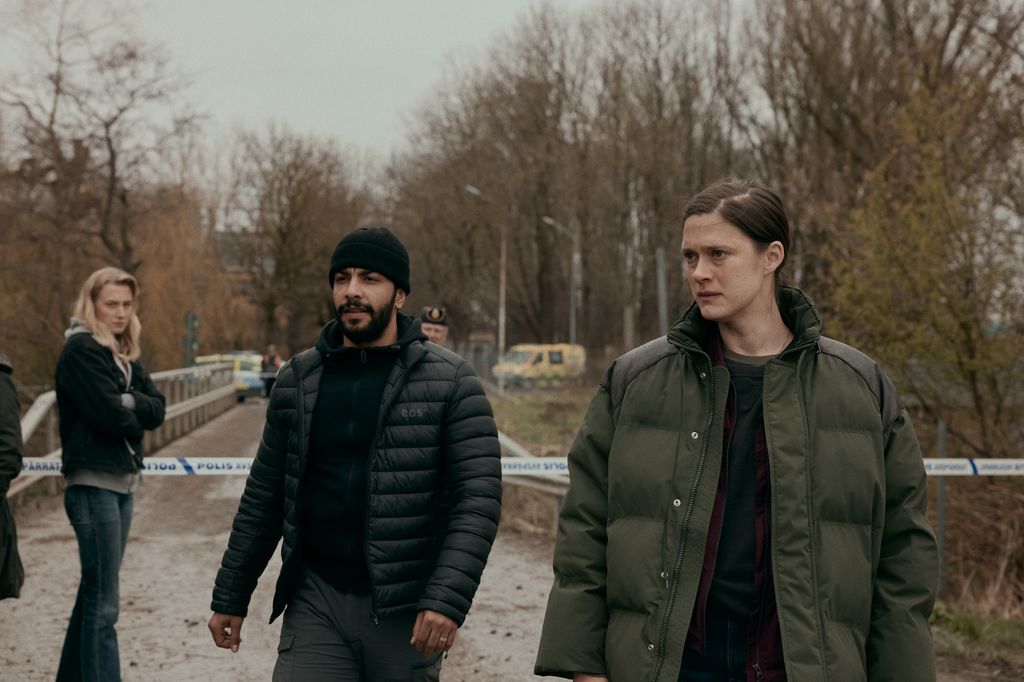
Leading the investigation is Dani, a perpetually angry yet brilliantly intuitive detective played with fierce intensity by Krista Kosonen. Dani is unpredictable—sharp-tongued, unconventional, and driven by an unyielding sense of justice that often clashes with protocol. Her personal connection to the victim adds layers of emotional stakes, pulling her deeper into the case and forcing confrontations with her own past. Paired with her is Malik, a freshly graduated rookie officer portrayed by Mohammed Nour Oklah, whose idealism and inexperience create a classic mismatched duo dynamic. Their partnership evolves amid mounting pressure, as the victim’s powerful family patriarch, Elias, issues ultimatums and threatens to take matters into his own hands if the police fail.
The narrative thrives on its claustrophobic rural setting, where vast open fields and isolated farms amplify isolation and suspicion. As Dani and Malik dig deeper, they enter what the synopsis describes as a “patriarchal rat-hole,” uncovering a violent intergenerational feud rooted in land disputes, betrayals, and unspoken traumas. The series masterfully balances procedural elements with character-driven drama, revealing how catastrophe strips away civility and exposes primal instincts. Subplots weave in personal struggles—Dani’s internal demons, Malik’s coming-of-age in the force, and the fractured dynamics within Silas’s family—adding emotional weight to the mystery.
Kosonen’s performance as Dani is a standout, embodying the archetype of the flawed Scandi noir detective while infusing it with fresh unpredictability. Her “odd but highly intelligent” character navigates moral gray areas, making decisions that blur right and wrong in pursuit of truth. Oklah brings earnest vulnerability to Malik, highlighting generational and cultural contrasts within the police force. The supporting ensemble, including portrayals of the domineering Elias and various family members entangled in the feud, grounds the story in authentic human conflict. Grönlund’s direction emphasizes realism, with dialogue that feels lived-in and violence that’s impactful rather than gratuitous.
Visually, Land of Sin captures the moody allure of Scandinavian landscapes—golden wheat fields under brooding skies, weathered farmhouses, and misty horizons that mirror the characters’ obscured motives. Cinematography contrasts the region’s pastoral beauty with underlying menace, using natural light and shadow to heighten tension. The score is sparse and atmospheric, building dread without overpowering the intimate storytelling. Over its compact five episodes, the pacing is relentless: early installments establish the community and stakes, while later ones deliver shocking revelations and confrontations that reframe everything.
What sets Land of Sin apart in the crowded Scandi noir genre is its focus on societal undercurrents—patriarchy, rural isolation, and the cycle of vengeance—without sacrificing thriller momentum. It echoes classics like The Bridge or The Killing in its brooding tone but carves a unique path by centering a generational family saga. Viewers are hooked by the twists: alliances shift unexpectedly, loyalties are tested, and the line between victim and perpetrator blurs. The series doesn’t shy from exploring survival instincts in crisis, portraying how ordinary people descend into darkness when pushed.
As a limited series, Land of Sin is perfectly structured for binge-watching—compact enough for a single late-night session yet layered for reflection. It’s the ideal counterprogramming to holiday warmth: a chilling dive into human frailty that leaves you questioning motivations long after the finale. With its raw emotional core and edge-of-your-seat suspense, this drama reminds us why Scandi noir remains unparalleled in delivering addictive, thought-provoking mysteries.
Whether finishing off leftover chocolates or seeking escapism in the quiet post-holiday days, Land of Sin offers an unforgettable ride. Mark January 2 on your calendar—this is one thriller that will keep you glued until the very last twist.