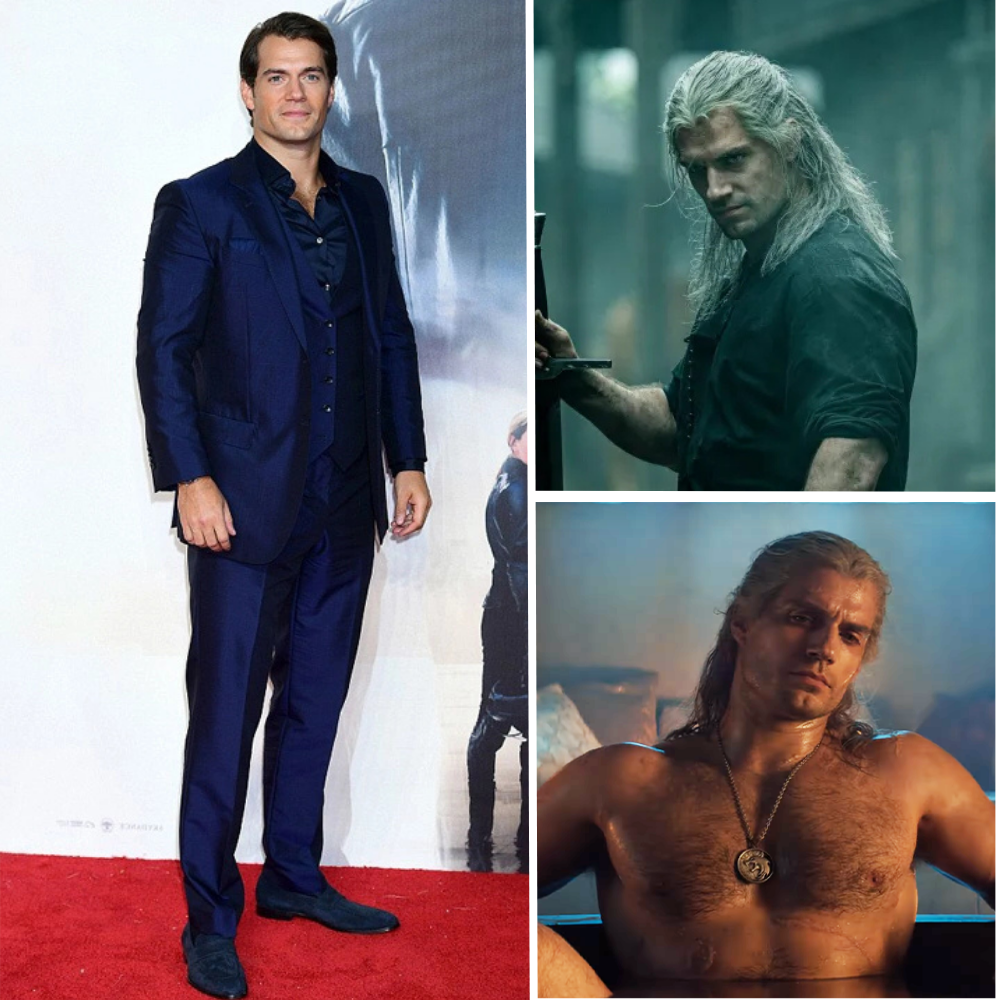
Behind the mesmerizing fantasy world of Netflix’s The Witcher lies a brutal reality of physical sacrifice that few actors endure. Henry Cavill, the British star who brought Geralt of Rivia to life, went to extreme lengths to achieve his chiseled, muscle-defined physique—particularly for the show’s unforgettable shirtless scenes, including the legendary bathtub moment that became an instant cultural phenomenon.
In interviews promoting the series’ first season in 2019, Cavill openly discussed his grueling preparation routine. For every shirtless sequence, he followed a deliberate dehydration protocol over three days to make his skin appear tighter and more vascular, allowing muscles to pop dramatically on camera. The process involved gradually reducing water intake: starting with about 1.5 liters on day one, dropping to half a liter on day two, and consuming no water at all on the day of filming. Combined with last-minute push-ups for a pumped look, this method created the ultra-ripped aesthetic fans adored.
Cavill described the experience as profoundly miserable, admitting on a popular talk show that by the final day, he could literally “smell water nearby.” He emphasized that while dieting and hunger were challenging, dehydration was by far the worst part of his regimen. Despite the discomfort, the actor viewed it as a necessary trade-off to authentically portray the superhuman mutant monster slayer, whose enhanced physiology demands an imposing, battle-ready body.
This technique is not unique to Cavill; it’s a common practice among bodybuilders, fighters, and Hollywood stars preparing for physique-revealing roles. It temporarily sheds subcutaneous water, thinning the skin to accentuate muscle definition without additional fat loss. However, experts widely regard it as unsafe for most people. Severe dehydration can lead to dizziness, fatigue, confusion, irregular heartbeat, kidney strain, and in extreme cases, fainting or organ damage. The human body is roughly 60% water, and prolonged restriction disrupts essential functions like temperature regulation and nutrient transport.
Cavill, known for his dedication—from bulking up massively for Superman to mastering swordplay for The Witcher—has always prioritized health in his long-term training. He works with professional trainers to monitor his condition, incorporating intense weightlifting, cardio, and fasting protocols during production. Yet he acknowledged the dehydration hack’s toll, noting it left him feeling like “the most miserable person on the planet” during shoots.
The iconic bathtub scene, where Geralt soaks after a grueling adventure, exemplifies this sacrifice. It not only showcased Cavill’s impressive build but also sparked endless memes and fan admiration. Though the actor later departed the series after three seasons, his commitment set a high bar, turning a simple moment into one of television’s most talked-about visuals.
Ultimately, Cavill’s story highlights the hidden costs of Hollywood perfection. While his results captivated audiences worldwide, they serve as a cautionary reminder: extreme methods may deliver stunning on-screen moments, but they come with real risks that shouldn’t be emulated without professional oversight.