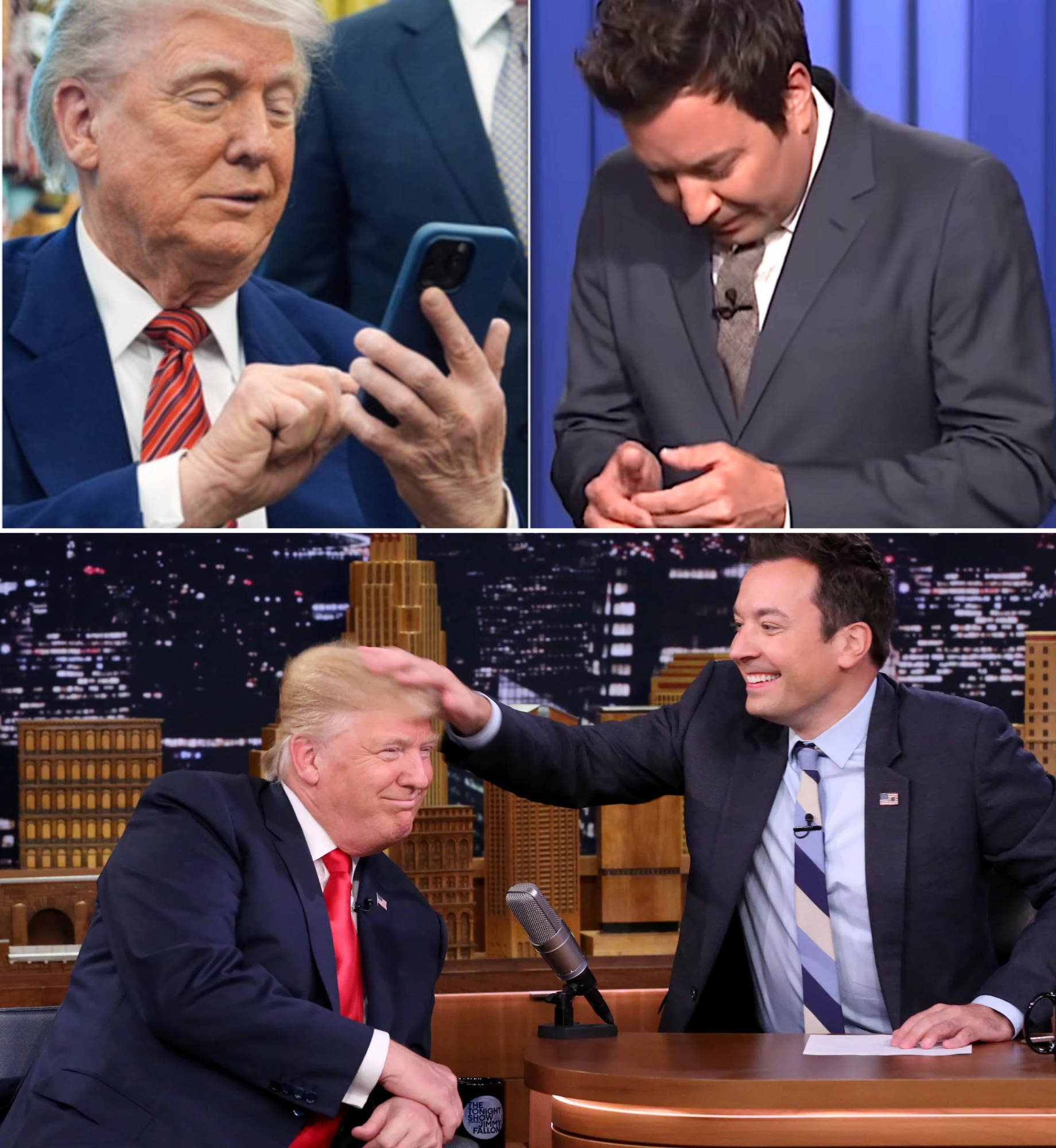
In the ever-evolving landscape of late-night comedy, Jimmy Fallon has once again proven his knack for turning political absurdities into punchy satire. During the December 2, 2025, episode of “The Tonight Show Starring Jimmy Fallon,” the host introduced a new word to the lexicon of Donald Trump’s supposed ailments: “thankles.” This playful jab, delivered in Fallon’s spot-on Trump impression, came amid a monologue skewering the former president’s recent public appearances and his ongoing commentary on national affairs. The bit quickly went viral, amassing millions of views on social media and sparking debates about the intersection of humor and politics in a polarized America.
The segment began innocently enough, with Fallon riffing on Trump’s holiday messages and his characteristic bravado. Mimicking Trump’s distinctive voice and mannerisms, Fallon quipped, “OMG, I’ve got cankle—I got thankles.” He paused for effect, then continued, “That’s a new word. Webster’s Dictionary, Oxford, if you’re listening, ‘thankles’ is a new word.” The audience erupted in laughter, appreciating the clever wordplay that blended “cankles” (a term for thick ankles) with “thankless,” perhaps alluding to Trump’s perceived ingratitude or the thankless nature of his post-presidency endeavors. Fallon didn’t stop there; he wove in references to Trump’s past health rumors, from his infamous fast-food diet to unverified claims about his physical fitness, painting a picture of a man burdened by self-inflicted “ailments.”
This isn’t the first time Fallon has targeted Trump with health-related humor. Over the years, late-night hosts have mined the former president’s medical disclosures—or lack thereof—for comedic gold. In 2018, Trump released a doctor’s note claiming he was in “excellent” health, which Fallon and peers like Stephen Colbert lampooned relentlessly. Fast-forward to 2025, and with Trump eyeing another political comeback amid legal battles and public feuds, the timing feels particularly pointed. Fallon’s “thankles” addition comes on the heels of Trump’s Thanksgiving post, where he expressed grievances rather than gratitude, providing ample fodder for satire.
The response was swift and divided. Supporters of Trump decried the joke as “disrespectful” and “bullying,” echoing the former president’s own criticisms of late-night TV. Trump has long railed against hosts like Fallon, once tweeting in 2018 that Fallon was a “lost soul” after an interview regret. On the flip side, fans praised Fallon’s wit, with social media users coining memes and suggesting expansions to the “Trump ailments dictionary,” including terms like “tweetitis” for his social media rants. Ratings for the episode spiked, underscoring late-night TV’s enduring appeal in dissecting current events.
Beyond the laughs, the bit touches on broader cultural themes. In the U.S., where political satire has roots in shows like “Saturday Night Live,” hosts like Fallon navigate a fine line between entertainment and commentary. Mental health advocates note that while humor can deflate egos, it should avoid stigmatizing real conditions. Trump, at 79 in 2025, has faced speculation about his vitality, especially after a campaign trail that included rallies and court appearances. Fallon, 51, uses his platform to highlight absurdities without delving into malice, a style that has kept “The Tonight Show” competitive against rivals like “The Late Show” and “Jimmy Kimmel Live!”
As 2026 begins, this episode reminds us of comedy’s role in holding power accountable. Whether “thankles” enters the dictionary remains to be seen—Merriam-Webster has added pop culture terms before—but it’s already cemented in late-night lore. Fallon, ever the optimist, ended the segment with a nod to unity: “We all have our ailments, but laughter’s the best medicine.” In a divided nation, that might just be the prescription we need.