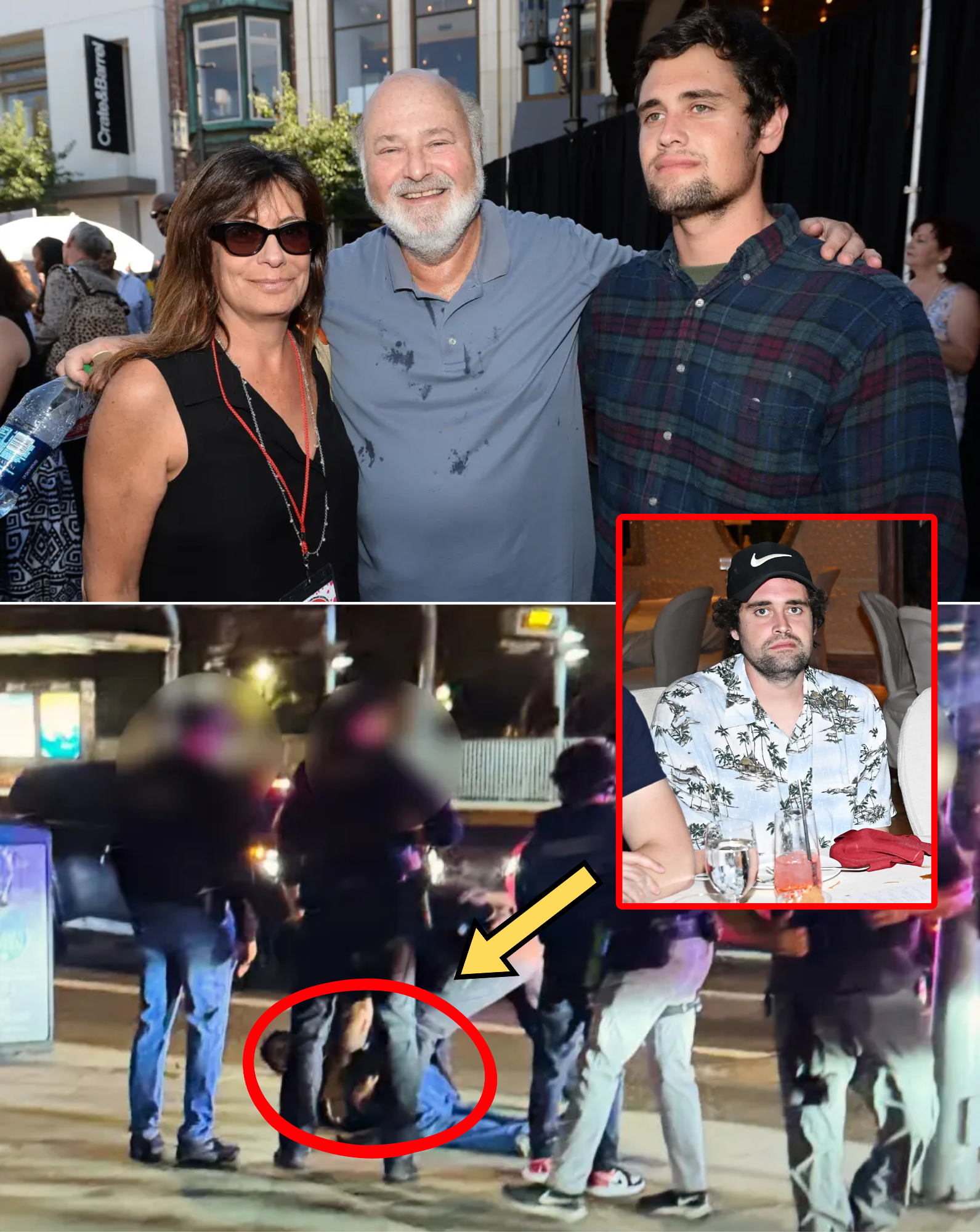
Hollywood’s tight-knit community remains in disbelief as new details surface regarding the arrest of Nick Reiner, the 32-year-old son of renowned filmmaker Rob Reiner and his wife, producer Michele Singer Reiner. Authorities confirmed late Sunday that Nick was taken into custody following the discovery of the couple’s bodies in their Brentwood residence, with investigators pointing to him as the individual responsible for the tragic outcome. The Los Angeles Police Department, in a Monday afternoon briefing, announced that Nick had been booked on suspicion of causing the deaths, though formal charges await review by the district attorney’s office. He is currently held without bail, a decision underscoring the gravity of the preliminary findings.
The sequence of events began unfolding around 3:30 p.m. on Sunday when the couple’s 28-year-old daughter, Romy Reiner, arrived at the family home for a routine visit and made the distressing discovery. Sources familiar with the matter indicate Romy promptly contacted emergency services, providing initial statements that guided responders to focus on internal family dynamics. Paramedics from the Los Angeles Fire Department arrived shortly thereafter, confirming the couple was deceased upon their entry. The scene was secured, and the LAPD’s Robbery-Homicide Division assumed control, initiating a comprehensive sweep for evidence.
By evening, detectives had located Nick and proceeded with his detention. LAPD Chief Jim McDonnell addressed reporters, stating, “Based on the evidence gathered thus far, we believe Nick Reiner is responsible for the deaths of Rob and Michele Reiner.” He emphasized the department’s commitment to a thorough process, noting that the investigation remains active and additional interviews are underway. While specifics on the manner of death have not been publicly detailed to preserve case integrity, officials have classified the incident as a homicide, with no indications of external involvement.
Reports from those close to the investigation suggest that Nick’s behavior following the incident raised additional concerns among responders. Insiders describe actions that appeared inconsistent with typical responses in such situations, prompting further scrutiny. These observations, while not elaborated upon in official releases, have fueled discussions among family acquaintances about underlying tensions that may have contributed to the events. A family spokesperson, speaking on condition of anonymity, acknowledged the complexity of the situation, urging respect for the ongoing legal proceedings.
The Reiner family, long admired for their contributions to entertainment and philanthropy, now faces an unprecedented challenge. Rob, at 78, and Michele, 68, had shared a 36-year marriage built on mutual respect and collaborative endeavors. Their union, which began on the set of the iconic romantic comedy “When Harry Met Sally…,” produced three children: sons Jake and Nick, and daughter Romy. Rob’s elder daughter, Tracy Reiner, from his previous marriage to the late actress and director Penny Marshall, has also been a steadfast presence in family matters.
Nick’s path has been one of notable highs and lows, marked by early creative promise overshadowed by personal struggles. From his teenage years, he navigated challenges related to substance use, entering treatment programs at 15 and experiencing multiple phases of recovery and setbacks. In a 2016 interview, Nick candidly shared experiences of instability, including periods without stable housing in states like Maine, New Jersey, and Texas. These revelations came amid efforts to rebuild, culminating in a joint project with his father: the 2015 film “Being Charlie,” which Nick co-wrote and Rob directed.
The semi-autobiographical drama depicted a young man’s journey through addiction and family reconciliation, earning acclaim for its authenticity. Actors like Nick Robinson portrayed the lead, drawing from Nick’s real-life insights, while veterans such as Cary Elwes bridged to Rob’s earlier works like “The Princess Bride.” Rob often spoke of the film as a bonding experience, highlighting how it fostered open dialogue within the family. Michele, in supporting roles behind the scenes, was credited by both as a pillar of encouragement during production.
Despite these positive steps, sources indicate that recent years brought renewed difficulties. Nick had been residing intermittently with his parents in their Brentwood home, a sprawling property in one of Los Angeles’ most exclusive neighborhoods. Neighbors recall the Reiners as gracious hosts, frequently engaging in community activities and offering assistance to local service workers. One security guard, who patrolled the area, shared memories of the couple’s kindness, including shared conversations and small gestures that built lasting rapport.
Family insiders point to ongoing discussions about support strategies, with Rob advocating for structured interventions through his foundation focused on mental health and youth welfare. Michele, known for her nurturing approach, balanced these efforts with day-to-day involvement. Tensions reportedly arose from differing views on the best path forward, though those familiar stress the couple’s unwavering commitment to their son’s well-being.
The weekend prior to the incident included a social outing at comedian Conan O’Brien’s annual holiday gathering, where witnesses noted a heated exchange between Rob and Nick. Attendees described the interaction as intense, leading the couple to leave early. Nick’s appearance—casual in contrast to the event’s upscale vibe—and limited engagement with guests were also remarked upon. This public moment has since been incorporated into the investigative timeline, providing context to the family’s interactions.
In the wake of Nick’s arrest, the surviving siblings have rallied together. Romy, who has pursued interests in production similar to her mother’s, has taken a lead in coordinating family responses. Jake, a musician based in New York, and Tracy, an occasional actress and mother, have issued joint statements expressing profound sorrow and requesting privacy. “We are devastated by this loss and appreciate the outpouring of support,” read one release, emphasizing unity amid grief.
Tributes from the entertainment industry have poured in, reflecting Rob’s enduring impact. Norman Lear, the creator of “All in the Family” where Rob rose to fame as Michael Stivic, described him as a “force of creativity and compassion.” Fellow directors like Judd Apatow and collaborators from “A Few Good Men” and “The West Wing” echoed sentiments of loss, highlighting Rob’s mentorship and advocacy work. Michele’s contributions, though often behind the camera, were praised for their subtlety and strength.
Rob’s career spanned generations, from satirical masterpieces like “This Is Spinal Tap” to poignant adaptations such as “Stand by Me.” His activism extended beyond film, championing causes like environmental protection and addiction recovery, often informed by personal experiences. The Reiner Foundation, dedicated to children’s health and education, has seen an influx of donations in recent hours, with supporters viewing it as a way to honor the couple’s legacy.
As the case progresses, forensic teams continue analyzing the residence, cataloging items that could clarify the sequence of events. Legal experts anticipate that Nick’s history may factor into proceedings, potentially involving evaluations under California’s mental health frameworks—systems Rob helped promote through congressional testimony on related issues.
Broader conversations have emerged about familial support in high-profile settings. Organizations like the National Alliance on Mental Illness note the amplified pressures of public life, where private struggles can intensify without adequate resources. The Reiners’ story has prompted renewed calls for accessible care, aligning with Rob’s lifelong advocacy.
In Brentwood, a subdued atmosphere prevails. Floral tributes accumulate at the property’s gates, symbols of communal mourning. Locals share anecdotes of the couple’s warmth, from neighborhood events to quiet acts of generosity. One resident recalled Rob’s enthusiasm for local causes, underscoring his approachable nature despite fame.
Hollywood, resilient yet reflective, pauses to remember. Streaming platforms curate retrospectives of Rob’s films, introducing new audiences to classics like “The Princess Bride,” with its themes of love and perseverance. Podcasts dissect his influence, from comedy roots to dramatic explorations.
For the family, immediate priorities include memorial arrangements, kept private to allow healing. Tracy, drawing from her own experiences following Penny Marshall’s passing, has been instrumental in guiding siblings through logistics.
Questions persist about preventive measures and early indicators. Investigators, reviewing communications and witness accounts, aim to construct a complete narrative. Romy’s role in alerting authorities highlights the importance of familial awareness in crises.
The incident resonates as a cautionary tale, prompting self-examination in creative circles. Rob’s works often delved into human frailties—”Misery” examining obsession, “A Few Good Men” probing truth—mirroring life’s complexities.
As prosecutors prepare their review, the community watches closely. Bail considerations remain suspended, reflecting evidentiary weight. Family attorneys stress cooperation while protecting privacy.
Untold elements may emerge, but emphasis stays on remembrance. Rob’s upcoming projects, like a “Spinal Tap” sequel, now carry added poignancy, celebrating his satirical genius.
Michele’s unproduced works, focused on family themes, evoke reflections on legacy. Her partnership with Rob exemplified enduring collaboration in an industry of flux.
This development underscores societal needs for stronger support networks. Advocacy groups report increased engagement, inspired by the visibility.
In the Hollywood Hills, dawn brings contemplation. The Reiners’ narrative, woven into cultural history, urges compassion and action.
Siblings’ social media shares glimpses of happier times—photos from sets, family gatherings—captioned with messages of continuity.
The arrest, while a pivotal update, marks but one chapter. Legacies endure through art, foundations, and memories shared.