The Golf Club Accident That Shattered Prince William’s Skull — and Finally Ended Diana and Charles’ Doomed Marriage
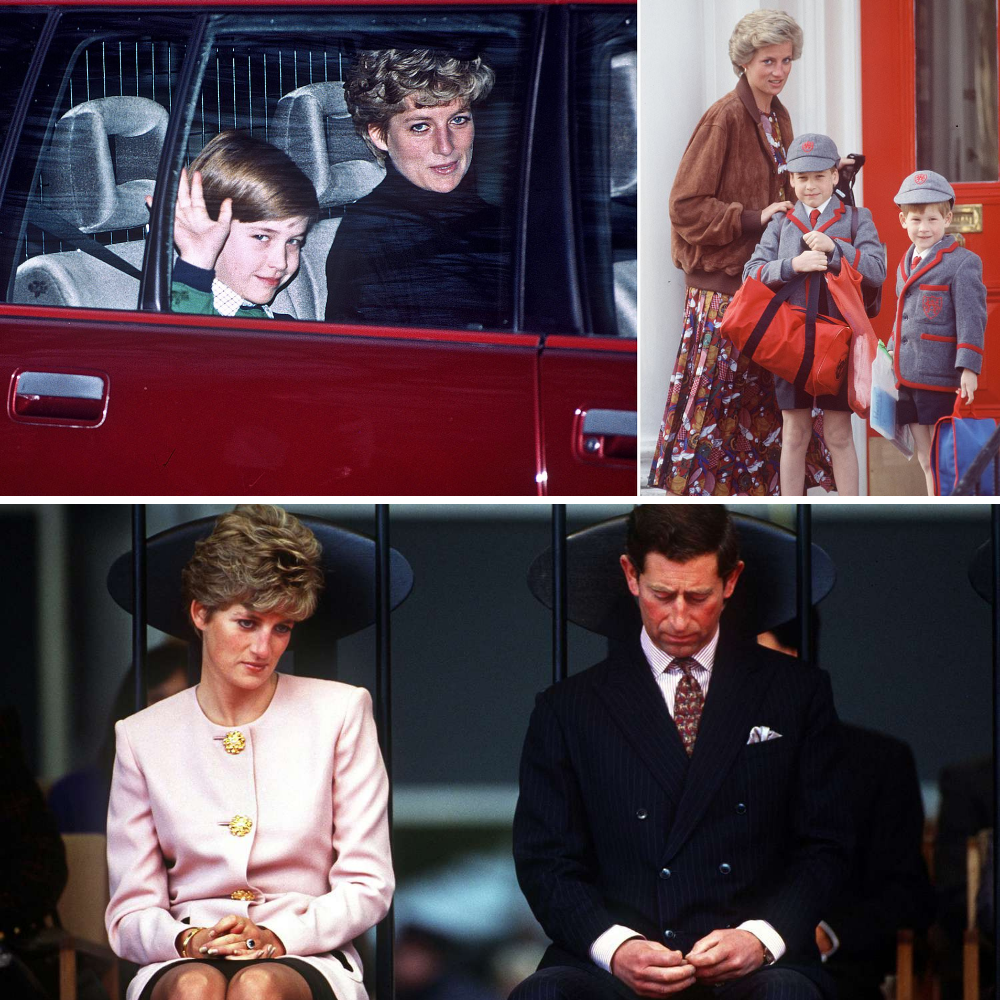
In the early 1990s, the marriage of Prince Charles and Princess Diana was already hanging by a thread. Behind the public facade of royal duty and family unity, years of emotional distance, infidelity rumors, and clashing priorities had eroded whatever remained of their once-fairy-tale union. Yet it was a single, frightening accident involving their young son Prince William in June 1991 that many observers point to as the definitive moment the relationship crossed the point of no return.
On June 3, 1991, eight-year-old William was at Ludgrove School in Berkshire when he and a schoolmate were playing with a golf club. A stray swing delivered a severe blow to the young prince’s head. He was rushed to Royal Berkshire Hospital and later transferred by ambulance to Great Ormond Street Hospital in London, where doctors diagnosed a depressed skull fracture. The injury required immediate surgery lasting around 75 minutes, with risks of brain damage mentioned, however small.
Princess Diana, who had been enjoying lunch with a friend at her favorite Italian restaurant in Knightsbridge, dropped everything and raced to her son’s side. She held William’s hand as he was wheeled into the operating theater, later describing the wait as one of the longest hours of her life. Her deep concern and constant presence at the hospital reflected a mother’s fierce protectiveness and emotional investment.
Prince Charles, traveling from Highgrove, also arrived at the initial hospital. However, once William was deemed stable enough for surgery, Charles chose to leave the facility to attend a scheduled performance of Puccini’s Tosca at the Royal Opera House. He did not return that night, instead proceeding with a royal engagement aboard the royal train. While palace statements later emphasized that he remained in contact with doctors, the decision sparked immediate public outrage. Tabloids ran headlines questioning his priorities as a father, highlighting what many saw as a stark contrast in parental devotion.
The dramatically different reactions of the couple laid bare the fundamental fractures in their relationship. Diana felt little surprise at her husband’s actions, viewing them as confirmation of his difficulty connecting emotionally with the children and his tendency to place duty above family. Close friends noted that she received no emotional support during the crisis. For the public and insiders alike, the incident crystallized what had long been suspected: the marriage was effectively over, even if the formal separation would not be announced until December 1992, followed by a divorce in 1996.
William eventually made a full recovery and was discharged after two nights. He still carries a visible scar on his forehead from the accident — one he has lightheartedly referred to as his “Harry Potter scar” in later years. The episode, however, left a lasting mark on the family dynamics and public perception of the Waleses.
This moment did not occur in isolation. By 1991, rumors of Charles’s renewed relationship with Camilla Parker Bowles and Diana’s own struggles had already fueled intense media scrutiny. The golf club incident simply served as the final, undeniable symbol of incompatibility. It exposed how two people, despite sharing two young sons they both loved, operated in entirely different emotional worlds.
In the years that followed, the couple’s public and private battles intensified, ultimately reshaping the monarchy’s image and influencing how future generations of royals, including William himself, would approach marriage and family life. What began as a childhood accident became, in retrospect, the painful turning point that ended one of the most watched royal unions in modern history.