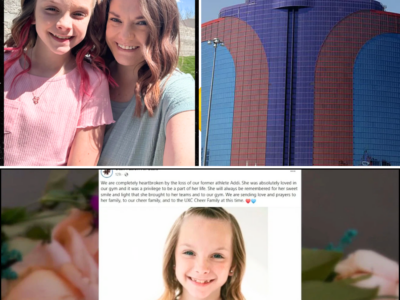
In the vibrant chaos of a college football rivalry weekend, tragedy struck with heartbreaking swiftness. Brianna Marie Aguilera, a bright 19-year-old junior at Texas A&M University from Laredo, Texas, was found lifeless outside the 21 Rio apartment complex in Austin on the early morning of November 29, 2025. Her death, ruled a suicide by the Austin Police Department (APD) on December 4, has ignited a firestorm of grief, doubt, and urgent calls for mental health awareness among young adults. What unfolded in those fateful hours paints a portrait of a young woman battling inner demons amid the highs of tailgate revelry and the lows of personal turmoil.
The evening began like so many for college students: electric anticipation for the Texas A&M versus University of Texas showdown. Aguilera arrived at a tailgate party at the Austin Rugby Club around 4-5 p.m. on Friday, November 28, her spirit buoyed by the Aggies’ energy. But as the night wore on, alcohol took its toll. By 10 p.m., she had become severely intoxicated, prompting organizers to ask her to leave. Disoriented, Aguilera stumbled into a nearby wooded area, where she lost her phone—a small mishap that would later prove pivotal.
Footage from the 21 Rio Apartments captured her staggering arrival at the 17th-floor unit around 11 p.m., seeking refuge with friends hosting an after-party. The gathering was lively, a post-game haven for out-of-town fans. Surveillance showed a boisterous crowd, but by 12:30 a.m., most had departed, leaving Aguilera alone with three other young women. Earlier that evening, she had borrowed a friend’s phone to call her out-of-town boyfriend, a conversation that turned heated. Witnesses reported hearing the argument rage for about two minutes, from 12:43 to 12:44 a.m. Mere moments later, at around 12:46 a.m., a bystander heard a sickening thud and dialed 911. Officers arrived to find Aguilera on the ground, her body bearing the unmistakable trauma of a high fall. She was pronounced dead at 12:57 a.m.
APD’s investigation, detailed in a December 4 press conference, pieced together a timeline laced with signs of distress. Upon recovering her lost phone, detectives uncovered a deleted digital suicide note dated November 25, addressed to specific loved ones. Friends recounted Aguilera’s prior suicidal ideation, dating back to October, including self-harming behaviors exhibited that very night. A text to another confidante hinted at overwhelming thoughts of ending it all. “Brianna had made suicidal comments previously to friends,” Detective Robert Marshall explained, emphasizing that the evidence pointed unequivocally to suicide, not foul play. Toxicology reports confirmed heavy intoxication, which may have amplified her vulnerability.
Yet, amid the official ruling, Aguilera’s family clings to skepticism, their anguish fueling a quest for truth. Her mother, Stephanie Rodriguez, told media outlets she couldn’t fathom her daughter’s death as anything but suspicious, rejecting the “suicidal or accidental” initial assessment. High-profile attorneys Tony Buzbee and Gamez Law Firm, retained by the family, held a news conference on December 5, decrying APD’s handling as “creating more questions than answers.” A GoFundMe page, raising over $50,000 for funeral costs, echoes their shattered hearts: “Brianna was pursuing her dream of becoming a lawyer at The Bush School of Government & Public Service. Our hearts are shattered.”
This heartbreaking case underscores a silent epidemic on campuses nationwide. According to the National Alliance on Mental Illness, suicide claims one in five college students’ lives, often masked by the pressures of academics, relationships, and social expectations. Aguilera’s story—vibrant, ambitious, yet privately tormented—serves as a stark reminder. Experts advocate for expanded counseling access, peer intervention training, and stigma-free dialogues. As Austin Police Chief Nathan Sexton poignantly stated, “My heart aches for Brianna’s parents.” In the wake of this loss, communities rally: vigils at Texas A&M honor her memory, while calls to the 988 Suicide & Crisis Lifeline surge.
Brianna Aguilera’s final, staggering steps with her ex on a dimly lit path near the complex symbolize not just a night’s end, but a life’s unraveling. As investigations close and questions linger, her legacy demands action—a safer space for the hidden struggles of youth. In a world that celebrates resilience, may her story illuminate the shadows.