From Shamrocks to State Banquets: How Princess Catherine Mastered the Art of Green Fashion Diplomacy
In a world where every royal appearance is scrutinized, few do subtle messaging better than Catherine, Princess of Wales. Over the past few weeks, she has turned the color green into a powerful tool of soft diplomacy, weaving tradition, national pride, and international respect into her wardrobe choices with effortless elegance.
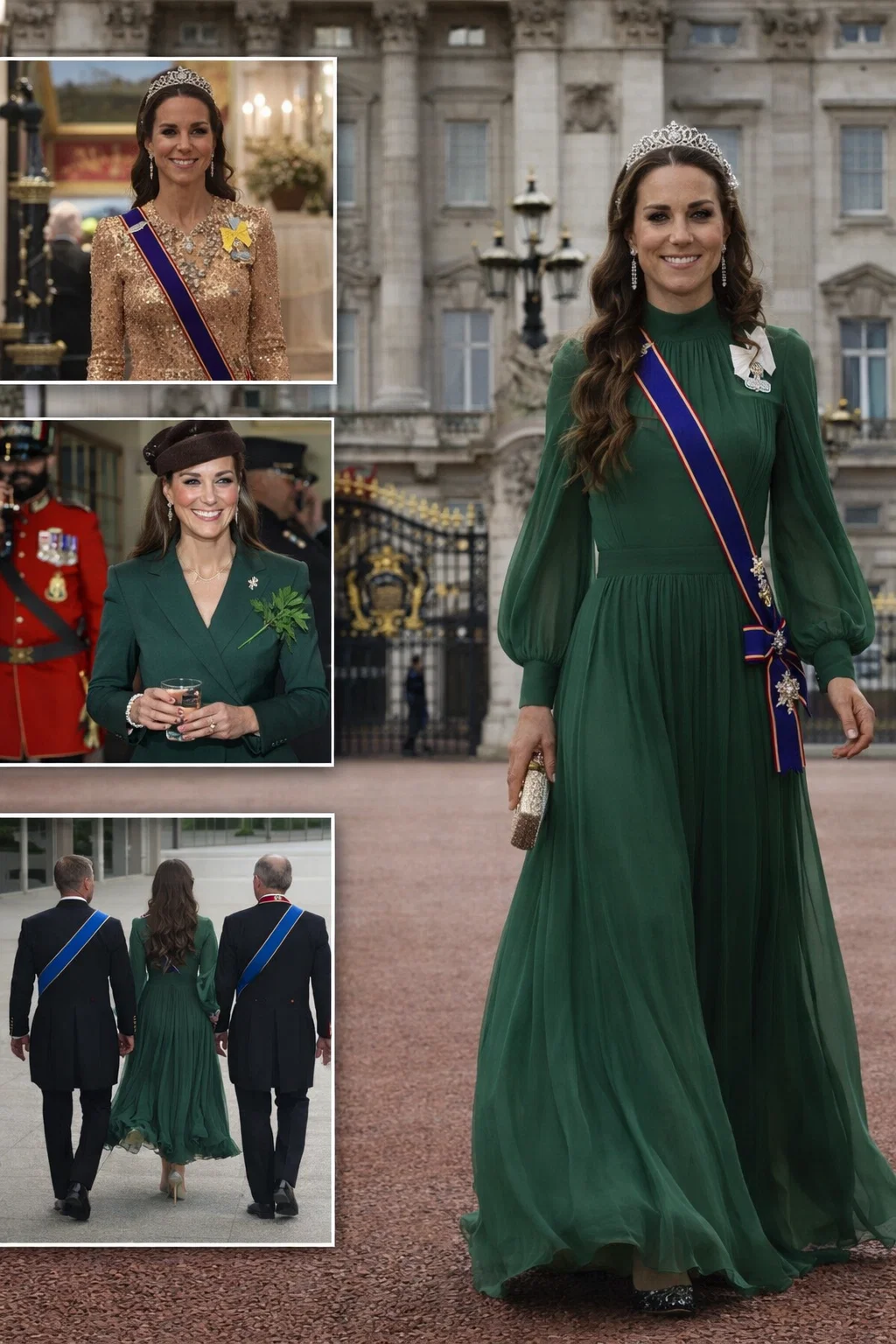
It began on St. Patrick’s Day, when Catherine stepped out as Colonel of the Irish Guards. Dressed head-to-toe in a striking emerald green Alexander McQueen coat, paired with a matching fascinator and black accents, she presented traditional sprigs of shamrock to the officers and the regiment’s Irish Wolfhound mascot. The look was both classic and intentional. Green is the color most associated with Ireland and the holiday honoring its patron saint, and Catherine’s monochromatic ensemble perfectly honored her role while radiating warmth and authority. The choice wasn’t random—it reinforced her deep connection to the regiment she has led since 2022 and paid homage to Irish heritage in a visually harmonious way.
Just days later, the Princess elevated the same shade to an even grander stage. During the state visit of Nigerian President Bola Ahmed Tinubu and First Lady Oluremi Tinubu to the United Kingdom, Catherine appeared at the glamorous state banquet held at Windsor Castle. She chose a sophisticated emerald green gown by designer Andrew Gn, featuring a high neckline, dramatic billowing sleeves, and a cinched waist that exuded modern regal glamour. Paired with Queen Mary’s Lover’s Knot Tiara—a favorite once worn by Princess Diana—the ensemble was breathtaking.
Many observers noted the thoughtful symbolism: the rich green directly echoed the dominant color of Nigeria’s national flag, which consists of green and white vertical bands. In diplomatic circles, this is known as “flag dressing”—a silent yet eloquent way for royals to show respect and cultural awareness to visiting dignitaries without uttering a single word. By incorporating the guest nation’s colors so prominently, Catherine signaled Britain’s warmth toward Nigeria and highlighted the importance of the bilateral relationship. It was a modern echo of the late Queen Elizabeth II’s own sartorial diplomacy, updated with Catherine’s signature polished style.
What makes Catherine’s approach so masterful is its consistency and layers of meaning. Green is not just a color for her; it bridges personal roles and public duties. On St. Patrick’s Day, it celebrated Irish military tradition and her position within the British Army’s regimental family. At the Nigerian state banquet, it extended a hand of friendship across continents, acknowledging Nigeria’s vibrant culture and growing global significance. In both instances, the shade projected confidence, approachability, and sophistication.
Fashion experts often describe royal dressing as a form of nonverbal communication, and Catherine has clearly honed this skill to perfection. Her choices avoid overt statements, instead inviting admiration and interpretation. Whether distributing shamrocks in a tailored green coat or shimmering in an evening gown under the chandeliers of Windsor Castle, she demonstrates that thoughtful attire can strengthen alliances, honor traditions, and captivate audiences worldwide.
In an era of constant media attention, Catherine’s green thread tells a quiet but compelling story: diplomacy isn’t only spoken in treaties or summits—it can also be worn with grace, intention, and impeccable taste. Through these carefully curated looks, the Princess of Wales continues to redefine what it means to represent the monarchy on both national and international stages.