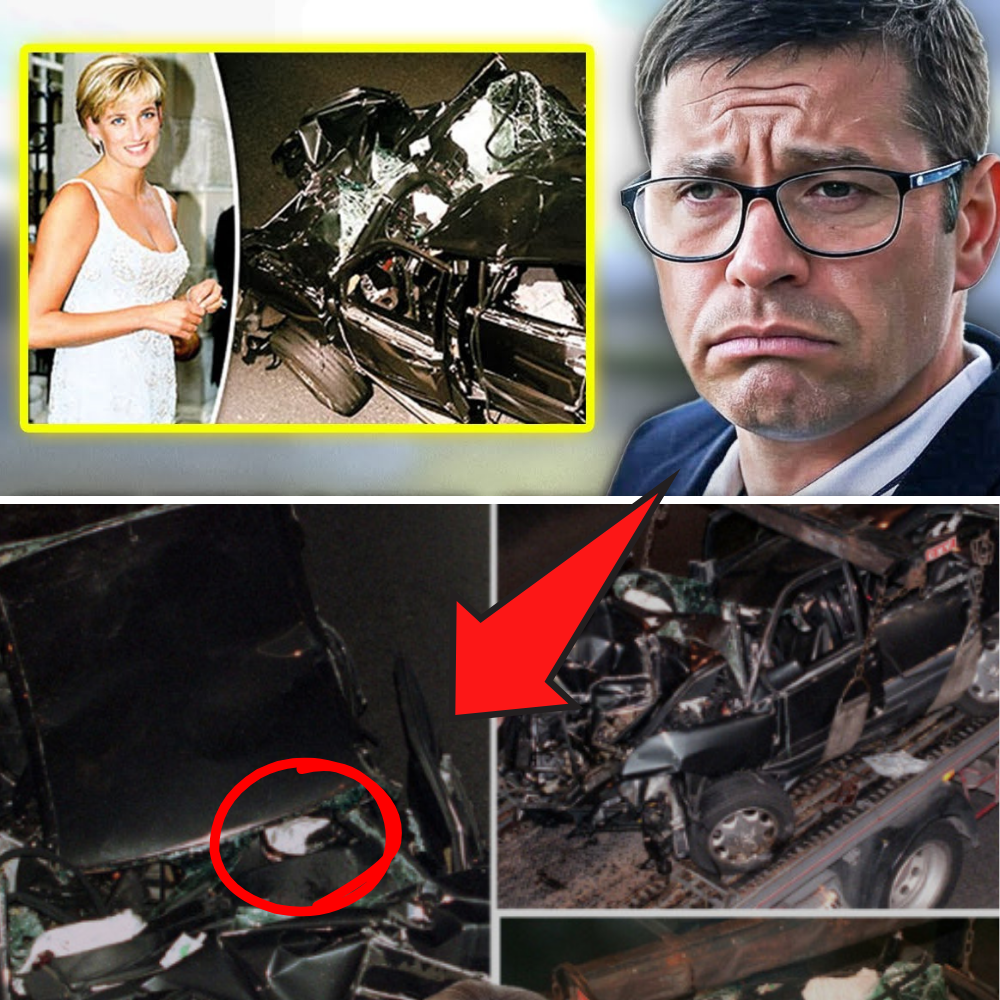
Nearly three decades after the world-shocking car crash that claimed the life of Princess Diana, the emergency doctor who was first on the scene has shared haunting details of those chaotic minutes in Paris’s Pont de l’Alma tunnel. Dr. Frederic Mailliez, an off-duty physician driving home from a party on August 31, 1997, stumbled upon the devastating wreckage and became one of the last people to try to save the “People’s Princess.”
Mailliez described arriving at the smoking Mercedes, severely damaged after hitting a pillar at high speed. He opened the door to find four victims inside: Diana crumpled on the floor in the back seat, unconscious and struggling to breathe, alongside her companion Dodi Fayed, driver Henri Paul, and bodyguard Trevor Rees-Jones. At the time, Mailliez did not recognize the gravely injured woman as the famous royal. “I know it’s surprising, but I didn’t recognize Princess Diana,” he later reflected. “My focus was entirely on saving her life.”
Acting swiftly with the limited tools in his car, Mailliez provided oxygen through a respiratory bag, which helped her regain slight energy and stabilize her breathing temporarily. He spoke to her in English after someone mentioned the victims spoke the language, reassuring her: “I’m a doctor, and I’ve called the ambulance.” Though she was unresponsive and unable to speak, he tried to comfort her amid the flashing cameras from gathered paparazzi. Mailliez noted that the photographers did not interfere with his efforts.
Emergency services arrived soon after, and professional firefighters and paramedics took over, carefully extracting Diana from the mangled vehicle. She was rushed to Pitié-Salpêtrière Hospital, where surgeons battled for hours to repair severe internal injuries, including a torn pulmonary vein causing massive bleeding. Despite their efforts, including open-heart massage, Diana was pronounced dead in the early hours of the morning at age 36.
The crash occurred as the Mercedes sped through Paris to evade pursuing paparazzi. Investigations confirmed the driver, Henri Paul, was intoxicated and driving recklessly, contributing to the tragedy. Only Rees-Jones survived, thanks in part to wearing a seatbelt – a factor experts say could have changed Diana’s outcome.
Mailliez has carried the weight of that night ever since, feeling a profound sense of responsibility for her final moments. “My name will always be attached to this tragic night,” he said. He questioned his actions repeatedly but confirmed with medical experts that he did everything possible under the circumstances. The event left an indelible mark, highlighting the fragility of life even for global icons.
Diana’s death sparked worldwide mourning and scrutiny of media pursuit, royal family dynamics, and emergency response protocols. Her legacy endures as a humanitarian, fashion icon, and symbol of compassion, touching generations who never knew her personally.