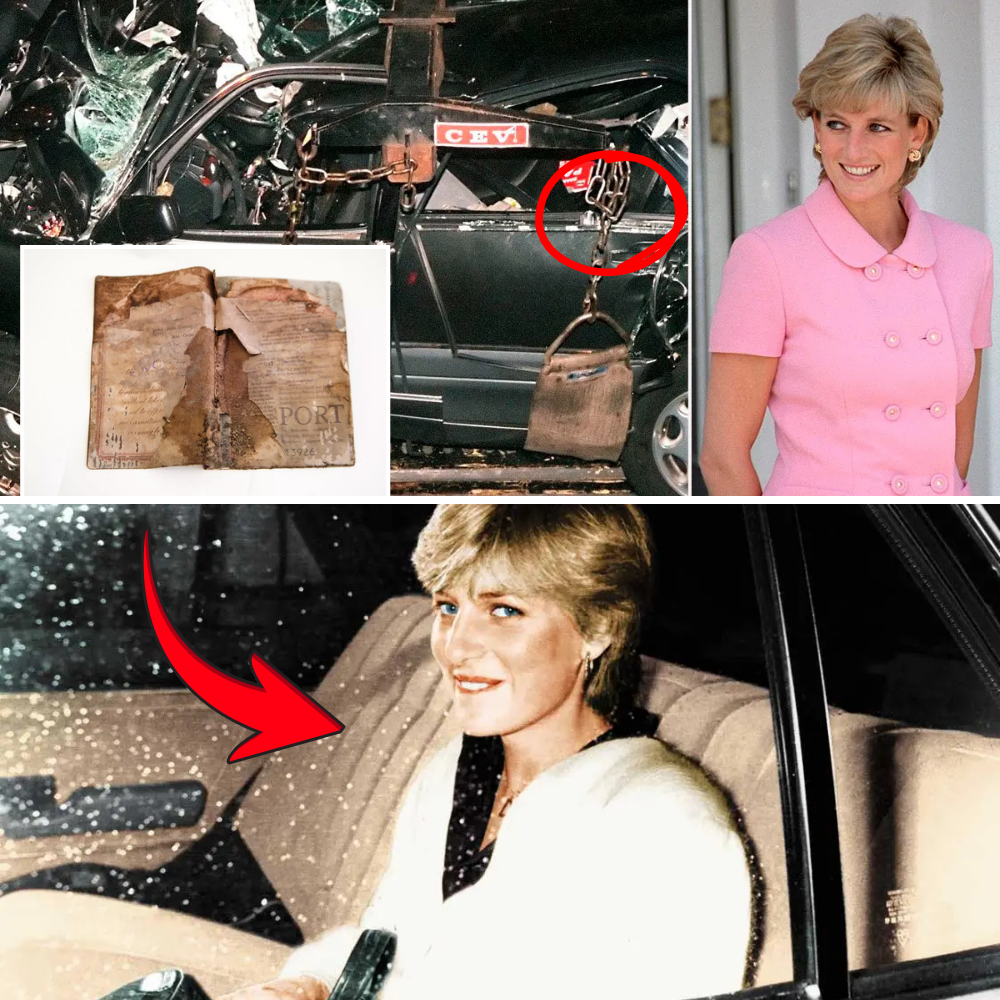
Nearly three decades after the tragic Paris tunnel crash on August 31, 1997, that claimed the life of Princess Diana, a viral narrative continues to circulate online, alleging her haunting final words were a whispered plea: “Henri, slow down,” as she clutched her seatbelt in the backseat of the Mercedes S280. According to this sensational story, the vehicle’s event data recorder (EDR) – often called a “black box” – captured a sudden braking attempt moments later, only for the crucial final seconds of data to be inexplicably marked as “unreadable” or corrupted.
This dramatic recounting paints a picture of terror in the car’s interior: Diana, alongside Dodi Fayed, sensing impending doom as driver Henri Paul sped through the Pont de l’Alma tunnel, evading paparazzi. The claim suggests a desperate attempt to slow the vehicle, hinting at possible driver error, mechanical sabotage, or something more sinister.
However, this story is entirely unsubstantiated and rooted in misinformation. Official investigations by French authorities in 1999 and the extensive British inquest concluding in 2008 found no evidence of any audio recording inside the Mercedes, nor any captured dialogue from the occupants. The last words attributed to Diana actually came after the crash: firefighter Xavier Gourmelon, one of the first responders, reported that she murmured, “My God, what’s happened?” as he tended to her at the scene. No witnesses or survivors – including bodyguard Trevor Rees-Jones, the sole survivor – ever reported hearing Diana say “Henri, slow down” before impact.
Regarding the “black box,” the 1995-1997 Mercedes-Benz S280 involved in the crash was not equipped with a modern Event Data Recorder capable of logging detailed speed, braking, or audio data in the way described. EDR technology was in its infancy during the mid-1990s and not standard in most vehicles until much later, mandated in the U.S. only after 2012. Crash reconstructions relied on physical evidence, witness statements, tire marks, and vehicle damage analysis, estimating the Mercedes struck the pillar at around 65-70 mph after losing control – likely due to high speed, Henri Paul’s intoxication (blood alcohol three times the legal limit, plus prescription drugs), and possible contact with a white Fiat Uno that was never fully traced.
No official report mentions corrupted or unreadable final data seconds because no such recorder existed in that model. Conspiracy theories have long swirled around the crash – from claims of MI6 involvement to tampered brakes or flashing lights blinding the driver – but both inquiries ruled it a tragic accident caused by gross negligence in driving, exacerbated by paparazzi pursuit.
Yet, these viral posts persist, blending half-truths with fiction to evoke emotion and curiosity. They exploit Diana’s enduring legacy as the “People’s Princess,” tapping into public fascination with what-ifs and cover-ups. In reality, the crash’s causes are well-documented: excessive speed in an unfamiliar tunnel, an impaired driver, and no seatbelts for rear passengers except Rees-Jones.
As we reflect on Diana’s life and untimely death, separating fact from sensationalism honors her memory. The true tragedy lies in the preventable loss, not in fabricated final whispers or mysterious data files.