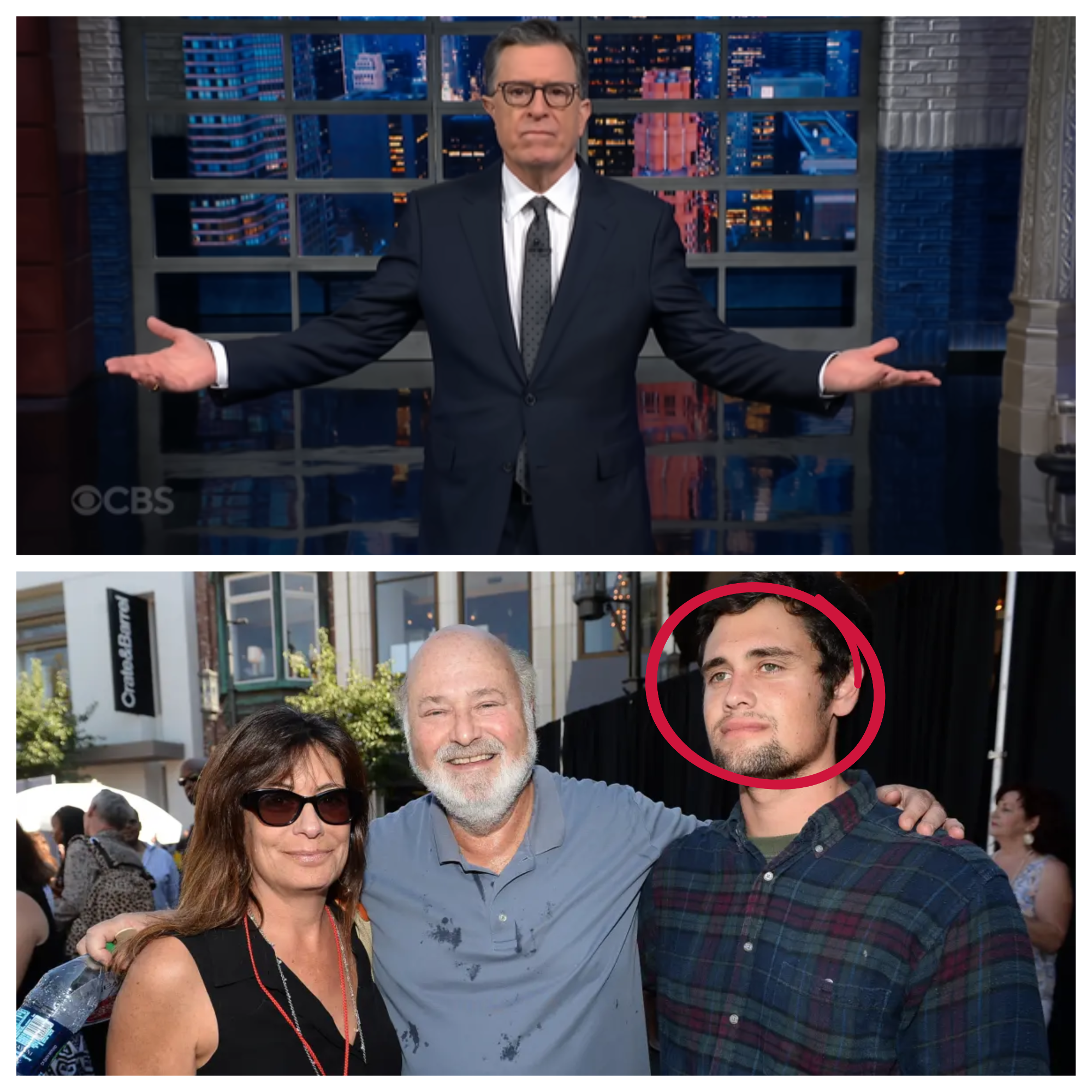
In a gripping moment that stripped away his trademark satire, Stephen Colbert delivered a searing eulogy on December 15, 2025, for slain Hollywood icons Rob and Michele Reiner, transforming his “Late Show” stage into a platform for unfiltered grief and outrage. Gone was the comedian’s playful banter; in its place stood a man channeling raw emotion, refusing to let the tragedy be diluted by platitudes. Colbert’s words painted the Reiners not as mere casualties of a random act, but as devoted parents ensnared in a familial nightmare that culminated in their brutal deaths at the hands of their own son, Nick.
The horror unfolded on December 14, 2025, when Rob Reiner, 78, the legendary director of timeless films like “This Is Spinal Tap,” “Stand by Me,” and “The American President,” and his wife Michele Singer Reiner, 70, a talented photographer and producer, were discovered lifeless in their Brentwood home. Autopsies revealed multiple sharp force injuries, with death occurring minutes after the attacks. Authorities swiftly arrested their 32-year-old son, Nick Reiner, charging him with two counts of first-degree murder. Reports indicate the stabbings happened in the early morning hours, turning a place of family solace into a crime scene.
Nick, the youngest of the Reiners’ three children, had reportedly battled severe mental health issues, including schizophrenia, for years. Sources suggest his medications were adjusted shortly before the incident, potentially exacerbating a psychotic episode. The Reiners had poured resources into his care, financing his life and attempting interventions, but the situation spiraled into violence. This wasn’t an isolated struggle; it echoed broader conversations about families grappling with mental illness, inadequate support systems, and the risks of untreated conditions. Rob and Michele, known for their philanthropy and close-knit family, had fought tirelessly to “save” Nick from his demons, a battle Colbert described as one of “devotion against darkness.”
Colbert, a longtime friend of the Reiners, didn’t mince words. He dismissed notions of “fate” or “destiny,” insisting the couple’s deaths were a preventable tragedy born from their unwavering love. “They were warriors on the frontlines of love,” he proclaimed, his voice cracking with emotion. He criticized media attempts to frame the story as a tale of “healing” for the survivor, urging remembrance of the parents’ sacrifices. Colbert’s tribute extended beyond personal loss, touching on Hollywood’s tendency to gloss over harsh realities. He vowed to honor their “brilliance” by confronting the “darkness that tried—and failed—to snuff it out,” a nod to Rob’s legacy of storytelling that championed truth and humanity.
Rob Reiner’s career spanned decades, from his breakout as Meathead on “All in the Family” to directing Oscar-nominated gems that blended humor with heart. Michele, his partner since 1989, collaborated on projects and raised their family with quiet strength. Their deaths sent shockwaves through the industry, prompting tributes from peers like Martin Scorsese and Billy Crystal, who lauded Rob’s impact on cinema. Yet, Colbert’s address stood out for its unflinching honesty, blending sorrow with a call to action on mental health awareness.
As investigations continue, with Nick held without bail, the case highlights the intersection of fame, family, and fragility. Colbert’s refusal to “stand quietly” ensures the Reiners’ story isn’t softened into oblivion but remembered as a cautionary epic of love’s perilous edge. In a world quick to move on, his words demand we shout the truth.