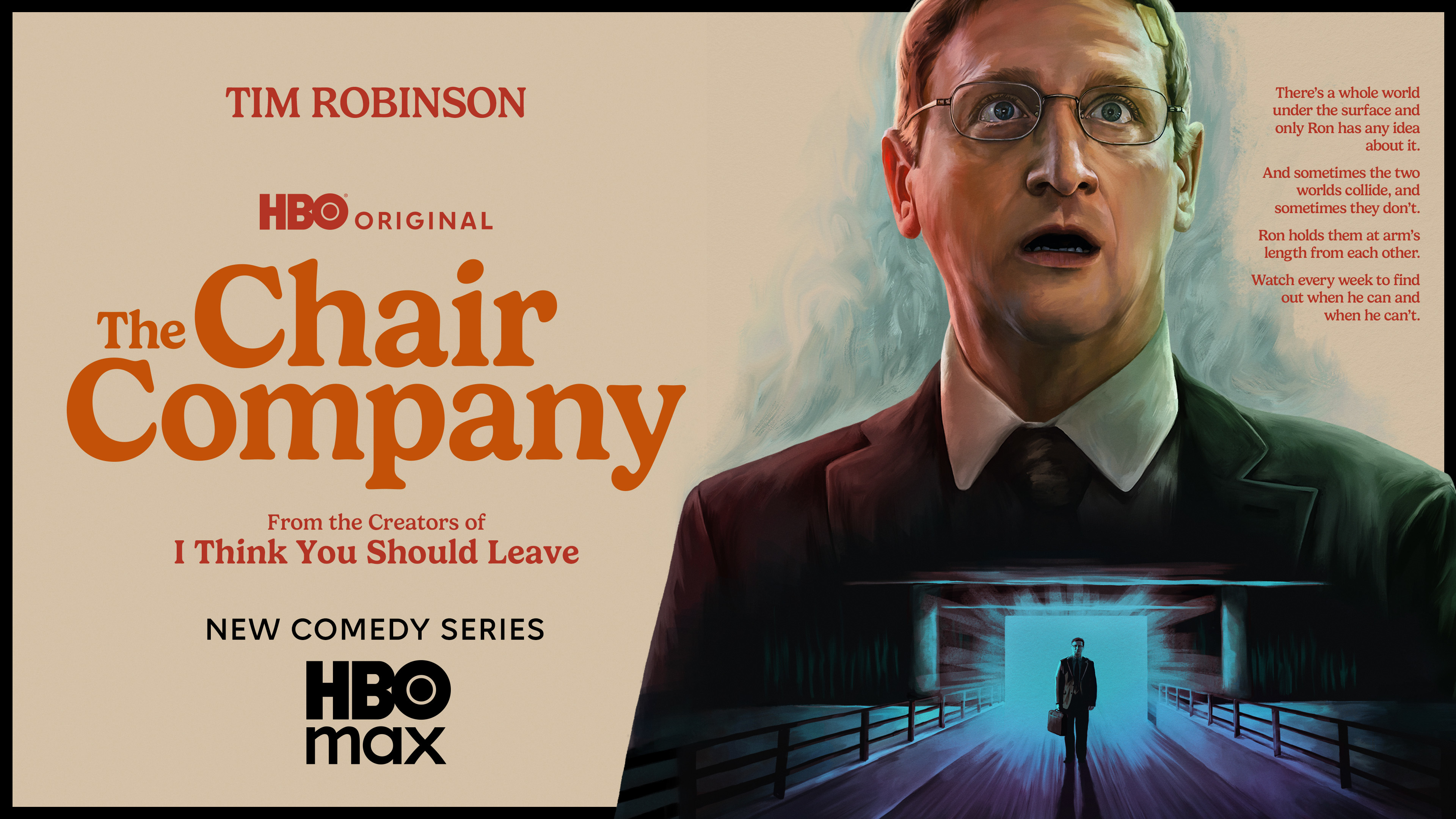
In the fluorescent-lit corridors of corporate America, where watercooler banter and PowerPoint slides reign supreme, a single moment of humiliation can unravel a man—or, in the case of The Chair Company, propel him into a labyrinth of paranoia so absurd it’s impossible to look away. Enter William Ronald Trosper, or “Ron,” played with manic brilliance by Tim Robinson, the comedic genius behind I Think You Should Leave. HBO’s latest gamble, The Chair Company, which premiered on October 12, 2025, and barrels toward its finale on November 30, isn’t just a show—it’s a fever dream that marries cringe-inducing comedy with the pulse-pounding dread of a 1970s paranoid thriller. Picture Chinatown scripted by the guy who gave us “Sloppy Steaks” and “Dan Flashes,” and you’re halfway there. With a second season already greenlit, this eight-episode odyssey has hooked 1.4 million viewers in its debut weekend, marking HBO’s biggest comedy launch in over five years. But what makes this bizarre blend of office rage, conspiracy spirals, and Tim Robinson’s signature awkward outbursts so irresistible? Buckle up—this is the story of The Chair Company, a show that’s as unsettling as it is hilarious, redefining what a comedy can be in an age of fractured trust and corporate absurdity.
At its core, The Chair Company is a mystery wrapped in a joke that refuses to wink. Ron Trosper, a middle-aged project manager at Fisher Robay, a property development firm in Canton, Ohio, is riding high on a rare promotion. He’s tasked with spearheading a new shopping mall, a career-defining moment that’s as much about personal redemption as professional clout. Ron’s life isn’t glamorous—he’s got a loving but exasperated wife, Barb (Lake Bell), a teenage daughter, Natalie (Sophia Lillis), a son, Seth (Will Price), and a car he doesn’t have to share with Barb’s flower business. He’s the everyman who’s clawed his way to “pretty okay,” the kind of guy who polishes his glasses with his tie and dreams of being taken seriously. But on the day of his big presentation, disaster strikes in the form of a defective office chair. As he sits to bask in his speech’s applause, the seat collapses beneath him, a slapstick catastrophe that sends colleagues into stifled snickers and Ron into a tailspin of mortification. What follows isn’t an apology tour or a quiet recovery—it’s a crusade against Tecca, the chair’s manufacturer, that spirals into a conspiracy so vast and surreal it threatens to upend Ron’s entire reality.

This isn’t your standard workplace sitcom. Created by Robinson and his longtime collaborator Zach Kanin, The Chair Company takes the DNA of their Netflix hit I Think You Should Leave—where characters double down on embarrassment to catastrophic ends—and stretches it across a serialized narrative that feels like The Parallax View run through a shredder of absurdity. The show’s genius lies in its refusal to play by genre rules. One moment, you’re wincing at Ron’s hostile outbursts in a customer service call (“This is ssssstunning!” he barks at a waiter, over-emoting about a salad’s presentation); the next, you’re gripped by the eerie possibility that Tecca’s shoddy chairs are just the tip of a sinister iceberg. Is Ron uncovering a corporate cabal that controls the furniture industry, or is he a delusional desk jockey chasing shadows in his own head? The series dangles both possibilities, blending cringe comedy with psychological thriller elements so seamlessly that you’re laughing, squirming, and questioning all at once.
The inciting incident—Ron’s chair collapse—is a masterclass in Robinson’s comedic alchemy. Picture him, hunched in a “crap suit” (as The Guardian aptly described), squinting through smudged glasses, delivering a speech with the earnestness of a kid at a spelling bee. The room claps, he beams, he sits—and then, crack. The chair buckles, dumping him to the floor in a heap of polyester and wounded pride. It’s the kind of moment Robinson was born to play: his face a kaleidoscope of shock, rage, and desperate denial, his voice climbing octaves as he scrambles to salvage dignity. But instead of brushing it off, Ron fixates. He tracks down Tecca’s customer service line, demanding answers with the fervor of a detective on a cold case. What he finds isn’t a quick refund but a rabbit hole of cryptic responses, shady subsidiaries, and a growing suspicion that Tecca’s chairs are a front for something far bigger. “I swear I have the worst pillow in town!” he bellows in a throwaway scene, thrashing his bedding in a fit of domestic fury—a line that captures his spiraling headspace and the show’s knack for finding humor in life’s mundane failures.
The show’s aesthetic, helmed by director Andrew DeYoung (Friendship), amplifies this unease. DeYoung shoots with the moody dread of a conspiracy flick—static shots of Ron staring at his computer, close-ups of his sweat-slicked face, fluorescent lights casting sterile glows over cubicle mazes. It’s All the President’s Men if Woodward and Bernstein were obsessed with ergonomic lumbar support. Yet the cinematography never feels like a gimmick; it’s a deliberate contrast to the chaos of Robinson’s performance, grounding the absurdity in a world that feels unnervingly real. Critics have lauded this balance: Collider calls it “one of the strangest comedies you’ll watch this year,” while The Hollywood Reporter praises its “uncomfortable, unsettling, and very funny” vibe. The score, a blend of ominous synths and jazzy flourishes, underscores the paranoia, turning mundane office scenes into pulse-quickening standoffs.
Ron’s descent isn’t a solo act. The ensemble—stacked with talent like Lake Bell’s sardonic Barb, Sophia Lillis’ eye-rolling Natalie, and Will Price’s earnest Seth—grounds his unhinged quest with human stakes. Bell, in particular, shines as the wife who loves Ron but is exhausted by his antics, her deadpan delivery (“You’re calling about the chair again?”) a perfect foil to his mania. Joseph Tudisco’s Mike Santini, a coworker with his own quirks, becomes an unlikely ally in Ron’s investigation, their road-trip episode in “I Won. Zoom In.”—described by The AV Club as a “virtuosic” high point—plunging into surreal chaos involving a method-acting Scrooge and a bar full of coked-up locals. Lou Diamond Phillips pops up as Jeff Levjman, a shadowy figure whose cryptic warnings only fuel Ron’s obsession. The cast’s ability to match Robinson’s intensity without stealing his spotlight is a testament to the show’s tightrope walk: it’s a Tim Robinson vehicle, but it’s not just about him.
What sets The Chair Company apart from Robinson’s sketch-driven past (I Think You Should Leave, Detroiters) is its ambition to weave a season-long arc without sacrificing the manic energy of a five-minute skit. The conspiracy plot—revolving around Tecca’s alleged corruption in chair manufacturing and distribution—is deliberately preposterous, yet the show’s intimate photography and immersive mood make you invest in it, even as you laugh at its lunacy. Ron’s outbursts, like his refusal to let go of a botched customer service call or his over-the-top reaction to a restaurant’s plating (“This is ssssstunning!!”), carry a darker edge here, reflecting what The Hollywood Reporter calls “the fragility of masculinity and the frustration of failing to communicate.” He’s not just a buffoon; he’s a man teetering on the brink, desperate for respect in a world that feels rigged against him.
Critics have been effusive, with the show boasting a perfect 100% on Rotten Tomatoes from 21 reviews and a 73% audience score. AwardsWatch dubbed it “one of the best shows of the year,” TV Guide hailed it as “the funniest show of the year,” and Soap Central called it “the most daring and harmonious of all Robinson’s creations.” But not everyone’s on board. Time’s Judy Berman argued the mystery subplot lacks suspense, suggesting Robinson’s style “may not be best suited to longform narrative,” while The New York Times’ James Poniewozik noted it often feels like “extended I Think You Should Leave sketches.” The Los Angeles Times cautioned that Robinson’s chaos requires “a certain stamina” to endure, his antics sometimes “drowning out the human inside.” Yet even detractors admit the show’s pull: Poniewozik confessed to being “drawn in, wondering what strange, sleazy alley this shaggy dog would lead me down next.”
The show’s cultural resonance is undeniable. In an era of “enshittification”—where customer service fails, subscriptions multiply, and tech glitches haunt daily life—Ron’s war against Tecca feels like a funhouse mirror of modern frustration. Rolling Stone nailed it: the show captures “the increasingly common horrors of being forced into another lousy subscription service or bombarded with spam messages.” A scene where Ron grapples with a scam email sent from his own hacked account to his CEO—demanding a raise, no less—hits painfully close to home, blending slapstick with the dread of digital betrayal. It’s no coincidence that The Chair Company premiered just as HBO Max hiked its prices, a meta twist that underscores the show’s timeliness. Ron’s paranoia mirrors our own: are we all just one bad chair, one rogue algorithm, away from unraveling?
The series’ narrative gambit—blending high surrealism with human stakes—pays off in episodes like the fifth, “I Won. Zoom In.,” where Ron and Mike’s road trip descends into a psychedelic whirl of bar fights, concussions, and a regional-theater actor obsessed with playing Scrooge year-round. It’s Barry’s “Ronny/Lily” meets Twin Peaks’ backwoods weirdness, a testament to Robinson and Kanin’s ability to stretch a premise without snapping it. Fans on platforms like ResetEra and IMDb rave about the show’s polarizing nature: “If you like Tim Robinson, you’ll love this. If you don’t, you’ll hate it,” one viewer wrote, while another called it “possibly the hardest I’ve laughed at any of his shows.” The podcast The Chair Company Files, hosted by Michael Wolf and Carlos Rodela, dissects each episode with fanboy glee, likening it to Severance and Office Space for its corporate uncanny.
With Season 2 confirmed before the finale—a bold move given the show’s miniseries vibe—the stakes are sky-high. Will Ron’s Tecca obsession deepen, or will he stumble into a new corporate quagmire? The show’s renewal, announced November 20, 2025, sparked fan theories: perhaps a rival company (tables, anyone?) or a pivot to Ron’s family dynamics, with Barb and the kids taking center stage. Collider speculates the conspiracy could “compound,” while The AV Club wonders if Ron’s two concussions (one from a pipe, another from an iPad-wielding drug dealer) hint at brain-damage-driven delusions. Whatever the path, Robinson and Kanin have a playground vast enough to keep the chaos coming.
The Chair Company isn’t for everyone. It demands a taste for the absurd, a tolerance for squirming through Ron’s self-inflicted wounds, and a willingness to embrace a mystery that might be nonsense—or everything. But for those tuned to Robinson’s wavelength, it’s a revelation: a show that’s “hilarious, strange, and ridiculous,” as Collider raved, yet oddly moving in its portrait of a man chasing meaning in a world that doesn’t care. As Ron prowls his “sleazy alleys” of conspiracy, he’s less a hero than a warning—a middle-aged everyman whose refusal to let go mirrors our own battles with a glitchy, indifferent universe. With its perfect Rotten Tomatoes score and a fanbase chanting “more chairs!” on X, The Chair Company is HBO’s wildest bet yet: a comedy that dares you to laugh, cringe, and believe, all while wondering if the real conspiracy is how much you’re rooting for a guy who’s probably wrong about everything.