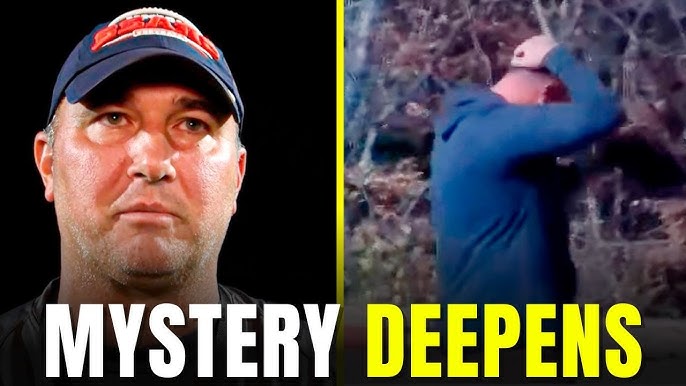
Travis Turner, the 46-year-old head football coach and physical education teacher at Union High School in Appalachia, Virginia, stepped into the spotlight this fall by guiding his team to an undefeated 12-0 season, culminating in a spot in the Class 2 state semifinals. Yet, on November 20, 2025, Turner’s own path took a sharp and unexplained turn when he left his family home and entered the dense woods nearby, sparking a widespread search that has gripped the small community of Big Stone Gap. As of early December, the effort has evolved into a full-scale manhunt, involving state police, federal agencies, and local volunteers, all seeking answers about the man who once symbolized local pride.
Turner’s background is woven into the fabric of Wise County’s football heritage. Born and raised in the Appalachian region, he followed in his father’s footsteps, who coached at the former Appalachia High School—merged into Union High in 2011—and was inducted into the Virginia High School League Hall of Fame in 2005. Turner himself shone as a quarterback during his high school days and later played at the University of Virginia’s Wise campus after a stint in Virginia Tech’s 1998 recruiting class alongside notable talents like future NFL quarterback Michael Vick. Over the years, he built a reputation as a dedicated educator and coach, instilling discipline and teamwork in his students while balancing family life with his wife, Leslie Caudill Turner, whom he married in 2001, and their three children: sons Bailey, 25, and Grayden, 21, and daughter Brynlee, 11.
The day of Turner’s disappearance unfolded against the backdrop of mounting tension. Virginia State Police agents from the Bureau of Criminal Investigation were en route to his residence for a routine interview as part of an ongoing probe, but upon learning he had already departed, they shifted focus to locating him out of concern for his well-being. Family attorney Adrian Collins later clarified in a November 28 statement that no arrest warrants existed at that moment, emphasizing, “The last known contact the family had with Travis occurred on or about Thursday, November 20, after he left his residence to walk in the woods.” Turner was last seen wearing a gray sweatshirt, gray sweatpants, and glasses, carrying no vehicle, keys, wallet, phone, medications, or cash—items he typically relied on, according to those close to him.
When Turner failed to return by evening, his wife contacted authorities, though initial guidance indicated a 24-hour wait before filing a formal missing person report. The next day, November 21, she did so with the Virginia State Police, who promptly launched an active search centered on the rugged terrain around his home. The area, characterized by thick forests, steep ridges, and winding rivers, presented immediate challenges. State police spokesperson Corinne Geller noted early on, “Our main priority is locating Turner safely,” as teams deployed drones for aerial surveillance, K-9 units to track scents, and helicopters for broader sweeps. By November 22, First Sgt. Jason Day confirmed the focus remained “right near the general location of his house,” with ground teams combing the underbrush despite chilly temperatures and intermittent rain.

As the search intensified, revelations emerged that transformed the case from a welfare check to a criminal pursuit. On November 25, authorities announced 10 arrest warrants against Turner: five counts of possession of child sexual abuse material and five counts of using a computer to solicit a minor. Additional charges are pending as the investigation continues, though specifics on the probe’s origins remain under wraps to preserve its integrity. The timing—mere days before Union’s pivotal playoff matchup against Graham High School—added layers of complexity, with the community left to grapple with the dual narratives of athletic triumph and personal turmoil.
The United States Marshals Service stepped in on December 1, elevating the effort with federal resources and issuing a public alert. They offered a reward of up to $5,000 for information leading to Turner’s location, underscoring the gravity of the situation. “Turner is considered a fugitive,” a Marshals spokesperson stated, while warning that he may be equipped for extended time away from home. The FBI joined the collaboration, providing expertise in digital forensics and cross-jurisdictional tracking. Former detective Ken Lang, speaking to media on December 1, speculated on the logistics: “It’s likely that when you’ve not prepared and you’re heading out, that you’ve already made plans to go somewhere, or you have an associate who’s willing to help.” He highlighted the challenges of evading detection amid potential surveillance, suggesting Turner might have prearranged support to reach a safe distance undetected.
Family members, meanwhile, have maintained a stance of cooperation and quiet resolve. In a statement released through Collins on November 25, they expressed, “It is the family’s prayer that Travis is safe and will have the opportunity to defend himself in a court of law.” They reiterated full collaboration with investigators, including allowing searches of their home, and urged the public to avoid speculation: “We trust God to bring truth and clarity in His time. Any allegations should be addressed through the proper legal process—not through rumor.” Leslie Turner has refrained from public comments, focusing instead on supporting her children amid the media glare. Collins added that the family’s independent searches in the woods were paused out of deference to professional operations and hampered by weather, but their hope persists for a peaceful resolution.
Union High School, nestled in the heart of coal country, has navigated the fallout with a mix of resolve and restraint. Superintendent Mike Goforth confirmed on November 24 that a staff member—widely understood to be Turner—had been placed on paid administrative leave, barring him from school grounds or student interactions. The school’s website quietly removed his profile from the staff directory, a subtle acknowledgment of the shift. Athletic Director Jay Edwards, the defensive coordinator, assumed interim head coaching duties, leading the Bears to a 12-0 victory over Graham on November 23. Senior running back Keith Chandler captured the team’s mindset post-game: “We talked in the huddle, and we said: ‘Listen boys, we’re going to have to handle adversity here. We stick together as brothers here, and should come out with the victory.’”
The Bears’ momentum carried forward, securing a 21-14 win over Ridgeview on November 30 to claim the Region 2D championship and advance to the state semifinals against Glenvar High School on December 6. Players have largely shielded their emotions from the press, with Edwards emphasizing focus on the field: “These kids are resilient; they’ve trained for tough moments.” Community support has poured in, from prayer vigils at local churches to fundraisers for the team’s travel, transforming a moment of division into one of unity. Goforth told reporters, “We’re aware of the charges against a staff member who has been on administrative leave, and our priority is the safety and well-being of our students.”
The terrain of Wise County, with its elevation changes and dense foliage, has tested search teams at every turn. Meteorologist Mary Ann Gilbert observed on December 2 that unseasonably warm temperatures—hovering in the mid-50s Fahrenheit—coupled with recent rainfall could complicate efforts, potentially washing away tracks or forcing Turner to seek higher ground. CNN security analyst John Miller suggested advanced tools like motion sensors and thermal imaging drones might be necessary to penetrate the canopy, where visibility drops to mere feet in spots. Despite these hurdles, patrols have expanded to include riverbanks along the Powell River, where locals report occasional sightings of unfamiliar figures, though none confirmed.
Public response has been a blend of concern and caution. Social media buzzed with #FindCoachTurner early on, shifting to more measured discussions as details surfaced. Residents in Big Stone Gap, a town of about 2,500 where football Fridays are sacred, have shared memories of Turner’s sidelines energy—his booming encouragements during homecoming games and post-practice barbecues. One former player posted anonymously, “Coach taught us accountability; whatever happens, we honor that by moving forward.” Yet, whispers of disappointment circulate in quieter corners, with parents voicing relief at the school’s swift actions to protect minors.
Legal experts tracking the case point to its procedural intricacies. The warrants, issued by a Wise County magistrate, stem from digital evidence uncovered in the initial investigation, though prosecutors have withheld timelines to avoid compromising leads. Collins has hinted at mounting a vigorous defense, stressing Turner’s right to due process: “This family stands ready to address matters in court, not the court of public opinion.” As the manhunt crosses state lines in scope, questions arise about jurisdiction if Turner surfaces elsewhere, potentially involving interstate task forces.

Broader implications ripple through Virginia’s educational and athletic spheres. The Virginia High School League has monitored the situation closely, ensuring Union’s eligibility remains intact under interim leadership. Discussions in school board meetings have touched on enhanced background checks and digital safety protocols, with Goforth advocating for statewide reviews: “Events like this remind us to stay vigilant in safeguarding our programs.” Nationally, outlets like ESPN and NBC have framed the story as a cautionary tale of hidden struggles behind public personas, drawing parallels to other high-profile cases without speculation.
As December unfolds, the search persists with renewed vigor. On December 3, a tip line received over 50 calls, sifting through from credible leads to well-meaning hunches. State police urge tips to their hotline at 540-444-7788 or the Marshals’ anonymous line, promising discretion. Volunteers, including off-duty firefighters and alumni, have mapped uncharted trails using GPS apps, their efforts coordinated through a community command post at the local VFW hall.
Turner’s family marks time with small rituals—family dinners recounting game highlights, Brynlee’s drawings of the Bears’ logo taped to the fridge. Bailey, the eldest, has spoken sparingly but firmly: “Dad’s a fighter; he’ll find his way back.” Grayden, balancing college applications, channels energy into team support, attending practices to lend a familiar voice from the stands.
In the annals of small-town sports lore, Turner’s chapter defies easy closure. The Bears, now 14-0 after a semifinal berth, embody the grit he instilled: preparation meets unpredictability. Edwards, in a pre-game huddle, echoed this: “Coach would say, ‘Control what you can, trust the rest.'” As searchers scan the horizon and the community holds breath, the quest for Turner underscores enduring themes—loyalty tested, futures uncertain, and the quiet strength of those left waiting.
The intersection of athletics and accountability has sparked policy debates. Advocates for youth sports call for mandatory mental health resources for coaches, citing the pressures of high-stakes seasons. In Richmond, lawmakers mull bills for faster digital forensics training in rural districts, where response times stretch due to geography. Turner’s case, though singular, amplifies these calls, prompting the Virginia Department of Education to announce a task force on educator conduct by mid-2026.
Media coverage evolves too, from sensational headlines to reflective pieces. A December 4 profile in the Bristol Herald Courier revisited Turner’s early coaching days, quoting a 2015 mentee: “He built us up, brick by brick—taught that real wins come from character.” Such remembrances humanize the narrative, balancing allegations with legacy.
Federal involvement brings sophisticated layers. FBI behavioral analysts profile potential movements, considering Turner’s familiarity with the terrain from hunting trips. Marshals leverage networks in neighboring states like Kentucky and Tennessee, where Appalachian trails blur borders. A December 2 briefing revealed patterns in similar cases: 60% resolve within 30 days, often through overlooked connections.
For the Turner household, normalcy fractures but endures. Leslie attends school events incognito, her presence a silent rally. The children navigate peers’ questions with scripted grace, drawing on faith gatherings for solace. Collins fields inquiries daily, bridging family and fray: “Privacy is their shield now.”
As the semifinals loom, Union’s roster swells with resolve. Freshman quarterback Eli Hayes, a Turner protégé, leads chants of “One play at a time.” Victory, if it comes, will taste bittersweet—a nod to the absent architect.
In quiet moments, searchers ponder the woods’ secrets. A drone operator shared on December 3: “These hills hold stories; someday, this one’s will surface.” Until then, Appalachia waits, its heartbeat synced to the rhythm of pursuit and playoffs alike.
The case’s digital footprint expands scrutiny on online safeguards. Investigators trace metadata from devices, underscoring vulnerabilities in remote areas with spotty supervision. Tech firms, prompted by queries, reaffirm commitments to proactive monitoring, though privacy advocates caution balance.
Community healers step up: counselors at Union High host optional sessions, framing talks around resilience. Pastor Elena Ruiz, from Big Stone Gap Baptist, led a December 1 vigil: “We pray for truth, for healing—whatever form it takes.” Attendance topped 200, a tapestry of jerseys and lanterns.
Turner’s athletic roots run deep. Archival footage from 2011 merger games shows him rallying squads, voice steady amid change. His father’s Hall of Fame plaque, displayed at the school gym, draws quiet visitors—pilgrims to a fractured dynasty.
As winter edges in, forecasts predict frost, potentially clarifying tracks. Search parameters widen to abandoned cabins, a nod to local lore. Tips spike post-broadcasts, sifting gold from gravel.
For families like the Turners, time bends. Holidays approach shadowed, yet traditions hold: Thanksgiving tables set one place extra, a placeholder for return. Bailey muses, “Faith isn’t blind—it’s the bridge.”
In sports’ grand theater, Turner’s intermission tests the troupe. Union’s semifinal clash, under floodlights, will echo his playbook: adapt, advance. Win or not, the lesson lingers—team transcends one soul.
Broader ripples touch coaching ranks. National associations host webinars on ethical boundaries, attendance surging. Virginia’s gridiron community, from Fairfax to the coalfields, shares resources, fostering a net of support.
Media ethics surface too. Outlets pledge sensitivity, avoiding trial by tweet. A Fox News segment on December 4 featured experts on rural manhunts, blending fact with empathy.
As December 5 dawns, patrols resume at first light. A K-9 handler notes, “Dogs don’t judge—they track.” Hope, threadbare but tenacious, fuels the fray.
Turner’s saga, unfinished, mirrors life’s pivots: from triumph’s roar to silence’s weight. Appalachia, resilient as its ridges, endures—searching, supporting, steadfast.