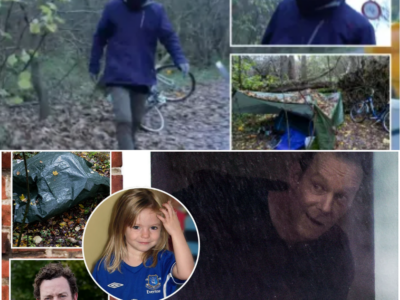
The chilling revelations from a remote, abandoned factory in central Germany have peeled back another layer of horror in the long-running hunt for answers about Madeleine McCann’s fate. A hidden hard drive containing photographs taken in Portugal, along with a grotesque collection of children’s swimsuits, toys, disturbing writings, black-market guns, and child abuse imagery, has convinced German investigators that the three-year-old British girl is dead—and that Christian Brueckner, the convicted sex offender long named as the prime suspect, holds the key to what happened on that fateful night in May 2007.

These bombshell details, painstakingly uncovered during a massive police raid in 2016 and only now fully emerging in public reports, paint a portrait of a predator whose obsessions ran disturbingly deep. The evidence, amassed at Brueckner’s derelict lair in Neuwegersleben—a disused factory he snapped up for around £20,000 in 2008—includes more than 75 small children’s swimming costumes, preschooler bikes, toys scattered like relics of innocence twisted into something sinister, masks that could disguise dark intentions, unregistered firearms with ammunition, chemicals suspected of being sedatives like chloroform or ether, and digital troves of depravity that investigators describe as deeply concerning.
The discovery began almost by accident. In January 2016, a neighbour’s dog wandered onto the overgrown property and appeared to alert on what looked like a possible grave. Officers arrived, unearthed USB sticks and memory cards buried beneath the body of Brueckner’s dead dog, and uncovered initial horrifying content: images of child abuse featuring girls as young as four and five. What started as a tip escalated into a full-scale operation. One hundred officers descended on the compound, turning over every stone in a search that would expose the extent of Brueckner’s secret world.
Among the most unsettling finds was a metal suitcase packed with photographs of young girls. Nearby lay lists of phone numbers, an address book, and other fragments that hinted at a broader network or pattern of behaviour. Three black-market guns—untraceable and loaded—sat alongside the children’s items, raising questions about whether Brueckner armed himself for protection, intimidation, or something far more menacing. Chemicals in bottles, later destroyed without full forensic testing, matched descriptions in his own writings of using substances to subdue victims during abductions.
But the centrepiece of the evidence remains shrouded in secrecy: an 80GB hard drive hidden within the lair, containing images captured in Portugal during the period surrounding Madeleine’s disappearance. German prosecutors have stated that these photographs, combined with other material from a laptop handed over to authorities, led them to conclude definitively that Madeleine died shortly after vanishing from her family’s holiday apartment in Praia da Luz on May 3, 2007. The exact contents of the drive have never been publicly detailed, but sources close to the investigation insist they provide compelling proof of her fate, shifting the case from abduction to murder.
Brueckner’s digital footprint extended beyond images. Investigators recovered chilling stories and Skype chats he allegedly authored or shared with other paedophiles. In one horrifying exchange, he expressed a desire to “capture something small and use it for days.” Other writings detailed fantasies of drugging a mother and her young daughter outside a preschool, then abusing the child. These narratives, blending delusion with graphic intent, aligned eerily with the method many believe was used to enter the McCanns’ unlocked apartment—through a window or patio door during a burglary gone catastrophically wrong.
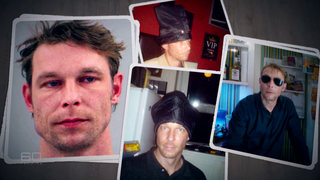
The connections to Portugal run deeper. Satnav data recovered from Brueckner’s vehicles placed him in the Algarve region around the time of the disappearance and in the months that followed. A nude selfie he took at the Arade Dam, some 35 miles from Praia da Luz, prompted a major search of the reservoir in 2023 after data showed multiple visits to the area. An insurance document even proved his presence at a festival in Orgiva, Spain, in April 2008—where witness Helge Busching claims Brueckner, under the influence, all but confessed. According to Busching, the suspect remarked that the missing girl “didn’t scream,” a statement that has haunted the investigation ever since.
Brueckner’s criminal history only amplifies the dread. A drifter with a rap sheet stretching back decades, he lived in the Algarve for years, surviving through petty crime, burglaries of holiday homes, and worse. In 2016, he was convicted of abusing a five-year-old girl in a German park, earning 15 months while already on the run. In 2019, DNA evidence nailed him for the 2005 rape of a 72-year-old American tourist in the same Praia da Luz region where Madeleine vanished—landing him a seven-year sentence. Though acquitted in October 2024 of other unrelated sexual assaults (with prosecutors appealing), his pattern of targeting vulnerable females in tourist areas is unmistakable.
The 2016 raid occurred against this backdrop, triggered not directly by Madeleine but by suspicions of grave-digging and hidden abuse material. Yet the haul transformed perceptions. What began as unrelated probes converged on the McCann case after an associate tipped off authorities in 2018 about Brueckner’s potential involvement. German prosecutor Hans Christian Wolters publicly named him suspect in June 2020, declaring the child dead based on accumulated evidence.
For the McCann family—Kate, Gerry, and their twins—the revelations offer no closure, only renewed anguish. Madeleine would be approaching her 23rd birthday if alive. Her parents have endured false dawns, media storms, private detectives, and endless speculation while maintaining a dignified campaign for truth. The emergence of this evidence, years after initial searches, underscores how fragmented and painstaking the probe has been.
Brueckner, now 48, has denied everything. He has called the focus on him a “witch hunt,” insisting no concrete link exists. Yet his behaviour fuels suspicion. Post-release fears in late 2025 centred on his potential return to old haunts to retrieve hidden items, though surveillance and legal restrictions have complicated matters.
The sheer volume of disturbing paraphernalia at his lair—swimsuits in toddler sizes for a man with no children, toys untouched by play but hoarded like trophies, guns suggesting preparedness for violence—creates a visceral sense of menace. Masks, perhaps for role-play or concealment, add to the creep factor. The chemicals evoke nightmares of sedation and helplessness. Together, they form a mosaic of predation that investigators argue fits the profile of someone capable of abducting a sleeping child from her bed.

Public fascination with the case has never waned. Documentaries, including The Sun’s Channel 4 special that aired these details, have brought the evidence into sharper focus, showing exclusive images of the seized items: piles of tiny swimsuits, a child’s bike leaning against rusted walls, the hard drive’s ominous presence. These visuals sear the imagination, reminding viewers that behind every headline lies real suffering.
As appeals for fresh charges continue and prosecutors weigh retrials on cleared counts, the pressure mounts. Without a smoking-gun forensic tie—DNA, a confession, or irrefutable video—the circumstantial web may not suffice for conviction. Yet the hard drive’s secrets, the witness accounts, the Portugal links, and the lair’s contents form an overwhelming dossier that few can dismiss.
The abandoned factory stands as a silent witness: overgrown, decaying, once a bolthole for secrets now exposed. Every item pulled from its shadows—every swimsuit, every gun, every twisted word—tightens the noose of suspicion around Brueckner. For Madeleine’s family and a watching world, the hope remains that this mountain of evidence will finally force justice to emerge from the darkness.
The case endures because the questions refuse to fade. What really happened in that quiet apartment? Why did a predator hoard symbols of childhood innocence? And will the truth, buried for so long, ever fully surface? As new details surface and old fears resurface, the hunt for Madeleine continues—not just for her, but for the peace that has eluded everyone touched by her loss.