
SWAT Standoff, No Bond, Two Counts of First-Degree Murder — USF Killer Hisham Abugharbieh Faces Justice Today 😱 The Shocking Courtroom Moment That Has Tampa Bay Speechless
Hisham Saleh Abugharbieh stood silently in a Hillsborough County courtroom on Saturday morning, shackled at the wrists and ankles, his face expressionless as a judge ordered him held without bond on two counts of first-degree premeditated murder. The 26-year-old former University of South Florida student, once a seemingly unremarkable roommate to one of the victims, now stands accused of methodically ending the lives of two promising young scholars from Bangladesh — Zamil Ahmed Limon and Nahida Bristy — before allegedly binding their bodies, stuffing them into heavy black contractor bags, and discarding them like ordinary household trash in and around Tampa Bay.
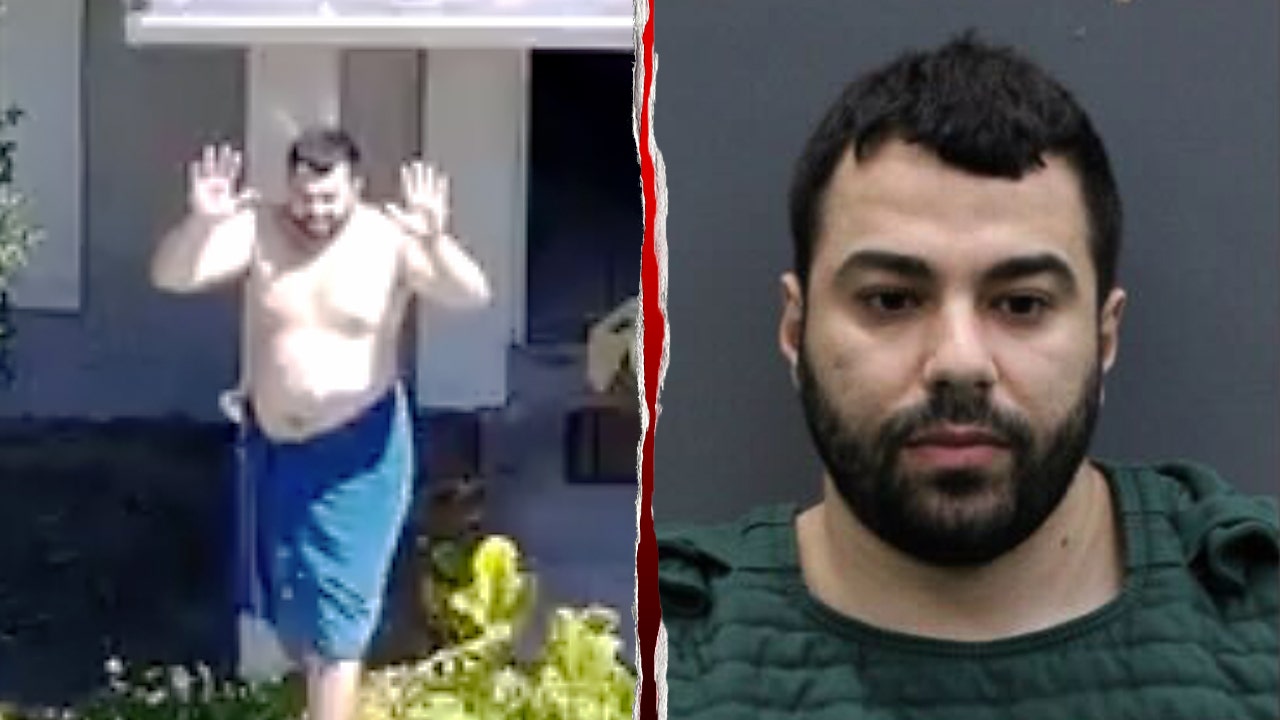
The brief but tense initial appearance marked the first public moment since Abugharbieh’s dramatic arrest late Friday afternoon. After barricading himself inside his family’s home in Lutz, he forced a SWAT response that lasted several hours. When he finally surrendered, authorities wasted no time linking him to the disappearances of Limon and Bristy, both 27-year-old doctoral candidates who vanished on April 16 after failing to attend scheduled university commitments. What began as a missing persons case exploded into one of the most disturbing double-homicide investigations Tampa Bay has seen in years.
Judge Michael Williams listened as prosecutors outlined the core allegations: premeditated killings carried out in the shared apartment near the USF campus, followed by a calculated disposal operation that spanned the Howard Frankland Bridge and nearby waters. Abugharbieh, who had been Limon’s roommate, showed little emotion during the hearing. His court-appointed attorney entered a not-guilty plea on his behalf. The judge set the next hearing for April 28 at 9:00 a.m., while emphasizing the “extreme danger to the community” posed by the defendant. No bond was granted.
Outside the courthouse, a small crowd of international students, faculty members, and members of the Bangladeshi-American community gathered in quiet grief and quiet anger. Candles burned beside printed photos of Limon and Bristy — two bright young academics whose dreams of scientific advancement were violently cut short in the place they had chosen as their second home.
Lives of Promise Brutally Interrupted
Zamil Limon and Nahida Bristy represented the best of what international education promises. Both had traveled thousands of miles from Bangladesh to pursue doctoral degrees at the University of South Florida. Limon was known among peers as a gentle, intellectually curious scholar with a passion for his field. Bristy, studying chemical engineering, was remembered for her warmth, determination, and quiet strength. Friends described them as dedicated students who balanced rigorous research with the challenges of adapting to life far from family.
They were not strangers to Abugharbieh. Limon shared an apartment with him and one other roommate. Bristy was a close friend of Limon’s. Their disappearance on April 16 triggered immediate concern when they missed important meetings. A family friend filed a missing persons report the following day. What followed was a week of frantic searches, community vigils, and growing dread that something terrible had happened.
On April 24, the nightmare became reality. Motorists on the Howard Frankland Bridge reported suspicious black bags on the roadside. Inside, investigators discovered Limon’s remains — bound at the hands and feet, showing multiple sharp-force injuries. Two days later, a kayaker’s line snagged another bag in shallow waters nearby. It contained Nahida Bristy’s body, disposed of in an almost identical manner. The dehumanizing nature of the crimes — treating two vibrant young lives as disposable waste — has horrified the community.
The Evidence: Digital Trails, Physical Horror, and a Missing Ring
Prosecutors say the case against Abugharbieh is strong and multifaceted. Blood evidence reportedly trailed from the apartment’s entryway through the kitchen and into his bedroom. Limon’s student ID and credit cards were found in a complex dumpster, along with items linked to cleanup efforts. Investigators recovered purchase records for heavy-duty trash bags, duct tape, cleaning supplies, and even a fake beard delivered to the residence.
Perhaps most disturbing are the alleged ChatGPT searches made from devices linked to Abugharbieh. Court documents reference queries about disposing of bodies in dumpsters, the decomposition process, and how such crimes might be discovered. These digital breadcrumbs, combined with GPS data, license plate readers, and cell phone records, have reportedly created an airtight timeline that prosecutors believe leaves little room for doubt.
Yet one detail continues to haunt investigators and the victims’ families: Nahida Bristy’s ring. The simple gold band she wore every day — a cherished gift from her mother symbolizing her dreams and connection to home — was mysteriously absent when her remains were recovered. Forensic teams confirmed every other identifying element, but the ring that should have been on her right hand had vanished. Sources close to the investigation describe a critical two-hour gap in the timeline during which the ring may have been intentionally removed. Was it taken as a trophy? As a final act of domination? Or to delay identification? The question lingers, adding a layer of psychological cruelty to an already horrific case.
A Dramatic Arrest and Community Shock
Abugharbieh’s arrest unfolded like a scene from a true-crime documentary. When authorities approached the family home in Lutz on Friday, he barricaded himself inside. SWAT teams responded, leading to a tense standoff. Negotiators eventually secured his surrender without injury. He was taken into custody and transported to the county jail, where he remains held without bond.
The University of South Florida, already reeling from the loss of two promising scholars, issued strong statements of support for the victims’ families and the international student community. University president called the killings “an unimaginable tragedy” and announced enhanced safety measures, including expanded mental health resources and security reviews for off-campus housing.
The Bangladeshi-American community has mobilized powerfully. Vigils have drawn hundreds. Fundraisers support the families, many of whom cannot immediately travel to the United States. In Bangladesh, relatives wait in anguish for the return of their loved ones’ remains so they can perform final rites. Social media is filled with tributes, photos of happier times, and calls for justice.
Broader Questions Raised by the Tragedy

This case has ignited urgent conversations far beyond Tampa. The alleged use of ChatGPT to research body disposal has spotlighted the dark side of artificial intelligence. Legal experts and ethicists are asking whether tech companies bear responsibility when users exploit their tools for criminal purposes. The Florida Attorney General’s Office has reportedly opened an inquiry into OpenAI’s handling of such queries.
It has also exposed vulnerabilities faced by international graduate students: the isolation of living far from family, the pressures of academic life, and the sometimes tense dynamics of shared housing. Many in the South Asian student community have shared stories of feeling unsafe or unsupported, prompting calls for better protections and cultural sensitivity training.
Mental health among graduate students has come under fresh scrutiny. The isolation, financial stress, and intense competition can exacerbate underlying issues. While no official motive has been released, investigators continue examining possible personal conflicts, resentment, or untreated psychological problems that may have contributed to the alleged crimes.
The Road to Justice
Abugharbieh’s next court appearance on April 28 will likely focus on discovery, potential motions, and scheduling. Prosecutors are building what they describe as a “mountain of evidence,” including forensic analysis, digital records, and witness statements from the third roommate who has cooperated with authorities.
For the victims’ families, the legal process offers a path to accountability but cannot restore what was lost. Zamil Limon’s relatives have spoken of their pride in his achievements and their devastation at his violent end. Nahida Bristy’s brother has made emotional appeals for the return of her missing ring, describing it as the last tangible piece of his sister’s identity.
The University of South Florida has established scholarship funds in both victims’ names, aiming to honor their legacies by supporting other international students pursuing similar dreams. Community leaders hope the tragedy will lead to lasting change — stronger safety nets, better roommate screening, and increased awareness about the pressures faced by those studying far from home.
A City Grapples With Horror
Tampa Bay, a city known for its sunshine and vibrant diversity, now finds itself confronting a darkness that feels profoundly personal. The Howard Frankland Bridge, normally a bustling artery of daily life, has become a site of mourning. Flowers and messages line the roadside where Zamil’s remains were found. Kayakers and boaters have reported seeing memorials floating near where Nahida was recovered.
In coffee shops near campus, students speak in hushed tones about the roommates they once trusted and the safety they once took for granted. International students check in with each other more frequently. Faculty members offer extended office hours and listening ears.
This case is more than a legal proceeding. It is a stark reminder of how quickly ordinary life can shatter — how a shared apartment, once a space of friendship and ambition, can become the setting for unimaginable horror. It forces society to confront uncomfortable truths about human capacity for cruelty, the responsibilities of technology companies, and the need to protect vulnerable populations in academic environments.
As Hisham Abugharbieh awaits his next court date behind bars, two families on opposite sides of the world prepare to bury their children. Two brilliant scholars who came to America seeking knowledge and opportunity now leave behind questions that may never be fully answered. Their dreams, their kindness, and their potential remain — stolen too soon, discarded too callously, remembered too painfully.
The search for justice continues. The search for understanding may last much longer. In the quiet moments between hearings, the people who knew Zamil Limon and Nahida Bristy will keep their memories alive — not as victims in black garbage bags, but as the hopeful, talented young scholars they truly were.