The tragic death of Alex Jeffrey Pretti, a 37-year-old intensive care unit nurse at the Minneapolis Veterans Affairs Health Care System, has ignited national outrage, exposed deep divisions over federal immigration enforcement, and left a grieving family to battle what they describe as “disgusting lies” spread in the aftermath. On January 24, 2026, Pretti was fatally shot by U.S. Border Patrol agents in broad daylight on a Minneapolis street amid escalating protests against aggressive immigration raids under the Trump administration. His sister, Micayla Pretti, has emerged as a powerful voice, slamming the official narrative and honoring her brother as a hero whose only instinct was to help others—even in his final moments.
The incident unfolded in the Whittier neighborhood near the intersection of 26th Street and Nicollet Avenue, around 9 a.m. CST. Multiple bystander videos, analyzed by outlets including The New York Times, BBC Verify, and ABC News, paint a harrowing picture that starkly contradicts the initial Department of Homeland Security (DHS) account. Pretti, an Air Force veteran and dedicated ICU nurse known for comforting patients and “lighting up every room,” had joined protesters outraged by recent federal actions—including the fatal shooting of Renee Good just weeks earlier on January 7, 2025.
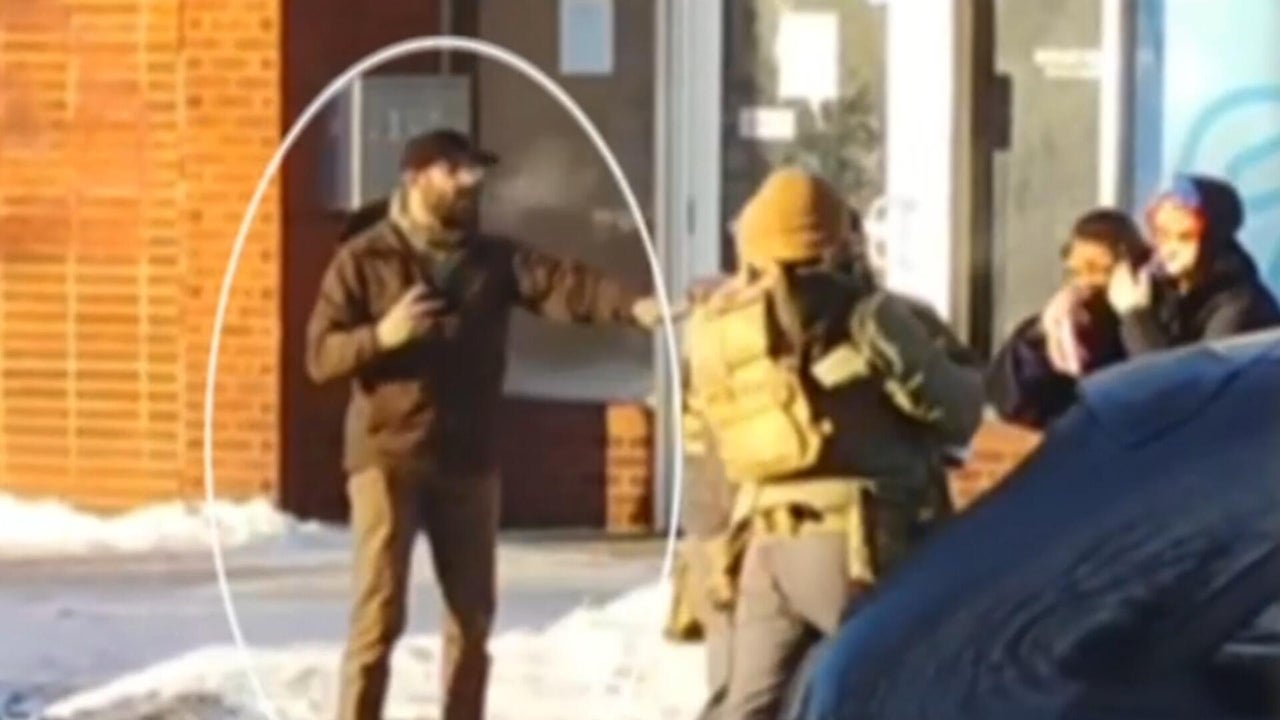
Eyewitness accounts and frame-by-frame footage show Pretti holding his cellphone in his right hand, using it to record or document the agents’ activities. His left hand was raised or visible, empty. Agents deployed pepper spray at close range, shoving bystanders and Pretti toward the sidewalk. A scuffle ensued when Pretti appeared to intervene—witnesses say he was “trying to help a woman” who had been pushed down by officers, just five feet away. Multiple agents pinned him to the ground, with one reaching for his waist. Video captures an agent in a grey jacket removing what appears to be a holstered firearm—Pretti’s legally carried Sig P320, permitted under Minnesota law—before turning away. Less than a second later, shots rang out. Pretti was struck multiple times, including at least three in the back, one in the upper left chest, and possibly the neck.
A 29-year-old licensed pediatrician, who lived nearby and rushed to help, provided sworn testimony detailing the aftermath. Agents initially blocked medical aid, demanding proof of licensure and patting down responders for weapons. The doctor found Pretti lying on his side—not the recommended recovery position—while agents counted bullet wounds instead of checking for a pulse or starting CPR. No lifesaving measures were attempted by federal personnel. The physician began CPR until EMS arrived, but Pretti was pronounced dead at the scene. Six witness affidavits, filed swiftly in federal court as part of an ACLU lawsuit against DHS officials, consistently describe Pretti as non-resistant, unarmed in the moment of confrontation, and motivated by compassion.
DHS’s initial statement claimed Pretti “approached officers with a 9mm semi-automatic handgun” and “violently resisted disarmament,” justifying “defensive shots.” Customs and Border Protection offered no further comment. High-profile Trump administration figures amplified this: Deputy Chief of Staff Stephen Miller labeled Pretti a “would-be assassin” and “terrorist,” while others suggested he intended to “massacre” agents. President Trump later distanced himself somewhat, telling reporters he did not view Pretti as an “assassin” and promising a review, even signaling potential withdrawal of agents from Minneapolis after talks with Governor Tim Walz. Yet the early rush to judgment fueled accusations of politicization and cover-up.

Micayla Pretti, Alex’s younger sister by five years, broke her silence on January 26, 2026, in a poignant statement shared with the Associated Press and other outlets. “Alex was kind, generous, and had a way of lighting up every room he walked into,” she wrote. “He was incredibly intelligent and deeply passionate, and he made people feel safe. But most importantly, he was my brother. I had the privilege of being his little sister for 32 years. I will never be able to hug him, laugh with him, or cry to him again because of those thugs—and that is a pain no words can fully capture.”
She continued: “All Alex ever wanted was to help someone—anyone. Even in his very last moments on this earth, he was simply trying to do just that.” Highlighting his VA work, where he “touched more lives than he probably ever realized,” Micayla called him a hero. “Alex always wanted to make a difference in this world, and it’s devastating that he won’t be here to witness the impact he was making. My brother is, and always will be, my hero.”
The emotional core of her message targeted the misinformation: “Hearing disgusting lies spread about my brother is absolutely gut-wrenching, and my family is deeply grateful so many people have stood up and helped tell his truth. He would be very proud.” She concluded with a piercing question: “When does this end? How many more innocent lives must be lost before we say enough?”
Her words echoed those of their parents, Michael and Susan Pretti, who released a Facebook statement calling the administration’s claims “reprehensible and disgusting” and “sickening lies.” They insisted Alex was “clearly not holding a gun” during the attack—his phone visible in one hand, the other raised—while pepper-sprayed and protecting a woman. “Please get the truth out about our son. He was a good man.”
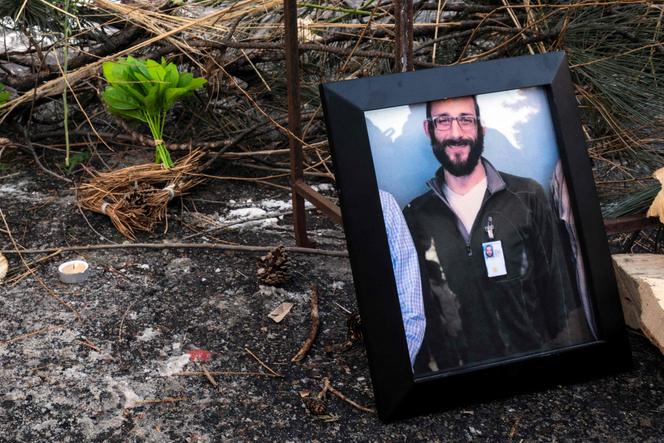
The Pretti family portrayed Alex as a “kindhearted soul” with no criminal record beyond minor traffic tickets, a lawful gun owner who cherished the outdoors and mountain biking. Colleagues and patients remembered his empathy: an Air Force veteran patient said Pretti “comforted” him just two weeks prior. A VA doctor recalled his dedication to veterans.
The shooting marked the second fatal civilian death by federal agents in Minneapolis amid the administration’s intensified immigration operations. Protests erupted immediately, with vigils drawing hundreds to makeshift memorials of candles and signs on Nicollet Avenue. Crowds chanted for justice, and rallies at Government Plaza demanded accountability. Bipartisan criticism emerged: some Republicans called for independent probes, the NRA condemned rushed judgments on lawful carry, and figures like Alexandria Ocasio-Cortez highlighted inconsistencies in responses to armed confrontations.
Experts questioned agents’ conduct—pepper-spraying crowds, blocking medical aid, and apparent failure to de-escalate. Body-camera footage, confirmed by DHS, remains under review, but public videos already challenge the self-defense claim. A federal judge heard arguments on evidence preservation, and state-federal tensions boiled over, with Minnesota officials alleging obstruction.
Micayla’s statement transcends grief; it demands reckoning. In an era of polarized narratives, her raw plea—gut-wrenching yet resolute—humanizes a man reduced to a political flashpoint. Alex Pretti was no assassin or threat; he was a nurse, a brother, a helper. His death raises urgent questions about accountability, excessive force, and truth in crisis. As vigils continue and investigations unfold, one voice cuts through: a sister’s unyielding love and call for justice. When does this end? The nation waits for an answer.