Shocking New Details In Unsolved Murder 😱 Friend Reveals Why Brooke Hanlon’s Case Feels So Unusual Even For A Brutal Stabbing
The silence surrounding Brooke Hanlon’s murder has grown heavier with each passing week. Nearly two months after the 35-year-old New Jersey therapist was found stabbed to death inside her Chester home, authorities have named no suspect and released almost no meaningful answers. For those who loved her, that vacuum has become its own form of torment.
Jennifer Payne, one of Brooke’s closest friends from graduate school, described the experience as confusing, heartbreaking, and “incredibly frustrating.” The two women shared a home in Boston during Brooke’s years at Northeastern University and remained close long after. Payne has spent the weeks since the killing trying to process a loss that feels both sudden and strangely incomplete. “Nothing prepares you for unexpectedly losing a loved one, let alone to murder,” she said. “But this case has been so unusual even for a murder. I’ve basically been in a constant state of ‘functional freeze,’ going through the motions of life but still stuck trying to process and accept that Brooke is gone.”
The near-total lack of public information has only intensified that paralysis. Payne, who admits she struggles with uncertainty, finds her mind racing to fill the blanks left by official silence. “The near total silence leaves your mind racing to fill in the blanks,” she explained. What she wants most, she insists, is for Brooke’s young daughter to grow up knowing the full measure of the woman her mother was—not merely the violent way her life ended.
Brooke Hanlon’s story began far from the quiet suburban streets of Chester. In 2014 she was studying counseling psychology at Northeastern University in Boston when she met James “Conor” Hanlon. She graduated the following year with a master’s degree and began working as a therapist in the Boston area. The relationship deepened. On June 12, 2021, the couple married in Montauk, New York. Two years later Brooke relocated her practice to New Jersey, taking a position as a psychotherapist in Bernardsville. In September 2024 they purchased a home on Pottersville Road in Chester. The following summer, in July 2025, they welcomed their first child, a daughter.
By all outward appearances the young family was settling into a new chapter. That chapter ended violently on the morning of June 6, 2026. Conor Hanlon dialed 911 and reported that his wife was not breathing and had a laceration on her chest. Dispatchers initially treated the call as a medical emergency involving cardiac arrest. When first responders arrived, the scene told a different story. One week later, on June 13, the Morris County Prosecutor’s Office announced that Brooke’s death was being investigated as a homicide. The medical examiner determined the cause of death as multiple sharp force injuries.
The 911 recording, released weeks later, captures a frantic husband being coached through CPR compressions. At one point he can be heard saying there is “blood everywhere.” Computer-aided dispatch logs obtained by journalists show intense activity at the Pottersville Road address for nearly a week after the killing—rotations of detectives, crime scene technicians, evidence collection, and hospital transports—before the scene was finally cleared on June 12.
Since then the investigation has remained tightly controlled. A modest reward of up to $1,000 was offered for information. Conor Hanlon retained legal counsel early on, and prosecutors have maintained communication with his attorney. He has made no public statements about his wife’s death. In early July he was photographed in Boston’s Brighton neighborhood. Later that month neighbors noticed his white SUV parked outside the Chester house for several hours, one of the few visible returns to the property since the murder.
Chester residents have grown increasingly uneasy. Neighbors describe themselves as hyper-vigilant, reacting to every unfamiliar sound. Local officials have offered condolences while carefully avoiding any discussion of evidence or theory. “To protect the integrity of that investigation, I will not comment on specific facts or circumstances at this time,” Chester Township Mayor Tim Drag said in a statement. The restraint may be prudent from an investigative standpoint, but it has left the community and Brooke’s friends suspended in a prolonged state of dread.
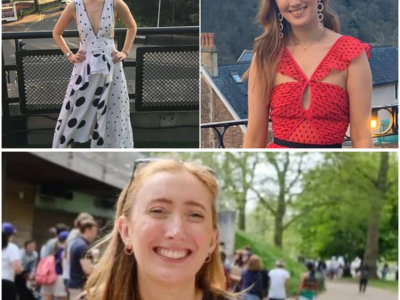
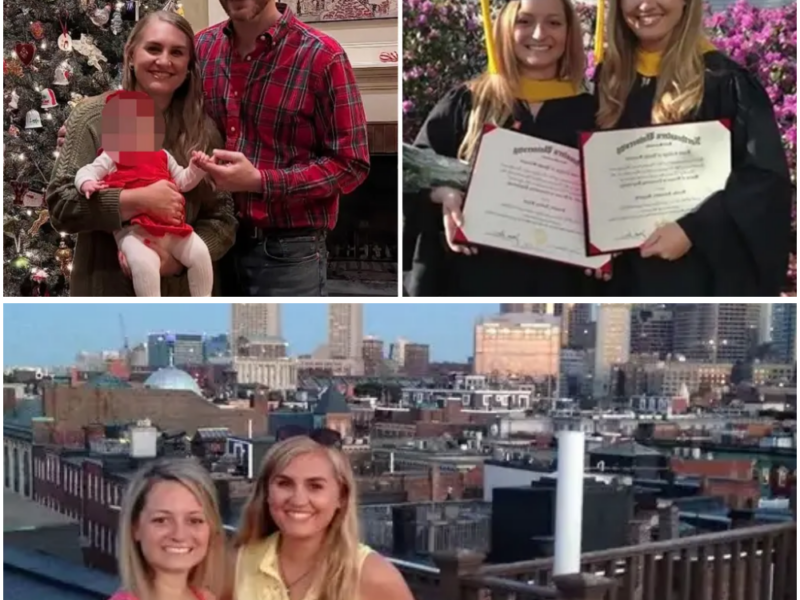
Payne continues to share photographs from their Boston years and the life that followed, determined to keep the focus on who Brooke was rather than solely on how she died. “I can’t even begin to imagine what her family is going through,” she said. “What I’m feeling is only a fraction of their pain. More than anything, I hope they know how deeply Brooke was loved and how wonderful of a family they were to her. I want them, especially Brooke’s daughter, to remember her beautiful and full life that I was so grateful to be part of, and not just the ending to it. But the longer this drags out, the more focus is put on her death, when Brooke was so much more than that to so many people.”
The absence of a named suspect after eight weeks has fueled private speculation and public anxiety in equal measure. Was the attack random? Was it someone known to the family? Did it stem from a professional connection or a personal conflict? Investigators have offered no guidance. The modest reward, the limited official statements, and the husband’s silence have only deepened the sense that this case refuses to follow the usual patterns of public homicide investigations.
Brooke Hanlon spent her professional life helping others navigate emotional pain. She had trained for that work, built a practice, married, moved, and become a mother. On an ordinary June morning that carefully constructed life was ended by multiple sharp force injuries inside her own home. The person or persons responsible remain unidentified. For Jennifer Payne and others who loved Brooke, the days continue to pass without the clarity that might allow them to begin true mourning. The case, as Payne put it, remains “so unusual even for a murder”—a violent death followed by an almost unbroken official silence that leaves those left behind trapped between grief and unanswered questions.
As the investigation enters its third month, the central facts remain unchanged. A young mother is dead. A toddler has lost her parent. A husband has offered no public account. And a close friend continues to wait, stuck in the functional freeze of a loss that refuses to resolve. The photographs Payne shares show a smiling graduate student, a newly married woman, a new mother. Those images now stand in painful contrast to the empty spaces left by an investigation that has yet to name a single person of interest.