Quiet suburbs in northwest Bexar County, Texas, just outside San Antonio, hide stories that can break even the strongest hearts. One such story began on Christmas Eve 2025, when 19-year-old Camila Mendoza Olmos stepped out of her family home for what everyone assumed was her usual early-morning walk. She never came back. Six days of desperate searching, nationwide media coverage, and collective prayer followed. Then, on December 30, search teams discovered a body in tall grass only a few hundred yards from the Olmos residence, next to a handgun. The Bexar County Medical Examiner identified the remains as Camila’s and ruled the cause of death as suicide by gunshot wound to the head.
Yet for Rosario Olmos, Camila’s mother, the official conclusion felt like an impossible betrayal of reality. When authorities delivered the news, her immediate response cut through the room like a blade: “That’s not my daughter. She was lying next to me just yesterday. How could she be gone like this?” Those words, spoken through sobs and disbelief, have since become the haunting centerpiece of a tragedy that refuses to settle into quiet acceptance.
Camila was more than a missing-person statistic. Friends and family paint a portrait of a young woman brimming with quiet ambition and deep affection. Raised partly in Southern California before the family relocated to Texas, she carried a gentle intensity that made people feel seen. She dreamed of becoming an orthodontist—a career chosen, she once told her mother, because she loved the idea of giving people confidence through their smiles. Enrolled at Northwest Vista College, Camila balanced classes with family responsibilities, often helping care for her younger siblings. At home, she remained Rosario’s closest companion. The two shared a bedroom, a habit born from years of closeness. On the night of December 23, they fell asleep side by side as they often did, talking softly about holiday plans until drowsiness took over.

Early the next morning, Rosario felt Camila stir and slip out of bed. Assuming it was the start of her routine walk to clear her mind, Rosario drifted back to sleep. Neighbor security footage later captured Camila around 7 a.m., dressed in a black hoodie, light-green pajama pants, and white sneakers. She appeared to search inside her car briefly before walking away alone. Crucially, she left her phone behind—still plugged in and powered off. That detail struck Rosario as alarmingly out of character. “Camila never went anywhere without her phone,” she later repeated to investigators and reporters alike. By midday, worry turned to panic, and Rosario contacted the Bexar County Sheriff’s Office.
What followed was a search effort that galvanized an entire region. Authorities issued a CLEAR Alert, signaling imminent danger for a missing adult. The FBI lent federal resources. Texas EquuSearch, the renowned nonprofit that has located hundreds of missing persons, mobilized ground teams, drones, and K-9 units. Hundreds of volunteers—many of them complete strangers—descended on the area, combing fields, drainage ditches, and wooded patches under the harsh Texas sun. Churches organized candlelight vigils; local businesses posted flyers bearing Camila’s warm smile and pleading eyes. Social media exploded with #FindCamila posts, turning a local disappearance into a national conversation covered by CNN, NBC News, People Magazine, and countless local outlets.
Rosario became the public face of hope. Day after day, she stood before cameras, voice cracking yet resolute, begging anyone with information to come forward. “Camila is my heart, my everything,” she said at one press conference, clutching a rosary so tightly her knuckles whitened. She walked the same routes her daughter might have taken, calling Camila’s name into empty fields as if sheer maternal will could summon her home. Friends and neighbors marveled at her strength, even as exhaustion hollowed her features.
Behind the public determination, subtle clues about Camila’s inner world began to surface. Sheriff Javier Salazar disclosed that investigators uncovered evidence of undiagnosed depression and prior expressions of suicidal thoughts. A handgun registered to a family member had vanished from the home around the time Camila disappeared. Yet those revelations stunned many who knew her. Her father, Alfonso Mendoza—separated from Rosario but living nearby—insisted publicly that suicide was unthinkable. “She had plans, dreams, people who loved her,” he told reporters. Classmates recalled recent conversations filled with excitement about upcoming semesters and holiday gatherings. To outsiders, the portrait of Camila seemed one of quiet resilience, not imminent despair.
Then came December 30. A Texas EquuSearch team, revisiting an overgrown field near Burnin’ Bush Landscaping—just minutes from the Olmos home on foot—spotted something unnatural amid the tall grass. The discovery halted the search in its tracks. Authorities secured the scene quickly, recovering both a body and the missing family firearm. Preliminary examination suggested a self-inflicted wound. The following day, New Year’s Eve, the Medical Examiner’s Office delivered formal identification: dental records and other markers confirmed the remains belonged to Camila Mendoza Olmos.
For most, the confirmation brought crushing closure. Vigils shifted from hope to mourning. Flowers piled up at the discovery site. Social media tributes poured in—photos of Camila laughing at birthdays, captions declaring her forever 19, forever loved. But inside the Olmos home, closure felt like an assault.
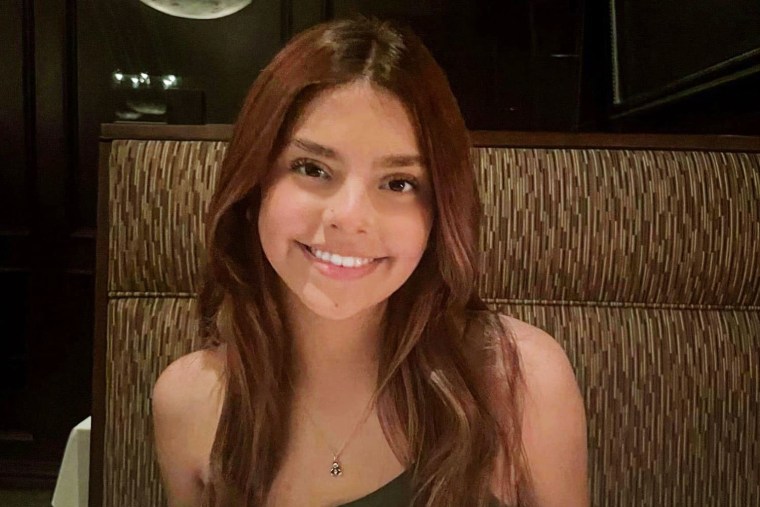
Rosario’s reaction was immediate and visceral. When detectives gently explained the findings, she shook her head violently, tears streaming. “No. That’s not my daughter,” she repeated, voice rising. “She was lying next to me just yesterday. How could she be gone like this?” Family members tried to comfort her, but she pushed away, pacing the living room as if movement could rewind time. She refused to view the body, insisting it would be a stranger. In the hours that followed, she clung to small rituals—straightening Camila’s side of the bed, folding the hoodie she last wore, replaying voicemails just to hear her voice. To Rosario, the official narrative felt like a cruel mistake, a mix-up that authorities would soon correct.
Psychologists familiar with acute grief recognize this response as classic denial—one of the earliest stages when loss arrives too suddenly to process. The mind rejects reality to shield itself from pain too immense to bear all at once. For a mother who shared a bed with her daughter mere hours before the disappearance, the leap from warm presence to cold absence defied comprehension. Rosario’s words—“She was lying next to me just yesterday”—became a mantra, anchoring her to the last tangible moment of normalcy.
Days after the identification, Rosario granted a brief interview to a local reporter on her front porch. Visibly frail, eyes swollen from endless crying, she spoke with quiet ferocity. “They tell me it’s her, but mothers know their children. I carried her, I raised her, I felt her breathing next to me that night. Something doesn’t feel right.” She acknowledged Camila’s quiet struggles—“We all have hard days”—but rejected the idea that her daughter could end her life without reaching out. “If she was hurting that much, she would have woken me. She always came to me.”
The family issued a statement thanking the community for its overwhelming support while asking for privacy to grieve. Yet even within that statement lingered traces of Rosario’s refusal: Camila, it read, “has gone to be with the Lord,” a phrasing that emphasized spiritual continuation over finality.
Mental health advocates have since used the case to highlight the silent nature of depression, especially among young adults. Too often, warning signs remain hidden behind smiles and daily routines. Camila’s story underscores how even loving, attentive families can miss the depth of a loved one’s pain. Resources like the 988 Suicide & Crisis Lifeline have seen increased mentions in local coverage, urging anyone struggling to seek help.
As 2026 begins, the field where Camila was found remains a makeshift memorial—teddy bears, candles, and handwritten notes weathering the Texas elements. Neighbors still drive past slowly, some crossing themselves. For the broader San Antonio community, the case serves as a somber reminder of fragility beneath ordinary lives.
Inside the Olmos home, time moves differently. Rosario reportedly still sets two places at the dinner table some evenings. She keeps Camila’s phone charging, half-expecting it to ring. Whether denial will eventually soften into acceptance remains uncertain; grief follows no predictable timeline. What is certain is the power of a mother’s love to defy even the harshest truth.
Camila Mendoza Olmos was 19 years old—full of dreams, surrounded by love, and quietly battling demons few saw clearly. Her story ended in a way no one wanted, but the echo of her mother’s heartbroken words ensures it will not be forgotten: “She was lying next to me just yesterday. How could she be gone like this?”