
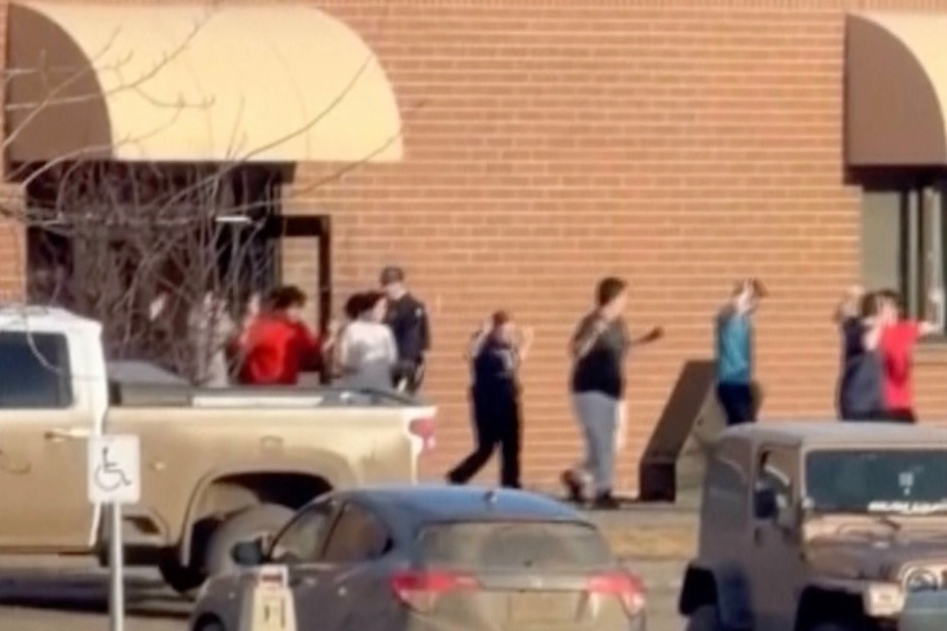
The crisp winter sun had barely crested the jagged peaks of the Rocky Mountains when terror descended on Tumbler Ridge, a remote mining town in northeastern British Columbia where life unfolds at a measured pace, dictated by the rhythm of coal trains and community hockey games. On February 10, 2026, what started as an ordinary Tuesday afternoon shattered into chaos at Tumbler Ridge Secondary School, a modest hub educating grades 7 through 12 in this community of just over 2,000 residents. Gunshots echoed through the hallways, transforming classrooms into scenes of unimaginable panic. By the time the smoke cleared, nine people lay dead—including the 18-year-old shooter—and at least 25 others bore wounds that would scar them physically and emotionally for life. Among the survivors clinging to hope is 12-year-old Maya Gebala, a courageous girl who, in a split-second act of heroism, tried to shield her classmates from the onslaught. Shot in the head and neck, Maya now battles for every breath in Vancouver’s BC Children’s Hospital, her story a beacon of resilience amid a national tragedy that has left Canada questioning how such darkness could infiltrate one of its most peaceful corners.
Maya’s ordeal began around 1:20 p.m. local time, as reports of an active shooter flooded emergency lines. The Royal Canadian Mounted Police (RCMP) swarmed the school, a single-story building nestled amid snow-covered pines, where students were midway through their afternoon routines. According to investigators, the rampage originated earlier that day at a quiet residence on the town’s outskirts. There, 18-year-old Jesse Van Rootselaar, a local resident with a documented history of mental health struggles, allegedly fatally shot her 39-year-old mother, Jennifer Strang, and her 11-year-old stepbrother. Van Rootselaar, who had transitioned to female six years prior and dropped out of the same school four years ago, then drove to Tumbler Ridge Secondary, armed with a semi-automatic rifle she had legally acquired in late 2025 after passing mandatory background checks. What drove her to this act remains under intense scrutiny, with police citing no clear motive but noting prior apprehensions for mental health assessments.
Inside the school, the horror unfolded predominantly in the library, a space meant for quiet study and discovery. Witnesses described a scene of pandemonium: bookshelves toppled, screams piercing the air, students scrambling under desks or barricading doors. Van Rootselaar moved methodically, firing over 30 rounds in a matter of minutes. Six lives were claimed there—one educator and five preteens aged 12 to 13—most huddled in futile attempts to hide. The teacher, a 39-year-old woman whose name has been withheld at her family’s request, died shielding a group of children, her body found slumped against a door she had tried to secure. The young victims included boys and girls on the cusp of adolescence, their backpacks still slung over chairs, homework unfinished.
It was in this maelstrom that Maya Gebala, a spirited 12-year-old with a heart as big as the mountains surrounding her hometown, became an unwitting hero. As the shooter approached the library, Maya sprang into action. Family accounts reveal she attempted to lock the door, buying precious seconds for her classmates to seek cover. When that failed, she dove under a desk, but the bullets found her anyway—striking her in the head and neck. Friends nearby, frozen in terror, noticed something miraculous amid the silence that followed: Maya’s finger twitching, a faint sign of life. They alerted medics, who rushed her from the bloodstained floor to an awaiting helicopter. Airlifted over 800 kilometers to BC Children’s Hospital in Vancouver, Maya arrived in critical condition, her young body battling severe trauma, including a brain bleed and swelling.

Her mother, Cia Edmonds, captured the raw agony in a Facebook post written from the sterile confines of the hospital waiting area. “I’m writing this post sitting in Vancouver Children’s Hospital while my daughter fights for her life,” she shared, her words a gut-wrenching plea that has since gone viral. “Today started as any other. [Now], however, my 12-year-old daughter is fighting for her life while they try to repair the damage from a gunshot wound to the head. And one to the neck… She was a lucky one, I suppose. Condolences to the other families during this tragedy… This doesn’t even feel real… I never thought I would be asking for prayers… but please please, pray for my baby.” In subsequent updates, Cia described the prognosis as “bleak,” with doctors urging more specialists to evaluate her daughter. “Our baby needs a miracle,” she wrote, her desperation palpable as she navigated the fog of exhaustion and fear.
Maya’s family, rallying around her bedside, paints a picture of a girl full of life and promise. Described by relatives as kind-hearted and brave, Maya loved the outdoors—skiing down powdery slopes in winter, exploring the forested trails in summer. She was the type of child who put others first, a trait that shone through in her final moments of consciousness. Her aunt, Krysta Hunt (sometimes referred to as Krystal), launched a GoFundMe campaign to alleviate the financial burden of extended hospital stays, travel, and potential long-term care. “Recovery timeline is unknown. All we know is that Maya made it through transport from Tumbler Ridge to Vancouver Children’s Hospital and currently in critical care,” Hunt wrote. As of February 13, 2026, the fundraiser had surpassed $51,000 from over 539 donors, a testament to the community’s outpouring of support. Hunt emphasized that the funds would allow Cia to remain by Maya’s side without the added stress of work or bills, noting the uncertainty of Maya’s path ahead. After emergency surgery to address the brain bleed, doctors monitored her response, but swelling persisted, casting a shadow over her recovery.
While Maya’s fight captivates the nation, she is but one thread in a tapestry of loss that has enveloped Tumbler Ridge. The deceased include Jennifer Strang and her young stepson, victims of the initial domestic assault that foreshadowed the school’s nightmare. At the school, the fallen educator leaves behind a legacy of selflessness, having mentored generations in art and drama. Among the students: 12-year-old Kylie May Smith, an “innocent soul” with a passion for anime and dreams of studying art in Toronto. Her family, devastated, shared collages of her life—skiing, figure skating, receiving awards as an “Artful Artist.” “She had the biggest heart and was such a gentle, loving, caring girl who lit up the way everywhere she went,” her mother, Desirae Pisarski, wrote. “You are at peace now, princess.”

Another young life extinguished was 12-year-old Abel Mwansa, a boy whose love for school was so profound he wept at the idea of homeschooling. His father posted a tribute: “I raised him to respect his elders, be strong, work hard, put a smile on his face like I do, focus on his studies, never miss school and to be a good kid.” Abel aspired to be a scientist, conducting homemade experiments with infectious enthusiasm. Thirteen-year-old Ezekiel Schofield, a hockey standout on the local U-15 team, dreamed of professional leagues, his skates a symbol of determination. His grandfather mourned: “We feel absolutely broken… So many young lives were ended so needlessly.” Two other girls, unnamed publicly, round out the heartbreaking tally, their families guarding privacy amid overwhelming grief.
The wounded, numbering up to 27, include Kylie’s brother Ethan, who survived by hiding in a utility room, emerging dust-covered but alive. Others, like 12-year-old Paige Hoekstra, also airlifted to Vancouver, face arduous recoveries. Her brother Nicholas shared: “Watching someone you love go through something like this is something you can’t really prepare for. We’re scared, we’re hoping, and we’re just taking it one moment at a time.” Medical teams worked tirelessly, treating injuries ranging from grazes to life-altering traumas, in a town ill-equipped for such a surge.
Tumbler Ridge, founded in the 1980s as a coal mining outpost, prides itself on its tight-knit bonds—neighbors sharing meals, kids playing freely in the vast wilderness. The shooting has fractured that illusion, leaving residents in a state of collective shock. That evening, over 800 people—nearly half the population—gathered in the biting -18°C cold for a candlelight vigil in the community center parking lot. Flames danced against the night sky as Mayor Darryl Krakowka addressed the crowd from a pickup truck bed: “We are one big, hurting family tonight. If you need a hug, reach out. We will carry this together.” Flowers, teddy bears, and hockey jerseys piled up at memorials outside the school and Strang home. Churches opened for counseling, mines granted paid leave, and schools across the district shuttered in solidarity.
Nationally, the tragedy has ignited a firestorm. Prime Minister Justin Trudeau proclaimed February 12 a provincial day of mourning, pledging increased mental health funding for rural areas. Conservative Leader Pierre Poilievre called for a review of youth firearm access, highlighting how Van Rootselaar obtained her weapon despite red flags. Gun control advocates decry loopholes in Canada’s strict laws, which include bans on assault weapons and mandatory checks, yet failed to prevent this. Mental health experts point to systemic gaps: long waitlists for adolescent care in remote regions, compounded by stigma around transgender issues. Van Rootselaar’s history—multiple psychiatric interventions, isolation post-dropout—underscores the need for better support.
Social media has amplified the discourse, with Jennifer Strang’s 2024 Instagram post resurfacing: a conservative-leaning plea against transphobia, warning of its deadly toll on youth. “Do you have any idea how many kids are killing themselves over this kind of hate? Please STOP the bulls–t!” she implored. Her words now haunt discussions, fueling calls for inclusive policies and anti-hate education.
As February 13 dawns, Tumbler Ridge clings to hope. Funerals loom, investigations grind on, but stories like Maya’s inspire. Her finger’s twitch, her mother’s unwavering vigil—these are emblems of human tenacity. Experts warn recovery could span years: physical therapy for wounds, counseling for trauma. Yet, in Maya’s fight, Canada sees its own resolve. Will this tragedy spur change, or fade into statistics? For now, prayers echo from coast to coast: Hold on, Maya. Your miracle awaits.
This massacre joins a grim lineage—from École Polytechnique in 1989 to Nova Scotia in 2020—reminding us that no community is immune. In Tumbler Ridge’s quiet streets, where snow muffles footsteps, the echoes of gunfire linger. But so does the spirit of survivors like Maya, urging us to build a safer tomorrow. As Cia Edmonds sits by her daughter’s bed, watching monitors beep in rhythm with fragile breaths, she embodies every parent’s nightmare—and hope. Maya Gebala, the girl who locked the door, now unlocks a nation’s heart. Fight on, little one; the world roots for you.