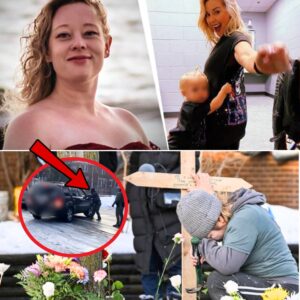
The tragic death of Renee Nicole Macklin Good on January 7, 2026, has become one of the most polarizing incidents in recent American history, igniting fierce debates over immigration enforcement, police use of force, civil rights, and the very nature of justice in a deeply divided nation. In the early morning hours of that snowy day in Minneapolis, Minnesota, a 37-year-old U.S. citizen, devoted mother of three, award-winning poet, and loving wife was fatally shot by U.S. Immigration and Customs Enforcement (ICE) agent Jonathan Ross. What began as an ordinary school drop-off for her youngest child ended in gunfire captured on multiple bystander videos that have since gone viral, sparking nationwide protests, political firestorms, and a renewed reckoning with federal authority under the second Trump administration.
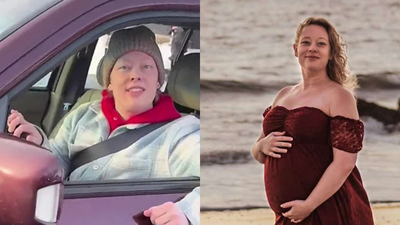
Renee Good—affectionately known as “Nae-Nae” to her family—was described by her loved ones as “the beautiful light of our family.” In a poignant statement released on January 14, 2026, her parents, Tim and Donna Ganger, along with her four siblings and attorneys, painted a vivid portrait of a woman whose “seemingly infinite capacity for love” touched everyone she encountered. “Nae was the beautiful light of our family and brought joy to anyone she met,” they wrote. “She was relentlessly hopeful and optimistic which was contagious. We all already miss her more than words could ever express.” They emphasized her role as “our best friend,” a protector, a shoulder to cry on, and “our scintillating source of joy.” Renee gave everything she had to care for friends, family, and even strangers, embodying a generosity that her family says was returned in the outpouring of support following her death: “The kind of unending care we’ve been given during this time is exactly the kind that she gave to everyone.”
Born on April 2, 1988, Renee Nicole Macklin Good had recently moved to Minneapolis with her wife, Becca Good, and their children. She was a passionate poet and guitarist, having won awards for her writing, and loved singing. A mother of three—including a 6-year-old whom she had just dropped off at Southside Family Charter School that fateful morning—Renee was deeply involved in her community. She served on the board of her son’s school, which had connections to efforts encouraging parents to monitor ICE activities and participate in related training. While not an immigrant herself, Renee was a staunch supporter of her neighbors, many from Somali and other immigrant communities targeted in the ICE operation that day.
The ICE action in Minneapolis was part of a broader, controversial crackdown on alleged immigration fraud linked to Somali immigrants, involving the deployment of militarized federal agents. This operation unfolded against the backdrop of heightened immigration enforcement in the early days of President Donald Trump’s second term, with reports of aggressive tactics across the country—including smashed car windows, pepper spray projectiles, and tear gas used against onlookers.
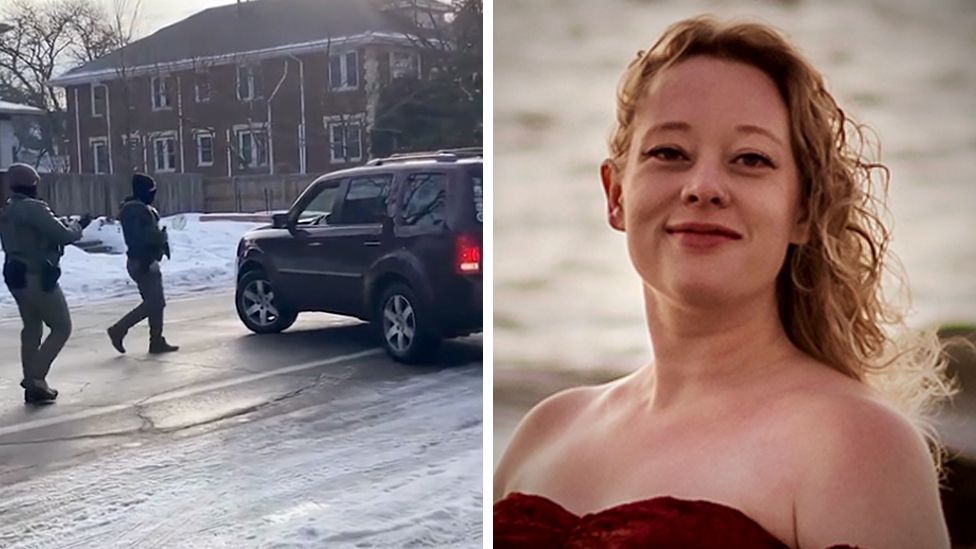
According to accounts from Good’s family and attorneys, the morning began routinely. Renee and Becca, accompanied by their dog, were driving their Honda Pilot SUV after the school drop-off when they encountered federal agents conducting enforcement in their neighborhood. Intending to “observe, with the intention of supporting and helping their neighbors,” the couple stopped. Becca exited the vehicle shortly before the critical moment. Agents approached Renee, who remained in the driver’s seat, and ordered her to exit. Video footage—widely circulated and analyzed—shows Renee speaking calmly to the agents. Her last recorded words, heart-wrenching in their composure, were: “I’m not mad at you.”
What happened next has become the crux of national contention. Renee drove her SUV forward, an action DHS officials describe as an attempt to run over agent Jonathan Ross, labeling it “domestic terrorism.” Ross, an Iraq veteran, fired three shots: one through the windshield and two more through the open driver’s side window as the vehicle passed him. Renee was killed almost instantly. Bystander videos captured the aftermath, including distressing scenes where ICE agents allegedly prevented a doctor from checking her pulse or rendering aid.
The Department of Homeland Security has staunchly defended Ross, stating he acted properly. Justice Department officials have asserted there is “no basis” for a criminal investigation. Vice President J.D. Vance has claimed the agent enjoys absolute immunity—a position legal experts have refuted, noting federal agents can face prosecution for willfully depriving individuals of civil rights under color of law. Yet the official narrative contrasts sharply with widespread public perception. Polling conducted shortly after the incident indicated that a majority of American voters viewed the shooting as unjustified.
Renee’s family has rejected the “domestic terrorism” characterization. They describe the encounter as a tragic “chance encounter,” not a premeditated confrontation. In their January 14 statement, they announced they had retained the Chicago-based law firm Romanucci & Blandin—the same firm that represented George Floyd’s family in 2020—to conduct a civil investigation aimed at holding ICE accountable. “What happened to Renee is wrong, contrary to established policing practices and procedures, and should never happen in today’s America,” the firm declared.
The incident has drawn sharp political lines. Top Democrats, including members of the Homeland Security Committee, have called for Ross’s arrest and launched probes. Congressman Al Green and others held news conferences condemning the killing and demanding transparency. Protests erupted across the U.S., with activists drawing parallels to past cases of excessive force. Poet Amanda Gorman expressed profound grief on social media, mourning Renee as a fellow poet and mother while decrying “the ongoing violence that ICE wages upon our community.” City leaders in Minneapolis, including Mayor Jacob Frey and Governor Tim Walz, have faced pressure to respond, with some questioning whether the agents were even acting within their authority when ordering a U.S. citizen out of her vehicle during a routine drive.

Legal questions abound. Was Renee obligated to comply with the ICE agent’s orders? Experts note that while individuals must generally follow lawful commands, it remains unclear if the agents’ authority extended to this scenario involving a non-immigrant bystander. Could the family sue ICE? The answer is complicated, involving potential civil rights claims under federal law, though qualified immunity and other barriers often shield agents.
Renee’s death has also highlighted broader tensions in immigration policy. The deployment of militarized agents in communities has been criticized as inflammatory, especially in diverse neighborhoods like those in Minneapolis. Reports of ICE tactics—smashing windows, using projectiles—have fueled accusations of overreach. For many, Renee’s killing symbolizes the human cost of aggressive enforcement: an innocent bystander, a mother simply trying to support her neighbors, caught in the crosshairs.
Yet amid the outrage, voices urge nuance. Some, including Renee’s former father-in-law Timmy Macklin, have expressed reluctance to assign blame outright: “I don’t blame ICE. I don’t blame Renee.” Others point to the chaos of the moment, the fear agents may have felt, or the complexities of split-second decisions.
For Renee’s family, the pain is raw and personal. They grieve not just a wife, mother, and sister, but a woman whose optimism and love defined her. Her children now face life without her presence—the stuffed animals once hanging from the glove compartment of her SUV a heartbreaking reminder of the ordinary joys she cherished.
As the civil investigation proceeds and protests continue, Renee Good’s story forces America to confront uncomfortable truths: about the limits of federal power, the value of due process, and the fragile line between enforcement and tragedy. Her last words—”I’m not mad at you”—echo as a plea for understanding in a moment of irreversible violence. In death, this “beautiful light” has illuminated divisions that may take years to heal, compelling the nation to ask: How did a routine morning turn deadly, and what must change to ensure it never happens again?