PLOT TWIST: Two Homeschooled Teens in Camo Leave Chilling Writings on Weapon After San Diego Incident – What the Suicide Note Really Said Has Everyone Talking…
Families arriving for prayers, children heading to classes nearby — then everything changed in moments that no one saw coming.
Authorities are piecing together a troubling picture involving two young men, writings about racial pride, and messages on a firearm that have left the community searching for answers.
The full story reveals layers that raise hard questions about warning signs, family alerts, and what drives such events.
👉 Read the complete report and see the latest developments here. What do you think happened? Share your thoughts below.
San Diego Mosque Incident Leaves Community Seeking Answers as Investigators Examine Writings and Backgrounds
Authorities in San Diego are continuing their review of a May 18, 2026, event at the Islamic Center of San Diego that resulted in the deaths of three individuals at the facility and the subsequent discovery of two young male suspects who had taken their own lives nearby. The episode, now under joint examination by local police and the FBI as a potential hate-motivated case, has prompted fresh discussions about mental health support, family awareness, and community safety.
Details emerging from law enforcement briefings paint a sequence that began with an early morning alert from a concerned parent. Roughly two hours before the reported activity at the mosque, the mother of 17-year-old Cain Clark contacted police to report that her son and his vehicle were missing. She also noted that several firearms from the home were unaccounted for. According to San Diego Police Chief Scott Wahl, the mother expressed worries about her son’s state of mind, describing thoughts of self-harm, and mentioned he was with another person. Both were said to be wearing camouflage-style clothing.
This call triggered a broader assessment by authorities, who recognized the combination of potential self-harm concerns and access to multiple firearms as a serious situation requiring prompt attention. Officers moved quickly, but by the time they responded to the Islamic Center — described as the largest mosque in the San Diego area — the tragic outcomes had already unfolded.
Three adults lost their lives outside the center during the incident. One was a security guard whose quick actions were later praised by officials as having helped protect others inside, including staff and students at an attached school. The identities of the deceased have not been fully released by authorities pending family notifications, but early reports indicate they were connected to the mosque community. A landscaper working in the vicinity was reportedly targeted but escaped injury.
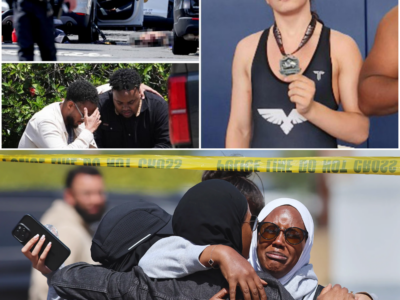
Law enforcement located a vehicle a short distance from the mosque containing the bodies of two males, identified through sources as 17-year-old Cain Clark and 18-year-old Caleb Velasquez. Both appeared to have died from self-inflicted gunshot wounds. The pair had reportedly been homeschooled or involved in virtual learning environments, and Clark was known locally as a wrestler.
What has drawn particular attention from investigators are items recovered during the search. Officials told multiple outlets that a note left at one of the suspects’ residences referenced themes of racial pride. Additionally, messages described as expressing strong dislike were found inscribed on one of the firearms involved. The exact content has not been publicly released, and Chief Wahl emphasized that the note did not name the mosque or any specific location as a target. Instead, he characterized the language as covering a broader range of generalized sentiments.
The FBI’s San Diego field office, led by Special Agent Mark Remily, confirmed close coordination with local partners. Teams are interviewing family members, friends, and acquaintances while collecting and analyzing evidence from the scene. At this stage, the focus remains on understanding the full sequence of events and any contributing factors.
Community leaders at the Islamic Center and across San Diego have expressed sorrow over the loss of life and concern for those affected. The security guard’s efforts have been highlighted in statements as an example of courage under difficult circumstances, with reports suggesting his response helped limit further impact inside the building where children and staff were present. Fundraisers for the families of the deceased have already gained significant support online.
This incident arrives amid ongoing national conversations about youth mental health, access to firearms in households, and the role of online or personal beliefs in shaping behavior. Homeschooling or virtual education environments, like those associated with the suspects, have come under occasional scrutiny in similar past reviews, though no direct connection has been established here. Clark’s background as a wrestler also raises questions about whether sports participation or social circles provided any observable indicators that were missed.
As the investigation proceeds, officials are careful not to draw premature conclusions. The classification as a potential hate-related matter stems from the combination of the writings and the choice of location, but investigators continue to explore all angles, including personal struggles and interpersonal dynamics between the two young men.
Residents in the area have described the Islamic Center as a hub for worship, education, and community gatherings. The mosque serves a diverse population, and its school component provides instruction for younger members. The sudden disruption has left many reflecting on everyday routines that can shift without warning. Local leaders have called for unity and support for those grieving while urging anyone facing personal difficulties to seek help through available resources.
Broader context includes previous high-profile events involving young individuals and firearms, which often lead to renewed debates on prevention strategies. Mental health professionals note that warning signs such as expressed thoughts of self-harm, sudden withdrawal, or fixation on certain ideologies can sometimes be subtle. In this case, the mother’s decision to contact authorities demonstrates one form of intervention that, while timely, could not prevent the outcome.
Experts following the case point to the importance of secure storage practices for firearms in homes with young people experiencing distress. They also emphasize expanded access to counseling services, especially for teens navigating complex identity or social issues. Racial pride themes in the recovered note, while not fully detailed publicly, have prompted some commentators to discuss how personal beliefs can intersect with mental health challenges in unpredictable ways.
San Diego Police have increased visibility around the area in the days following the event to reassure the public. The FBI continues its parallel review, which may include digital records, communications, and any materials belonging to the suspects. No additional threats have been identified, according to official statements.
For the families connected to the Islamic Center, the coming weeks will involve mourning and rebuilding a sense of security. The loss of the security guard, described by some as a father figure within the community, has particularly resonated. Stories shared by those who knew him portray a dedicated individual who prioritized the safety of others. Similar sentiments are emerging about the other victims, though details remain limited.
On a wider scale, this episode adds to data points reviewed by policymakers and advocacy groups focused on violence prevention. Organizations representing various faith communities have issued statements condemning loss of life and calling for dialogue across differences. Some have specifically asked public figures to avoid language that might heighten tensions.
Investigators face the challenge of reconstructing timelines with precision. The mother’s call provided a critical window, yet the rapid progression of events limited response options. Questions persist about how the two young men connected, what activities they shared in the period leading up to the incident, and whether any external influences played a role. Virtual learning setups, while offering flexibility, can sometimes reduce daily oversight from educators who might notice changes in behavior.
Clark’s identification as a wrestler brings another dimension. Sports can build discipline and community, but they can also involve pressure or isolation depending on individual circumstances. Friends and acquaintances interviewed by media expressed surprise at his involvement, describing him in terms that suggested a typical teenage profile prior to the event. Similar reactions have surfaced regarding Velasquez.
As more information surfaces, the public’s attention has turned toward understanding root causes rather than assigning simple labels. Mental health hotlines have seen increased calls in the region, reflecting a positive response where people seek support for themselves or loved ones. Schools and community centers are reinforcing available resources.
The recovery of items with specific inscriptions has fueled speculation, but authorities maintain a measured approach. The absence of a direct threat to the mosque in the note suggests the selection of the location may have stemmed from broader sentiments rather than a long-planned operation against that site. This nuance matters for both the legal classification and prevention lessons.
Looking ahead, San Diego officials plan continued engagement with the affected community. Support services for witnesses, families, and first responders are being coordinated. The incident serves as a reminder of the complex interplay between personal struggles, household environments, and societal influences.
In examining this case, several themes emerge that warrant deeper reflection. First, the role of parental vigilance when signs of distress appear. Second, the effectiveness of rapid law enforcement response once alerts are received. Third, the ongoing need for balanced discussions around youth development, belief systems, and access to means that can lead to irreversible choices.
Communities across the country often respond to such events with increased awareness campaigns. Faith-based organizations, in particular, have strengthened security reviews while maintaining open doors for worship. The Islamic Center’s experience may accelerate similar evaluations in other locations.
For those following the story, the coming days will likely bring additional context from toxicology reports, full autopsies, and further interviews. Digital footprints, if any, could provide insight into thought processes without excusing outcomes. The goal remains prevention through understanding.
This San Diego case, while unique in its details, echoes patterns seen elsewhere: young individuals in crisis, access to firearms, and writings that reveal inner turmoil. Addressing these requires multifaceted efforts — from family communication to professional intervention and societal support systems.
As the investigation advances, authorities continue to ask for public assistance with any relevant information. The community’s resilience will play a key part in healing, alongside a commitment to learning from difficult moments. The lives lost represent not only individual tragedies but also opportunities for broader conversations that could protect others in the future.