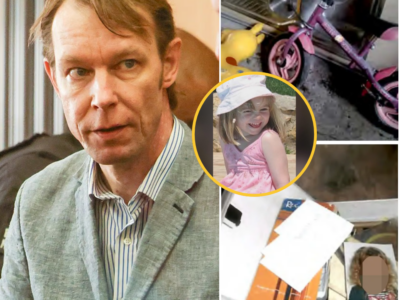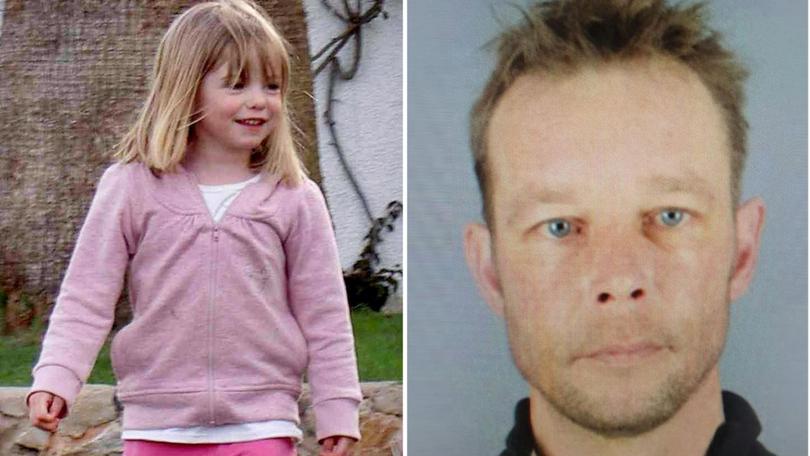
The shadow of uncertainty has loomed over the Madeleine McCann case for nearly two decades, but recent developments have injected fresh tension and dread into an already heartbreaking saga. Christian Brueckner, the 49-year-old German man long identified as the prime suspect in the disappearance of the three-year-old British girl from a Portuguese holiday apartment in 2007, has reportedly returned to his hometown of Braunschweig. This move has sparked intense alarm among investigators and sources close to the probe, who fear he may be positioning himself to retrieve hidden evidence from a remote, abandoned property he once controlled—and then vanish beyond the reach of justice.
Brueckner, often referred to in stark terms as a convicted rapist and paedophile, was released from a German prison in September 2025 after completing a seven-year sentence for the brutal rape of a 72-year-old American woman in Portugal’s Algarve region back in 2005—the very area where Madeleine vanished. Since walking free, he has lived an elusive existence, reportedly camping in remote woodlands across northern Germany to evade scrutiny, vigilante threats, and constant media attention. His freedom came despite German prosecutors’ insistence that he remains their key figure in the Madeleine inquiry, which they treat as a murder investigation. No charges have ever been filed against him in connection with the child’s disappearance, and he has consistently denied any involvement.
The abandoned box factory that has now become central to these latest fears is no ordinary derelict building. Located near Braunschweig, it served as Brueckner’s isolated hideaway after he purchased it at auction for around £31,500. Investigators discovered that he used the site to conceal disturbing materials: a buried cache of photos and videos depicting sexual abuse. These grim finds formed part of the evidence that helped convict him in unrelated sex crimes and reinforced suspicions about his predatory patterns. Sources suggest the factory may hold even more secrets—items that could either incriminate him further or provide leverage in his ongoing bid to evade accountability.

A source familiar with the case expressed profound concern: “There have been all kinds of suggestions that more secrets are buried at his box factory. The nightmare scenario is he gets to whatever is there and disappears with it. That could end any hopes of seeing a McCann case in court.” The fear is palpable—Brueckner, having slipped surveillance multiple times since his release, could dig up whatever remains hidden, destroy it, or transport it abroad, effectively burying any prospect of a trial that has eluded authorities for years.
Tracking Brueckner has proven extraordinarily challenging. After his prison release, he initially lived in a tent in forested areas, moving frequently to avoid detection. Reports indicate he has been spotted scuttling along railway tracks and through dense woodland, living “like a rat” to stay off the grid. At one point, he was guarded by two women locals nicknamed “helpers” and a vicious pit bull terrier at a makeshift camp. Police fitted him with an electronic ankle tag and imposed conditions, including surrendering his passport and registering an address, but a German court later overturned the requirement to remain in the country, citing EU freedom of movement rules. This ruling heightened anxieties that he could flee at any moment, rendering tracking devices useless once he crosses borders.
The box factory itself carries a chilling history tied to the broader suspicions around Brueckner. In January 2016, a neighbour reported what appeared to be a possible grave on the property, prompting earlier scrutiny. Buried items recovered there included the abusive media that contributed to his convictions. The property’s remote, wooded location made it an ideal spot for concealment—far from prying eyes, accessible only to someone familiar with its layout. Now, with Brueckner sighted in Braunschweig near this very site, the clock feels as though it is ticking louder than ever. Has he returned simply for nostalgia, or is this a calculated step toward erasing traces that could finally link him conclusively to Madeleine’s fate?

The Madeleine McCann disappearance remains one of the most haunting unsolved mysteries of modern times. On May 3, 2007, the toddler vanished from her family’s holiday apartment in Praia da Luz while her parents, Kate and Gerry McCann, dined nearby with friends. The case exploded into global headlines, sparking massive searches, false leads, conspiracy theories, and endless speculation. Early suspicions fell on various figures, but in June 2020, German authorities dramatically named Brueckner as their prime suspect, revealing they believed Madeleine was dead and that evidence—including mobile phone data placing him in the area—pointed to him.
Brueckner’s life before and after that fateful night paints a disturbing portrait. A drifter with a long criminal record, he lived in the Algarve around the time of the abduction, working odd jobs and reportedly engaging in burglaries of holiday homes—similar to the method many believe was used to enter the McCanns’ apartment. Witnesses have come forward over the years with claims that he made incriminating statements, including alleged confessions to a former cellmate about involvement in a child’s disappearance. One key witness, Helge Busching, claimed Brueckner all but admitted the crime during a conversation years ago.
Despite these threads, the case against him has remained circumstantial. German prosecutor Hans Christian Wolters has repeatedly stated confidence in Brueckner’s guilt but acknowledged the need for more concrete forensic ties. A hard drive and other digital evidence reportedly led investigators to conclude Madeleine is deceased, yet no direct physical proof has publicly surfaced linking Brueckner to her. Efforts to build a watertight prosecution have been hampered by his acquittals in some unrelated sexual offence trials—though appeals and retrial possibilities linger. As recently as February 2026, Germany’s top prosecutor backed a potential retrial for some cleared charges, offering faint hope that renewed legal pressure could force more revelations.
Brueckner’s post-release behaviour has only amplified unease. He was briefly housed in council accommodation after locals protested his initial placement near vulnerable people, including areas where children played. Photos showed him peering from windows overlooking playgrounds, fuelling outrage. He has attempted to purchase untraceable phones and even boasted to a shop worker about possessing information that could “solve the scandal of the century.” In interviews, he has portrayed himself as persecuted, insisting the focus on him is a “witch hunt” and claiming he does not feel truly free.
For the McCann family, the years have been an unrelenting ordeal. Kate and Gerry have maintained tireless campaigns, private investigations, and public appeals, never giving up hope despite the passage of time. Madeleine would now be in her early twenties if alive. Their poignant New Year messages have expressed cautious optimism for breakthroughs, even as setbacks mount.
The current fears surrounding the box factory underscore a broader frustration: justice delayed may become justice denied. If Brueckner succeeds in retrieving and destroying potential evidence, the window for prosecution could slam shut permanently. Police resources are stretched, surveillance imperfect, and legal constraints limit preemptive action. Sources describe investigators as “deflated” by his freedom, yet determined to pursue every avenue.
This twist revives the raw emotions that have gripped the public since 2007—outrage at a predator walking free, sympathy for a family in perpetual limbo, and dread that the truth might slip away forever. As Brueckner lurks near his old lair, the question hangs heavy: what secrets still lie buried in that abandoned factory, and will anyone reach them before he does?
The world watches, hoping against hope that this chapter does not end in silence. Madeleine’s story deserves resolution, not another layer of obscurity. Every sighting, every rumour, every fear of flight brings the case back into sharp focus, reminding us that the search for answers continues—even as the suspect appears to be one step ahead.