The quiet suburb of Rancho Cordova, just east of Sacramento, California, has always prided itself on safe streets, friendly neighbors, and families raising children in a peaceful community. On the morning of January 27, 2026, that illusion shattered in the most horrifying way imaginable. Inside a modest single-story home on Mill Water Circle, in the Kabbalah Ranch neighborhood, deputies from the Sacramento County Sheriff’s Office discovered four bodies: a husband, a wife, and their two young children, all dead from multiple gunshot wounds. What began as a routine response to reports of gunfire quickly escalated into a tense standoff when a chilling 911 call came in, claiming the caller was the shooter and had rigged the house with “booby traps” before turning off his cellphone.

The victims were David Edward Vallerga Jr., 58, a military veteran; his wife, Lindsey G. Peralta Vallerga, 49; their 13-year-old son, Colton Drake Peralta Vallerga; and their 11-year-old daughter, Sydney Peralta Vallerga. Authorities swiftly ruled the incident a murder-suicide: David Vallerga had allegedly shot his wife and children before taking his own life. Yet the initial drama surrounding the “booby-trapped” home—and the eerie phone call—left the community reeling, haunted by questions about what drove a seemingly ordinary family man to such unthinkable violence.
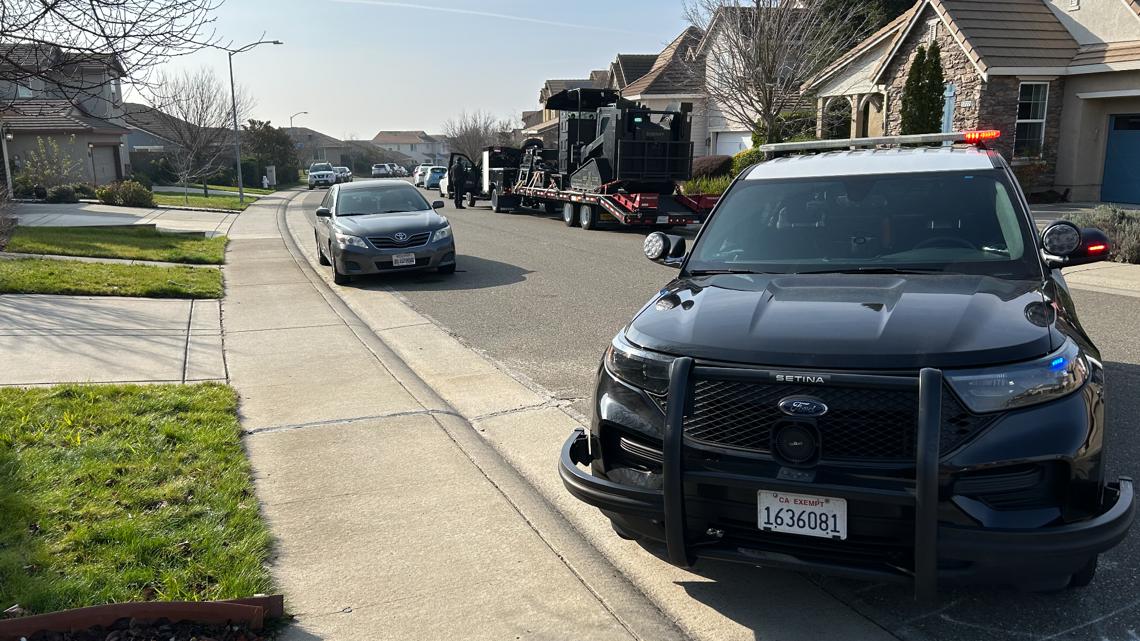
The nightmare unfolded around 8:30 a.m. on that fateful Tuesday. Dispatchers received the first call reporting possible gunfire in the area of Copper Sunset Way and Mill Water Circle. Minutes later, a second call came in from a male voice that would later be linked to David Vallerga. According to audio reviewed by the Sacramento Bee and confirmed by sheriff’s officials, the caller stated calmly but ominously: “I’m the shooter. I’m setting up booby traps and turning off the cellphone.” The words sent a chill through first responders. In an era of active-shooter scenarios and domestic terrorism fears, such a warning demanded extreme caution. The Sacramento County Sheriff’s Office mobilized heavily: deputies, SWAT teams, explosive ordnance disposal units, drones, and even a robot for breaching entry points.
Deputies approached the home warily. Visible damage marred the fence and sliding glass door at the rear—likely from forced entry during the tactical response. A drone was launched inside, revealing one unresponsive male on the floor. Once the scene was deemed safe, officers entered and made the grim discovery: four bodies, all bearing fatal gunshot wounds. No explosives, tripwires, or any form of booby traps were ever found. The “traps” claim, it turned out, was a false alarm—or perhaps a deliberate misdirection in the final moments of a desperate mind.
Investigators pieced together a tragic picture. David Vallerga, the homeowner, owned the $633,000 property jointly with his wife. Public records and neighbors painted the Vallergas as a homeschooling family who ran a tutoring business together. They kept chickens in the backyard, often sharing fresh eggs with neighbors as a friendly gesture. Lindsey’s last Facebook post, dated January 23—just four days before the killings—showed a seemingly normal family life. David, meanwhile, maintained an online presence that portrayed him as a devoted father: photos of outings with Colton, “boys’ nights” shopping for dinner, family bonding moments. To the outside world, they were the picture of suburban stability.
Yet cracks existed beneath the surface. Neighbors, speaking anonymously to outlets like the New York Post and local media, described occasional disturbances. One longtime resident recalled hearing frequent yelling, including an instance where David shouted at Lindsey, “I’m going to F you up.” A neighbor with military experience, living two houses away, speculated that David may have suffered from PTSD stemming from his service—though no official confirmation of diagnosis or treatment has emerged. Another neighbor noted the Vallergas’ children were creative and playful—painting, inventing games—but admitted the household often echoed with swearing and raised voices. “The dude was kind of unhinged,” one said, explaining why no one ever called police. “I never saw smiles off their faces when we interacted,” another added, contrasting the public warmth with private turmoil.
Inside the home, authorities found a staggering arsenal: 16 firearms in total, including two pistols believed used in the killings. The sheer number of weapons raised immediate questions about access, mental health, and warning signs. California’s strict gun laws notwithstanding, private collections like this are not uncommon in suburban areas, but the volume added to the sense of foreboding. The children—Colton, a teenager on the cusp of high school, and Sydney, still in elementary years—had their lives ahead of them, cut short in the place they should have felt safest.
The community’s response was one of profound shock and grief. Rancho Cordova, part of the greater Sacramento region, is known for its family-friendly vibe—parks, good schools, quiet cul-de-sacs. Neighbors gathered outside yellow tape lines, hugging, crying, sharing memories. “Their kids played with our kids. We’ve been their neighbors for over 14 years,” one said. “We were like, ‘Oh, they didn’t seem off.’” Another emphasized the neighborhood’s warmth: “We’re gonna support one another. This is a warm and living community. We’re gonna miss them.” Vigils sprang up spontaneously, candles flickering against the winter dusk, teddy bears and flowers piling up near the home.
For law enforcement, the incident was heartbreakingly familiar yet uniquely disturbing. Sgt. Edward Igoe of the Sacramento County Sheriff’s Office described the difficulty: “It’s always difficult. A response to something of this magnitude is always extremely difficult. And honestly, as an agency, just our prayers are with friends and families of those involved today.” The use of drones and robots underscored modern policing tactics in potential high-risk entries, especially after the booby-trap warning. Clearing the home took hours, with explosive experts methodically searching for nonexistent devices.
This tragedy fits into a grim national pattern of familicide—murder-suicides within families—that claim hundreds of lives annually in the U.S. Experts point to factors like untreated mental illness, financial stress, domestic discord, and easy access to firearms. In David’s case, speculation swirls around possible PTSD, marital strain, or a sudden breakdown. No suicide note has been publicly mentioned, leaving motives opaque. The 911 call itself raises chilling possibilities: Was it a taunt to authorities? A cry for help twisted into something darker? Or the act of a man determined to control the narrative of his final act?
The children’s deaths hit hardest. Colton and Sydney were described as bright, homeschooled kids who thrived in their parents’ structured environment. Neighbors recalled them riding bikes, playing in yards, embodying innocent childhood. Their loss has prompted renewed calls for mental health resources, especially for veterans, and for better intervention in households with red flags like frequent arguments or large gun collections.
As the investigation continues—autopsies completed, ballistics analyzed, phone records reviewed—the Sacramento region grapples with the aftermath. Counseling services have been offered to neighbors and first responders. The home on Mill Water Circle stands empty, a stark reminder of how quickly normalcy can vanish. David Vallerga’s final phone call echoes in the minds of those who heard it: a voice claiming traps that never existed, perhaps mirroring the invisible traps of despair that ensnared an entire family.
In the end, what remains is not just grief but a haunting question: How many other seemingly ordinary homes hide similar storms? Rancho Cordova, once a symbol of safe suburban life, now carries the weight of unimaginable loss. The Vallerga family—once vibrant, now forever silenced—serves as a tragic warning that darkness can lurk behind any closed door, waiting for the moment it breaks free.