Heartbreaking Sky Tragedy: 6 Heroic US Airmen Lost in Iraq KC-135 Crash – Families Shattered, No Signs of Enemy Fire 😢✈️💔 What Really Happened?

Tragedy struck the skies over western Iraq on March 12, 2026, when a U.S. Air Force KC-135 Stratotanker, a vital aerial refueling workhorse, plummeted to the ground during a high-stakes combat mission. All six crew members perished in the crash, marking a somber milestone in Operation Epic Fury—the ongoing U.S.-led campaign against Iranian aggression that has already claimed American lives and reshaped the Middle East security landscape. The Pentagon released the names of the fallen heroes on March 15, igniting waves of grief across military communities, hometowns, and families who now face a future forever altered by unimaginable loss.
The KC-135 Stratotanker, a Boeing-designed icon that has served faithfully for over six decades, plays an indispensable role in modern air warfare. Capable of extending the reach of fighter jets, bombers, and surveillance aircraft through mid-air refueling, it enables missions that would otherwise be impossible without landing for fuel. The aircraft can also transport wounded personnel and conduct intelligence gathering, making it a linchpin for sustained operations in contested regions. With hundreds still in service across active duty, Air National Guard, and Reserve units, the KC-135’s reliability has long been taken for granted—until moments like this shatter that illusion.
This particular aircraft belonged to a mixed crew drawn from elite units: the 6th Air Refueling Wing at MacDill Air Force Base in Florida and the 121st Air Refueling Wing at Rickenbacker Air National Guard Base in Columbus, Ohio. They were supporting Operation Epic Fury, a multifaceted effort involving intense U.S. and allied strikes on Iranian targets following escalations that drew in regional powers. In the opening days of the operation, American forces hit over 1,700 targets in Iran within the first 72 hours, underscoring the scale and urgency of the conflict. The crash unfolded in “friendly” airspace over western Iraq, far from direct enemy lines, yet the mission’s demands placed these airmen in harm’s way nonetheless.
Officials from U.S. Central Command and the Joint Chiefs of Staff were swift to clarify key details. Joint Chiefs Chairman Gen. Dan Caine emphasized that the incident involved no hostile or friendly fire. An interaction with another aircraft occurred— one that landed safely—while the KC-735 went down. The precise cause remains under rigorous investigation, with teams poring over flight data, wreckage, and witness accounts to uncover what went wrong in those fateful seconds. No evidence points to enemy action, but the tragedy has intensified scrutiny on aerial refueling protocols, mid-air safety measures, and the relentless pressures of wartime flying.
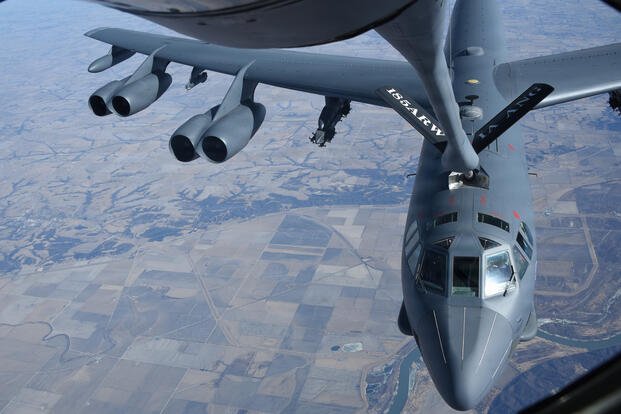
The six airmen represented the best of American service: experienced pilots, dedicated operators, and individuals whose personal stories reveal profound commitment to family, country, and comrades. Their loss brings the total U.S. troop fatalities linked to the Iran conflict to at least 13, a number that weighs heavily on a nation already grappling with the human cost of extended military engagement.
Leading the crew was Maj. John “Alex” Klinner, 33, of Auburn, Alabama. A graduate of Auburn University and an eight-year veteran, Klinner served with the 6th Air Refueling Wing at MacDill. Known for his steady command presence and selfless nature, he was an instructor pilot overseeing flight training—a role that demanded precision and mentorship. Beyond the cockpit, Alex was a devoted father to three young children: a 2-year-old son and 7-month-old twins. His wife, Libby Klinner, shared a heart-wrenching tribute: “They won’t get to see firsthand the way he would jump up to help in any way he could. They won’t see how goofy and funny he was. They won’t witness his selflessness, the way he thought about everyone else before himself. They won’t get to feel the deep love he had for them.” His brother-in-law, James Harrill, added: “It’s kind of heartbreaking to say: He was just a really good dad and really loved his family a lot—like a lot.” Alex embodied the quiet strength that defines so many in uniform, a man whose kindness and humor left lasting impressions on all who knew him.
Capt. Ariana G. Savino, 31, hailed from Covington, Washington, and was also assigned to the 6th Air Refueling Wing. As a pilot in the high-demand world of aerial refueling, she navigated complex maneuvers at altitude, ensuring fighters could stay airborne longer amid intense operations. Her service reflected the growing contributions of women in combat aviation roles, breaking barriers while upholding the highest standards of professionalism.
Tech. Sgt. Ashley B. Pruitt, 34, from Bardstown, Kentucky, brought critical expertise as part of the MacDill-based crew. Her role likely involved essential maintenance, systems management, or in-flight operations support—tasks that keep these aging aircraft mission-ready under grueling conditions. Pruitt’s dedication exemplified the unsung backbone of air mobility forces.
From the Ohio Air National Guard’s 121st Air Refueling Wing came three more fallen: Capt. Seth R. Koval, 38, of Mooresville, Indiana (though associated with Stoutsville, Ohio, through service); Capt. Curtis J. Angst, 30, of Wilmington, Ohio; and Tech. Sgt. Tyler H. Simmons, 28, of Columbus, Ohio. All served with the 166th Air Refueling Squadron.
Koval, a KC-135R Stratotanker instructor pilot and squadron operations chief, boasted 19 years of service, 2,076 total flight hours, and 443 combat hours—a testament to his expertise and bravery. A Purdue University graduate, he trained others to master the delicate art of boom operations, where precision can mean the difference between mission success and failure.
Angst, a KC-135R pilot with a degree in aerospace engineering from the University of Cincinnati, logged 880 total hours and 67 combat hours. His technical background and passion for flight made him a rising star in the unit.
Simmons served as a boom operator, the specialist who extends the refueling boom to connect with receiver aircraft. With 779 total hours and 230.4 combat hours, he was remembered for his infectious personality. Family described how “Tyler’s smile could light up any room, his strong presence would fill it.” His parents, grandparents, and loved ones are now left grieving the void created by his absence.
Maj. Gen. Matthew S. Woodruff, Ohio’s adjutant general, captured the collective sorrow: “Today we mourn the loss of three remarkable Airmen whose service and commitment embodied the very best of our Ohio National Guard.” Tributes have poured in from governors, colleagues, and communities, highlighting not just their professional accomplishments but the personal warmth they brought to those around them.
The crash has reignited difficult conversations about the risks inherent in military aviation, particularly during prolonged conflicts. Aerial refueling remains one of the most technically challenging maneuvers in flight—requiring split-second coordination at high speeds and altitudes, often under fatigue from long sorties. The KC-135 fleet, while upgraded over the years, includes aircraft dating back to the 1950s and 1960s. Modernization efforts continue, but incidents like this underscore the human element: pilots and crews who push boundaries daily to project power and protect allies.
Operation Epic Fury itself represents a pivotal chapter in U.S. foreign policy. Sparked by escalating Iranian actions—threats to shipping lanes, proxy attacks, and nuclear advancements—the campaign has involved massive airstrikes, cyber operations, and coalition support. The involvement of Israel alongside the U.S. has broadened the theater, raising stakes for all participants. With American assets operating from bases across the region, including in Iraq, the mission demands constant vigilance. This crash, though non-combat in origin, adds to the toll and reminds the public that even “routine” support roles carry lethal dangers.
Families now navigate the painful aftermath: notifications delivered by uniformed officers, funerals planned amid protocol, and children facing futures without parents. GoFundMe pages, community vigils, and military support networks have mobilized, but nothing can fully mend the heartbreak. Libby Klinner’s words echo the sentiment shared by many: the irreplaceable loss of love, laughter, and guidance.
As the investigation proceeds, answers may emerge about mechanical failure, procedural lapses, or unforeseen factors in that mid-air encounter. Whatever the findings, the sacrifices of these six airmen will not be forgotten. They died in service to a cause larger than themselves—defending national interests in a volatile world.
Their stories—of fathers reading bedtime tales between deployments, pilots mentoring the next generation, operators whose smiles brightened hangars—humanize the statistics of war. In honoring Maj. Klinner, Capt. Savino, Tech. Sgt. Pruitt, Capt. Koval, Capt. Angst, and Tech. Sgt. Simmons, America remembers not just the uniforms they wore but the lives they lived fully, courageously, and generously.
The skies over Iraq claimed six heroes that day, but their legacy endures in every refueling mission that follows, every family they inspired, and every American who pauses to reflect on the true cost of freedom. As flags fly at half-staff and names are etched on memorials, the nation grieves—and resolves to carry forward their commitment to duty, honor, and selfless service.