The quiet suburb of Tipp City, Ohio, nestled just north of Dayton, had always felt like a safe haven—tree-lined streets, family homes, and a close-knit community where neighbors waved and children played freely. On the morning of February 16, 2026, that illusion shattered when police responded to a frantic 911 call from the Flynn residence on Cunningham Court. Caleb Flynn, 39, a former contestant on Season 12 of American Idol and once a music pastor with a promising voice, sounded utterly devastated as he reported a home invasion. Someone had broken in, he claimed, and shot his wife, Ashley Flynn, twice in the head. Blood was everywhere, the garage door stood wide open, and their two young daughters slept unaware in their rooms. Officers arrived to find Ashley, 37, a beloved substitute teacher and volleyball coach at Tipp City Schools, lifeless in the bedroom—her warm smile forever silenced. What appeared at first as a tragic burglary gone fatally wrong quickly unraveled into something far more sinister: a meticulously staged murder by the man who vowed to love and protect her.
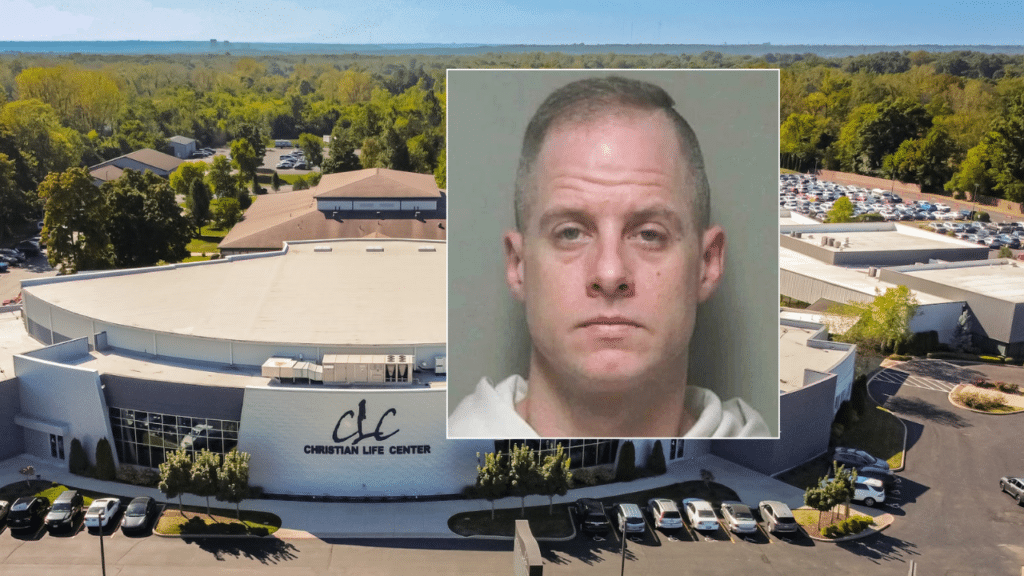
Caleb’s voice cracked with panic during the eight-minute 911 recording, released days later by the Miami County Prosecutor’s Office. “Oh my God, somebody broke into my home, somebody broke into my home and shot my wife,” he gasped. “My wife, she’s got two shots to her head. There’s blood everywhere. Oh my God, oh my God, oh my God.” He begged dispatchers to hurry, insisting the intruder might still be inside, though he claimed not to have seen anyone. The garage door, he repeated, gaped open like an invitation to chaos. Police found signs of forced entry—a side door to the garage pried or manipulated—and shell casings from a 9mm handgun scattered near the bed. Ashley had been pronounced dead at the scene, her body bearing the brutal marks of close-range shots. The children, mercifully unharmed and asleep through the horror, were shielded from the worst as officers secured the home. For a brief moment, the narrative held: a random criminal had targeted this peaceful family, turning a routine night into nightmare.
Yet detectives from Tipp City Police, working alongside other agencies in what Chief Greg Adkins called a “complex” and “thorough” investigation, sensed inconsistencies almost immediately. The crime scene told one story on the surface, but subtle anomalies whispered another. Caleb cooperated at first, recounting his version with apparent grief. He explained that his handgun, normally stored in the center console of his 2024 Ford pickup in the garage, must have been taken by the intruder. The console stood open when officers arrived, supporting his claim of theft during the supposed break-in. He described waking to the sound of disturbance, rushing to find his wife already shot, the perpetrator gone. His distress seemed genuine—tears, trembling hands, the raw edge of shock. But as forensic teams combed the house and garage, piecing together timelines and physical evidence, the facade began to crack.

The pivotal clue emerged from the garage itself, a detail so mundane yet so damning that it screamed premeditation. The side door leading from the house into the garage had been forced open—or so it appeared. A large refrigerator stood directly in front of it, blocking access. To open that door from the outside, an intruder would have needed to push the heavy appliance aside, creating noise, drag marks on the floor, and obvious disruption. None existed. The fridge remained firmly in place, unmoved, its position unchanged. Officers noted that accessing the door would require shifting hundreds of pounds of metal and contents—something no burglar in a hurry would attempt without leaving traces. Yet Caleb had pointed to that very door as the point of entry, the garage door itself wide open as if the intruder had fled through it. The mismatch was glaring: why stage a forced entry at a blocked door when the main garage bay stood unobstructed? This tiny oversight exposed the orchestration—Caleb had likely opened the garage door himself after the act, perhaps to simulate escape, but neglected to account for the refrigerator’s immovable barrier at the interior access point.
Investigators dug deeper. The handgun Caleb claimed was stolen? Ballistics linked it directly to the 9mm rounds that killed Ashley. No forced entry truly matched the scene; the “prying” appeared contrived, lacking the typical tool marks or damage consistent with a genuine break-in. Shell casings lay too neatly near the bed, as if placed rather than ejected in panic. The timing raised red flags—Caleb’s call came around 2:31 a.m., but evidence suggested the shots occurred earlier, with no signs of struggle or defense wounds on Ashley, implying she was caught unaware, perhaps asleep. Prosecutors later alleged in court filings that Caleb had shot his wife with the 9mm, then tampered with the scene—opening the console, staging the entry points—to mislead first responders. “Officers were led astray by the staging of the crime scene,” the criminal complaint starkly declared.
Caleb’s background added layers to the tragedy. Once a hopeful on American Idol, he auditioned with dreams of stardom, describing himself as “born to sing” and serving as a music pastor. Ashley, warm and dedicated, had built a life around family, faith, and coaching young athletes. Tipp City Schools mourned her publicly, praising her “beautiful smile, warmth, kindness, and the positive impact she had on so many—both in and out of the classroom and on the court.” Friends and colleagues remembered a devoted mother whose world revolved around her daughters. Whispers of marital strain surfaced quietly—rumors of an extramarital affair, deleted encrypted messages, even a chilling text sent from Caleb’s phone around 12:42 a.m.: “It’s almost done.” Though not yet central in public filings, such elements fueled speculation of motive: jealousy, financial pressure, or a desire to escape the marriage without the mess of divorce.

By Thursday, February 19, probable cause crystallized. Caleb was arrested at home, booked into Miami County Jail on charges of murder, two counts of felonious assault, and two counts of tampering with evidence. He appeared via video in court the next day, pleading not guilty. Bond was set at $2 million—a figure reflecting the severity and the judge’s apparent skepticism toward his claims of innocence. Defense attorney Patrick Mulligan questioned the investigation’s thoroughness, but the community’s shock ran deep. How could a man who once performed on national television, who professed faith and family values, allegedly orchestrate such horror in the presence of his sleeping children?
The refrigerator detail stands as the forensic linchpin—a classic example of how killers, no matter how carefully they plan, often betray themselves with one overlooked inconsistency. In countless staged burglaries, perpetrators focus on big-picture deception—broken windows, scattered belongings—while missing the small, immovable truths. Here, that heavy appliance blocked the supposed entry path, rendering the forced-door narrative impossible without Herculean effort. Detectives pieced it together methodically: no drag marks, no shifted weight on the floor, no logical reason for a burglar to choose the obstructed route over the open garage bay. Combined with the gun’s origin, the shell placement, and the absence of intruder DNA or footprints, it dismantled Caleb’s story layer by layer.
This case echoes infamous precedents where staging failed spectacularly—Scott Peterson’s boat alibi, or the Chris Watts garage confession—but the Flynn tragedy carries unique heartbreak. Two young girls lost their mother, their father now accused of the unthinkable. Ashley’s legacy endures in the lives she touched, her kindness remembered amid the outrage. As the legal process unfolds, with potential trials revealing more about motive and evidence, the community grapples with betrayal at its core. A loving home became a crime scene because of one man’s calculated deception, undone by a single, silent refrigerator standing guard over the truth.
Tipp City Police continue their work, emphasizing compassion for the family while pursuing justice. Chief Adkins promised transparency where possible, acknowledging the pain rippling outward. For now, the tell-tale clue—a mundane kitchen appliance in an improbable place—serves as a chilling reminder: perfection in crime is impossible. One tiny detail, overlooked in the heat of staging, can scream murder when everything else whispers accident. Caleb Flynn’s plot, so masterfully covered on the surface, crumbled under scrutiny, exposing the cold reality beneath the open garage door.