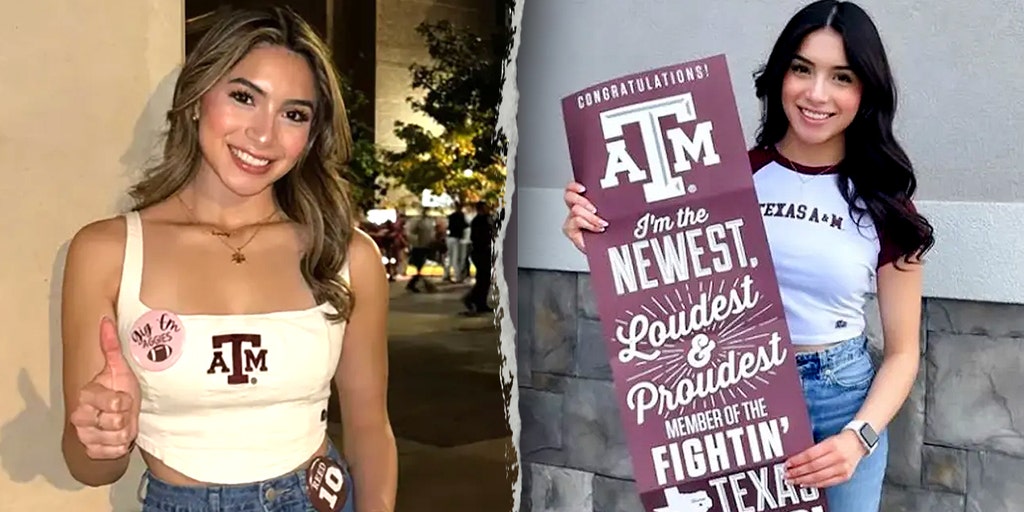
In the heart of Austin’s bustling West Campus, where the energy of college rivalry pulses through the air, a tragedy unfolded that has gripped the nation. Brianna Marie Aguilera, a vibrant 19-year-old sophomore at Texas A&M University, fell 17 stories to her death from the balcony of the luxurious 21 Rio apartment complex in the early hours of November 29, 2025. What began as a celebratory weekend tailgate for the heated University of Texas vs. Texas A&M football game has spiraled into a whirlwind of grief, controversy, and unanswered questions.
Recent claims of “new surveillance footage” have reignited the debate, painting a picture of a young woman staggering back to the building at precisely 11:54 p.m., her phone mysteriously switched to Do Not Disturb mode shortly before her fatal plunge. Brianna’s mother, Stephanie Rodriguez, is reportedly stunned, insisting this detailed timeline contradicts the simplified version initially released by the Austin Police Department (APD). As social media buzzes with speculation and demands for transparency, this case exposes the fragile line between official narratives and the raw pain of a grieving family. What really happened to Brianna Aguilera that night? And why does the truth seem so elusive?
Brianna Aguilera was more than a statistic—she was a beacon of ambition and joy. Born and raised in Laredo, Texas, she was a former cheerleader at United High School, known for her infectious smile and unyielding drive. Enrolled in Texas A&M’s prestigious Bush School of Government and Public Service, Brianna dreamed of becoming a lawyer, channeling her passion for justice into a future that promised brilliance. Friends and family described her as disciplined, outgoing, and deeply loved. “She loved life,” her mother tearfully shared in early interviews. Just days before her death, Brianna was excitedly planning her 20th birthday, with no outward signs of the despair that police would later attribute to her.
The weekend of November 28, 2025, was meant to be one of rivalry-fueled fun. The annual Lone Star Showdown between UT and Texas A&M drew thousands to Austin, including Brianna and a group of friends. She arrived for a tailgate party at the Austin Rugby Club, a pre-game gathering laced with the excitement of college football. But what started as celebration quickly turned chaotic. According to witnesses and police reports, Brianna became heavily intoxicated—underage at 19—and was asked to leave the event after her behavior grew erratic. Reports mention her punching a friend who attempted to help her, an action later framed by investigators as part of a pattern of distress.
Lost and separated from her group, Brianna made her way to the 21 Rio apartments, a high-end student housing tower near the UT campus, where friends resided on the 17th floor. This is where the surveillance footage enters the story—and where discrepancies begin to emerge.
The APD’s official timeline, released during a December 4 press conference, paints a straightforward picture. Surveillance cameras captured Brianna arriving at the complex just after 11 p.m., entering a unit on the 17th floor. Around 12:30 a.m., a large group of friends departed the apartment, leaving Brianna alone with three other women. By early morning, she was the last one remaining. At approximately 1 a.m., tragedy struck: Brianna fell from the balcony, landing on the ground below. She was pronounced dead at the scene.
Homicide Detective Robert Marshall emphasized the thoroughness of the investigation. “Every witness has been nothing but forthcoming,” he stated. Key evidence included a deleted digital suicide note recovered from Brianna’s phone, dated November 25 and addressed to specific people in her life. Police also uncovered prior suicidal comments Bri-spectrumanna made to friends in October, along with self-harming actions earlier that evening and a text message expressing suicidal thoughts. Surveillance showed no one else on the balcony at the time of the fall, and toxicology reports confirmed high levels of intoxication. On December 4, APD ruled the death a suicide, closing the case without suspicion of foul play.
Yet, for Brianna’s family, this conclusion feels like a betrayal. Stephanie Rodriguez has been vocal from the start, questioning the APD’s handling of the investigation. In emotional interviews, she highlighted red flags that haunted her: Brianna’s phone, found later in nearby woods, had been switched to Do Not Disturb mode—a setting her daughter only used during class or study sessions. “Someone put her phone on Do Not Disturb, which my daughter never does unless egzamin’,” Rodriguez said. “Our rule was, you go out, but you keep your phone on so I can always reach you.”
The family’s doubts deepened with the hiring of high-profile attorney Tony Buzbee, a Texas A&M alumnus known for taking on powerful entities. Buzbee, alongside the Gamez Law Firm, has called the APD’s probe “sloppy” and “lazy,” demanding an independent investigation, possibly by the Texas Rangers. “Brianna’s parents firmly believe there is much more information that needs to be discovered,” Buzbee posted on social media. He pointed to alleged inconsistencies: Why was the scene not immediately preserved? Were all occupants thoroughly interviewed? And why rush to a suicide ruling amid public speculation?
Then came the bombshell that has stunned observers: claims of new surveillance footage surfacing in mid-December. Viral social media posts, circulating widely on platforms like Facebook, describe video showing Brianna “staggering” back to 21 Rio at exactly 11:54 p.m.—a more precise timestamp than the APD’s “just after 11 p.m.” The footage allegedly captures the moment her phone enters Do Not Disturb mode, just minutes before her fall. Rodriguez is said to be “stunned,” viewing this as proof that police “simplified” the timeline to fit their narrative.
These claims have electrified online communities, with hashtags like #JusticeForBrianna trending. Conspiracy theories abound: Was someone else involved? Did intoxication mask foul play? Some posts even reference additional “17th-floor CCTV” that supposedly “throws the case into chaos.” Public reaction has been fierce, with Texas A&M students mourning on campus and UT neighbors recalling the eerie scene of police tape and flashing lights.
But a closer examination reveals cracks in this “breaking” narrative. Mainstream outlets have not corroborated the existence of this “new” footage beyond the APD’s December 4 release. The 11:54 p.m. timestamp and staggering description appear primarily in unverified social media threads, echoing early family concerns about the Do Not Disturb setting rather than presenting verified new evidence. Critics argue these posts sensationalize the tragedy, fueling misinformation in an already emotionally charged case.
APD Chief Lisa Davis addressed the backlash head-on: “I understand how grief and the need for answers can raise intense emotions and many questions. But sometimes the truth doesn’t provide the answers we’re looking for.” She defended the investigation’s integrity, noting the cooperation of the apartment complex in providing hallway footage and the recovery of digital evidence from Brianna’s phone.
The controversy underscores broader issues in high-profile deaths involving young people. Intoxication at college events is commonplace, yet it can complicate autopsies and timelines. Mental health struggles, often hidden, add layers of tragedy—Brianna’s alleged prior comments highlight how even bright futures can harbor unseen pain. The family’s rejection of suicide is understandable; no parent wants to accept such a final act from a child full of promise.
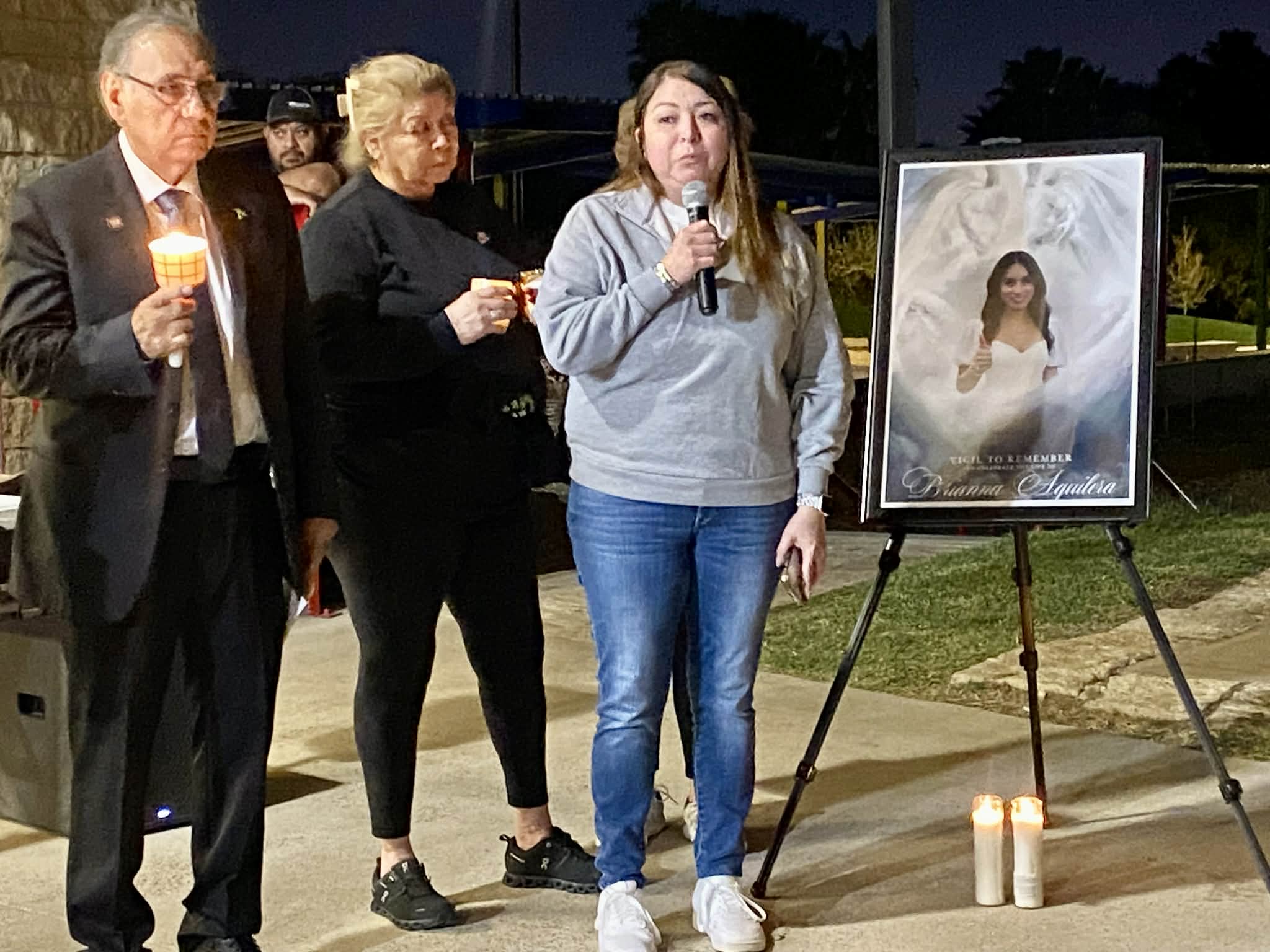
As December 18 dawns, the case remains a poignant reminder of life’s fragility. Brianna’s funeral in Laredo drew hundreds, celebrating a life cut short. A GoFundMe for her family has raised tens of thousands, a testament to her impact.
Will new evidence truly emerge, or is this the final chapter in a heartbreaking story? The APD stands firm, but the family’s fight persists. In the end, Brianna Aguilera’s death forces us to confront uncomfortable truths: about mental health, about the perils of college culture, and about the quest for justice in the face of unbearable loss. Her story isn’t just a mystery—it’s a call to listen more closely to those we love, before it’s too late.