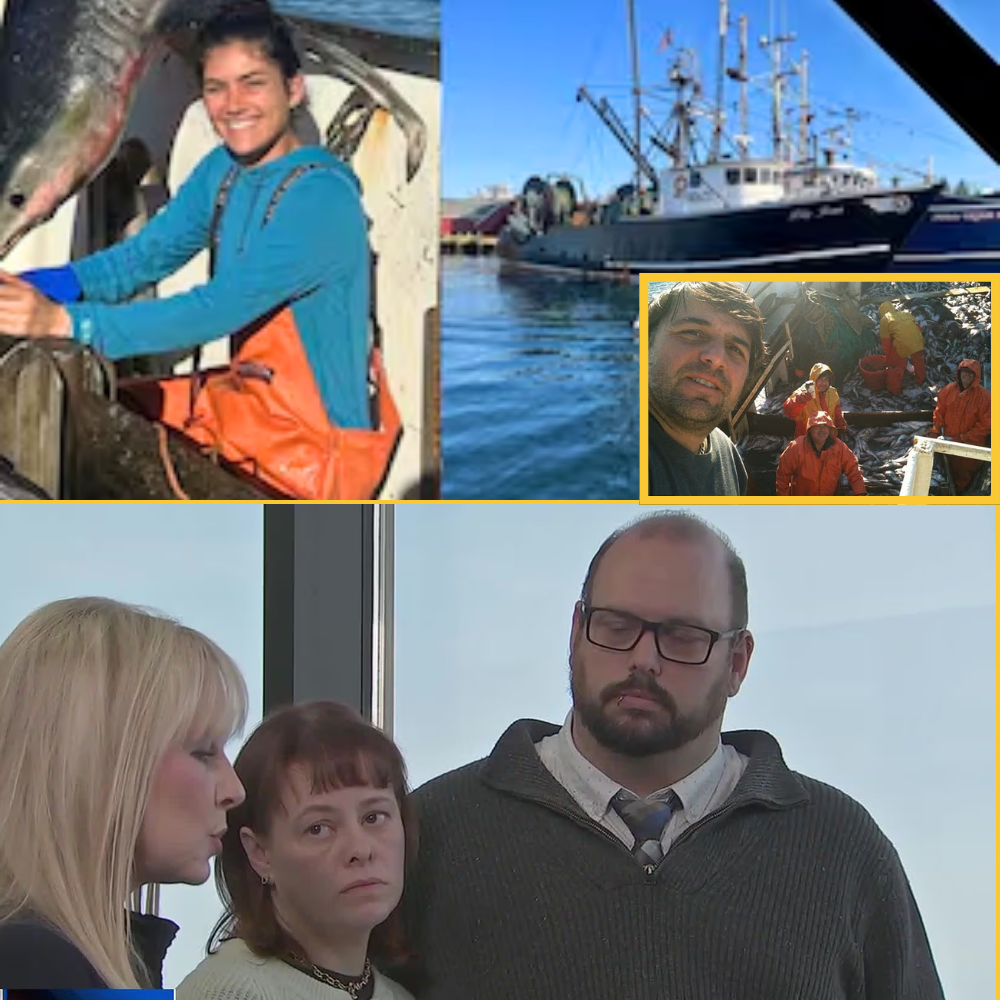
In the unforgiving expanse of the North Atlantic, where winter storms rage like ancient beasts and the line between survival and oblivion is as thin as a fishing line, tragedy struck with merciless speed on January 30, 2026. The 72-foot fishing vessel Lily Jean, a stalwart of Gloucester’s storied fleet, vanished into the icy depths off Cape Ann, Massachusetts, claiming the lives of its seven crew members. As the U.S. Coast Guard suspended its exhaustive search on January 31—having scoured over 1,000 square miles amid freezing spray and towering waves—the community of America’s oldest seaport grappled with a loss that cuts to the bone. But amid the grief, one voice emerged to paint a vivid, haunting picture of the final moments: Captain Sebastian Noto, a lifelong friend and fellow fisherman, who shared the chilling details of his last phone conversation with Captain Gus Sanfilippo. “I quit. It’s too cold,” Sanfilippo said, words that now echo like a ghostly farewell from the deep.
 This is not just a story of a boat sinking—it’s a tale of unbreakable bonds, relentless peril, and the human spirit tested against nature’s fury. Sanfilippo, a fifth-generation fisherman whose name was synonymous with resilience and wisdom on the Gloucester docks, led a crew that embodied the grit of New England’s commercial fishing heritage. Their disappearance has left families shattered, a town in mourning, and lingering questions about what went wrong on a routine trip home. As details emerge, including Noto’s emotional recounting, the tragedy unfolds like a nor’easter—building slowly, then overwhelming everything in its path.
The Captain: A Legacy Forged in Waves and Wisdom
Gus Sanfilippo was more than a captain; he was a legend in the tight-knit world of Gloucester fishermen. Born into a family that had plied these waters for over a century, Sanfilippo represented the fifth generation to chase the bounty of the Georges Bank—a treacherous underwater plateau teeming with haddock, flounder, cod, and lobster, but infamous for its sudden storms and rogue waves. His life was the sea: rising before dawn, navigating through fog and gales, hauling nets heavy with fish that would feed families across the nation. Friends and colleagues described him as skilled, wise, and endlessly generous—a man who didn’t just fish for a living but lived to pass on the craft.
In 2012, Sanfilippo and the Lily Jean gained national attention through an episode of the History Channel’s Nor’Easter Men, a documentary series that thrust viewers into the brutal reality of North Atlantic fishing. The show captured the crew’s multi-day voyages: decks slick with ice, hands raw from ropes, exhaustion etched into every face as they battled 30-foot swells and sub-zero winds. Sanfilippo stood out as the unflappable leader, his calm demeanor a beacon for his team. “He was the kind of skipper who made you feel safe even when the world was falling apart around you,” one former crew member recalled in interviews following the incident.
But Sanfilippo’s influence extended far beyond the screen. He was a mentor to many, including younger fishermen eager to learn the trade. Massachusetts State Senator Bruce Tarr, who grew up with Sanfilippo in Gloucester, spoke of him with deep admiration during a press conference. “This was a good vessel, this was a good skipper who was skilled and wise and experienced,” Tarr said, his voice heavy with disbelief. “How does this happen? How do you lose a boat 22 miles from shore?” Tarr’s words captured the collective shock: the Lily Jean was no rust-bucket; it was a well-maintained 72-foot trawler equipped with modern technology, including the EPIRB that would ultimately signal its doom.
Sanfilippo’s generosity was legendary. A friend who spoke anonymously to local media shared how the captain had taken him under his wing years ago. “He taught me everything I know now about fishing,” the man said, echoing sentiments heard across the docks. From reading subtle changes in the water’s surface to handling gear in a howling gale, Sanfilippo shared his knowledge freely, ensuring the next generation could survive where so many had faltered.
The Fateful Voyage: A Routine Trip Turns Deadly

The Lily Jean set out in late January for what should have been a standard winter run to the Georges Bank. Winter fishing is notoriously hazardous—frigid temperatures cause decks to ice over, shifting weight and risking capsizes; freezing spray clogs vents and machinery; and storms can whip up without warning. Yet for seasoned crews like Sanfilippo’s, it was business as usual. The vessel was returning home “full of fish,” a phrase that now carries a tragic irony, when disaster struck in the pre-dawn hours of January 30.
At approximately 6:50 a.m., the Coast Guard’s Sector Boston received an automated EPIRB activation—no voice, no mayday, just a digital cry for help pinpointing the vessel’s last known position about 25 miles off Cape Ann. The lack of communication suggested a rapid catastrophe: perhaps a massive wave overwhelming the boat, a sudden flood, or icing that destabilized it beyond recovery. Rescue teams mobilized swiftly: an MH-60 Jayhawk helicopter from Air Station Cape Cod, small boats from Station Gloucester, and the cutter Thunder Bay plunged into the fray.
Conditions were nightmarish. Air temperatures hovered near freezing, water at a bone-chilling 12 degrees Fahrenheit (-11°C)—survival time in such waters is measured in minutes, not hours. Seas rolled at 7 to 10 feet, laced with freezing spray that coated everything in a deadly glaze. Over 24 relentless hours, searchers covered 1,047 square miles, a vast swath of ocean that tested human limits. They found scattered debris, the vessel’s life raft deployed but eerily empty, and one unresponsive body recovered from the waves. The identity of that victim has not been publicly released, pending family notification, but it extinguished any flickering hope for miracles.
On January 31, the Coast Guard made the gut-wrenching call to suspend the search. “The decision to suspend the search was incredibly difficult,” Capt. Jamie Frederick, commander of Sector Boston, stated in a press release. “Our thoughts and prayers are with all the family members and friends of the lost crew of the Lily Jean, and with the entire Gloucester community during this heartbreaking time.” Frederick’s words underscored the agony: after exhausting every resource, the sea had claimed its toll.
The Haunting Final Call: “I Quit. It’s Too Cold”
Amid the official reports, it was Captain Sebastian Noto’s personal account that brought the human heartbreak into sharp focus. Noto, a fellow Gloucester fisherman who often worked alongside Sanfilippo, spoke to NBC10 Boston about their last conversation—a routine check-in that turned prophetic.
“I was about 30 miles east of him,” Noto recounted. “We usually work together all the time. We are like glue, man. We give a lot of information back-and-forth.” On that fateful morning, around 3 a.m., as the storm built, the two captains connected by phone. Sanfilippo, typically stoic, let slip a rare vulnerability: “I quit. It’s too cold.”
“He was calm,” Noto added, describing his friend’s demeanor. “He just couldn’t do the cold because the air holes was freezing.” The admission was uncharacteristic for a man who had weathered countless nor’easters, but it painted a vivid picture of the conditions: freezing spray clogging vents, perhaps hindering engine performance or bilge pumps. Noto speculated that a malfunctioning bilge pump might have been the culprit, allowing water to ingress unchecked. “Just a guess, I could be wrong you know because even if the bilge is taking water, you got plenty of time to call Mayday,” he noted. “You got plenty of time to get into the survival suit, life raft. The boat takes time to sink.”
The unanswered questions torment Noto and the community. Why no mayday? Why an empty life raft? The silence from the Lily Jean suggests a swift, overwhelming event—perhaps a rogue wave or catastrophic failure—that left no window for escape. Noto’s realization hours later, when Sanfilippo failed to respond, hit like a gut punch: “We were looking at a serious situation.”
The Crew: Faces Behind the Loss
The seven aboard the Lily Jean were a microcosm of Gloucester’s fishing world: veterans and newcomers, families tied by blood and shared peril. Besides Sanfilippo, the crew included:
- Jada Samitt, 22, a bright-eyed NOAA fisheries observer from Virginia and a recent University of Vermont graduate. Her role was crucial—monitoring catches for sustainability, ensuring the ocean’s resources endure. Her family released a poignant statement: “It is with profound sadness and shattered hearts that we share the loss of our beloved Jada. She was vibrant and compassionate with an infectious smile and spirit… brave and determined.” They emphasized her passion: “Jada was on the Lily Jean that day because of her strong belief in her work, not only as an observer, but as someone who knew her important role as a crew member.” NOAA suspended observer deployments until February 4 in response, a nod to the risks amplified by the tragedy.
- Sean Therrien, 45, a reliable deckhand known for his steady hand in storms.
- John Paul Rousanidis, 33, remembered by his sister as “very generous, very happy” and an avid outdoorsman whose love for the sea was matched only by his zest for life.
- A father-son pair, their names pending full release, symbolizing the generational thread that weaves through Gloucester’s fleet.
These were not statistics—they were dreamers, providers, adventurers who embraced a life where every trip could be the last. Their loss ripples outward, touching spouses, children, and a community where fishing is identity.
Gloucester’s Collective Grief: A Town Built on Resilience
Gloucester, founded in 1623, has fishing in its DNA. The Fisherman’s Memorial, overlooking the harbor with its bronze statue of a helmsman gazing seaward, bears over 5,000 names lost since 1650—a testament to the sea’s toll. Over the weekend, the site became a shrine: flowers piled high, candles flickering against the wind, handwritten notes of sorrow and solidarity.
Residents gathered at St. Ann’s Church for a tearful Mass, seeking comfort in faith and fellowship. Governor Maura Healey addressed the state with empathy: “We join with the families, the fishing community, the city of Gloucester… in mourning this day and in grieving seven brave individuals who were out there doing their job.”
Local voices amplified the pain. Ashley Sullivan, a business owner connected to the vessel’s owner, called for reflection: “I hope everyone takes a step back and really looks at the sacrifices these men make on a day-to-day basis just to put food on our table. It’s very emotional and very heartbreaking.” Donations surged through Fishing Partnership Support Services, earmarked for the families, a practical outpouring of support in a town that knows how to rally.
Lingering Mysteries and a Call for Answers
As investigators sift through data—weather reports, vessel records, recovered debris—the cause remains elusive. No collision or explosion evident. Noto’s bilge pump theory joins others: icing overload, a sudden wave, mechanical failure in the cold. The empty life raft haunts: survival gear activated automatically, but unused, suggesting the crew had no chance.
Commercial fishing ranks among America’s deadliest jobs, with a fatality rate 29 times the national average. Winter exacerbates every risk, yet the allure persists—freedom, camaraderie, the thrill of the catch. This tragedy reignites calls for enhanced safety: better gear, stricter weather protocols, perhaps even remote monitoring.
A Legacy That Endures
Captain Gus Sanfilippo’s final words—”I quit. It’s too cold”—linger as a poignant reminder of human limits against nature’s might. Yet his legacy thrives in those he mentored, like the friend who credits him for “everything I know now about fishing,” and in the community he helped sustain. The Lily Jean‘s crew didn’t just harvest the sea; they embodied its spirit.
As waves crash over the sinking site, Gloucester mourns but endures. Stories of Sanfilippo’s wisdom, Noto’s bond, Samitt’s passion—these are the nets that catch memories, pulling them from the depths. Rest in peace, brave souls of the Lily Jean. The ocean took you, but your light guides those left behind.