A 13-Year-Old Climbed Onto A Carnival Ride For Fun—Minutes Later, Clayton Phillips Was Thrown From His Seat, At Least 10 Carnival Seats Were Allegedly Defective
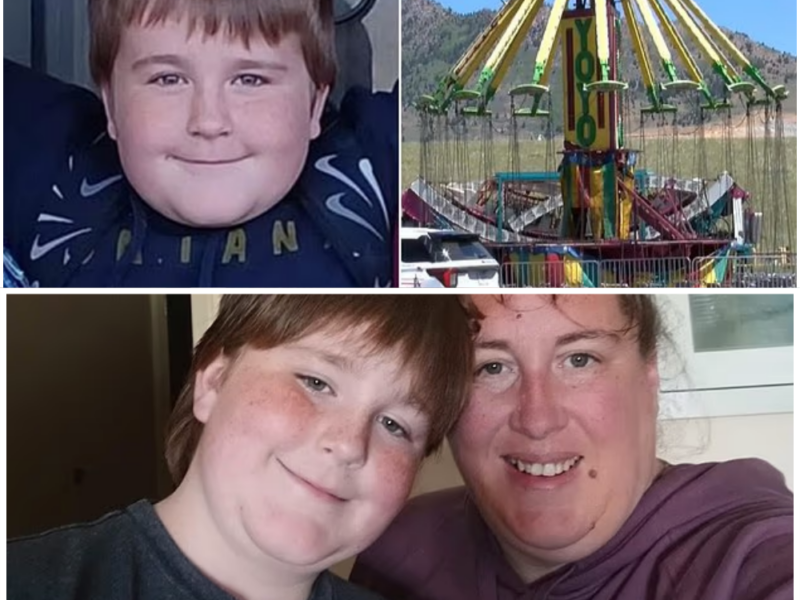
The Yo-Yo ride was spinning at full speed when 13-year-old Clayton Phillips was thrown from his seat into the air. What should have been a carefree afternoon at a carnival in Butte, Montana, ended with a boy fighting for his life and a mother left to bury her son.
Clayton died two weeks later from the injuries he sustained in June 2026. He had been rushed first to a hospital in Butte and then airlifted to a facility in Kalispell. His mother, Ashley Hossack, has now filed a lawsuit that lays out a series of failures she says made the accident inevitable. The complaint names Butte-Silver Bow County, Midway West Amusements, Shady Acres Safety Services, and its owner Dennis Sutherland. It also seeks punitive damages from as many as 20 people or entities connected to the inspection, maintenance, assembly, supervision, management, loading, or operation of the ride.

According to the lawsuit, at least ten chairs on the Yo-Yo were defective. Restraints were missing, and the problems were visible and readily discoverable. Those faulty chairs remained in use on the day Clayton boarded the ride. Midway West owner Michelle Jensen later told law enforcement that the only precaution operators took was to verbally instruct riders not to sit in the damaged seats. Replacement parts had been ordered, she said, but they had not yet arrived. The ride had been inspected twice in the month before the incident, with Sutherland allegedly signing off on those checks.
The suit argues that Butte-Silver Bow County, which received a share of the carnival’s gross revenue, failed to put reasonable safety procedures in place. It did not require Midway West to provide a full inventory of each ride. The county, the complaint states, had a duty of care in the ownership, management, supervision, and control of its premises and possessed the authority to inspect both the carnival grounds and the passenger-loading areas. A copy of the carnival permit included in the filing shows Midway West was required to carry public liability insurance of $1 million per occurrence and an additional $1.5 million for bodily injury and property damage.
Hossack is seeking all recoverable compensatory, general, special, economic, and noneconomic damages. That list includes the cost of Clayton’s suffering, lost future earnings, funeral expenses, the expense of emergency and medical response, and more. The exact dollar amount has not been specified. Butte-Silver Bow has three weeks from the August 7 filing date to submit a formal response in court. County Attorney Matt Enrooth has previously said an investigation found no criminal culpability.
The legal documents describe a chain of decisions that left a 13-year-old boy exposed to preventable danger. Defective restraints stayed on the ride. Verbal warnings substituted for physical safeguards. Inspections occurred yet the problems remained. A county that shared in the carnival’s profits is accused of failing to verify the safety of the equipment on its property. Each of those points will be tested as the case moves forward. For Ashley Hossack, the lawsuit is the only remaining avenue to hold anyone accountable for the loss of her son.
Clayton’s obituary painted a picture of a boy full of ordinary joys and quiet passions. He had just graduated from eighth grade at Butte Central Elementary and Junior High School on May 27, 2026. For the past six years he had been part of the Orphan Girl Theater, where he shared his heart, his humor, his curiosity, and a wonderful sense of character. His hobbies included Legos, music—especially Eminem—YouTube, Harry Potter, reading, traveling with family, hanging out with friends, and playing Minecraft. He was, by every account, a typical Montana teenager with a bright personality and a full calendar of the small pleasures that make a childhood.
Those details make the circumstances of his death even harder to accept. A carnival is supposed to be a place of temporary escape, bright lights, and harmless thrills. The Yo-Yo ride is designed to swing riders outward in wide arcs, the kind of motion that produces screams of delight rather than catastrophic injury. When restraints fail and a child is ejected at high speed, the entire premise of carnival safety collapses. The lawsuit claims that collapse was not a sudden mechanical mystery but the predictable result of known defects left unaddressed.
The two weeks Clayton spent in the hospital after the accident gave his family a brief, agonizing window of hope that ultimately closed. The airlift from Butte to Kalispell signaled the seriousness of his condition. When he died, the carnival lights in Butte had long since gone dark, but the questions about how a ride with multiple defective chairs was allowed to operate remained brightly lit. The lawsuit now forces those questions into a courtroom where evidence, depositions, and expert testimony will determine responsibility.
Carnival accidents are rare enough to shock when they occur and common enough that safety regulations exist for a reason. Inspection protocols, restraint systems, and operational rules are meant to keep the risk of injury vanishingly small. In this case, the complaint alleges those systems failed at multiple points. Chairs that should have been removed stayed in service. Operators relied on spoken instructions rather than physical barriers. Oversight that should have caught the problems did not. The result was a 13-year-old boy thrown from a spinning ride and a mother left to navigate grief and the legal system at the same time.
Ashley Hossack’s decision to sue is both personal and public. On the personal level it is an attempt to seek justice for her son and to recover damages that might ease the practical burdens of his death. On the public level it is a demand that the people and entities responsible for the ride’s condition answer for what happened. Whether the courts will agree with every claim in the complaint remains to be seen. What is already clear is that a preventable tragedy has left a Montana family permanently altered.
Clayton Phillips should have spent the rest of the summer riding bikes, playing Minecraft, quoting Eminem lyrics, and preparing for high school. Instead his name appears in a lawsuit that will take months or years to resolve. The Yo-Yo ride that threw him into the air has become the center of a legal battle over responsibility, maintenance, and the duty of care owed to every child who climbs into a carnival seat. For one mother in Montana, that battle is the only way left to speak for the boy who never came home from the fair.