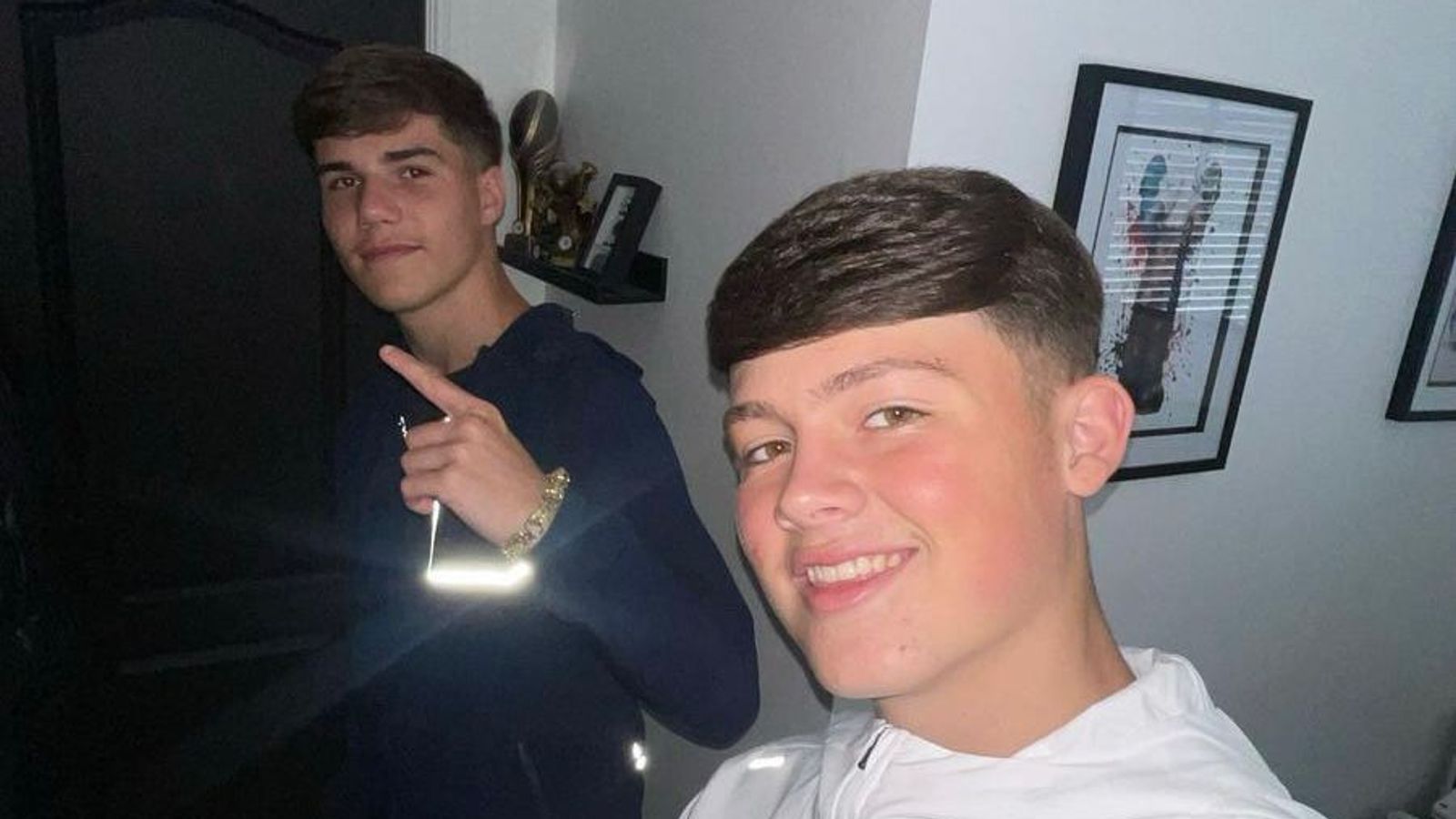
Two teenage boys lost their lives in a split-second tragedy on the railway tracks near Poynton station in Cheshire, where an act of extraordinary bravery collided with irreversible fate. On July 3, 2025, Joshua Myers and Jordan Everett, both just 16, were struck and killed by an Avanti West Coast train traveling at around 110-111 mph. What unfolded that night was not a calculated act of despair, but a chaotic cascade of teenage vulnerability, alcohol, friendship, and a desperate, selfless attempt at rescue that ended in double heartbreak.
Joshua Myers, from Handforth, Cheshire, had been grappling with mounting pressures that no teenager should face alone. He had started high school full of promise, but the environment quickly overwhelmed him. His mother, Jenny Myers, described how he became deeply miserable, began disappearing for hours or days, and turned to heavy drinking as an escape. Friends recalled that when intoxicated, Joshua would casually—or perhaps desperately—say things like “I want to kill myself,” words that were dismissed as drunken exaggeration rather than genuine cries for help. Social services stepped in, and he was referred to Child and Adolescent Mental Health Services (CAMHS), but long waiting lists meant support remained out of reach. A particularly devastating blow came when he faced a police bail condition over an allegation of sexual assault involving a teenage girl. The experience left him feeling “treated like an animal” by authorities and hounded on social media, forcing the family to flee their home. Joshua refused to return to school, and his GP noted admissions of using ketamine, cannabis, ecstasy, MDMA, and excessive alcohol. He told a doctor he sometimes felt suicidal when under the influence of substances.

Jordan Everett, from High Lane in Stockport, Greater Manchester, was Joshua’s inseparable companion. The two did everything together—shared adventures, laughter, and the quiet struggles of adolescence. Jordan dreamed of becoming a pilot and had already begun flying lessons, a detail that underscored his ambition and the bright future stolen from him. Described by his family as loving, loyal, and cherished by everyone who knew him, Jordan embodied the kind of steadfast friend who would never hesitate to step in when someone he cared about was in danger.
On that warm July evening, the group of friends gathered at a skate park, drinking vodka among other substances. Joshua became heavily intoxicated—“bladdered,” as witnesses put it—and his mood darkened. He scaled a fence, climbed onto the railway platform, and descended onto the tracks. In a voice thick with alcohol and anguish, he shouted that he wanted to kill himself. Friends watched in disbelief, perhaps still hoping it was another fleeting outburst rather than intent. But Joshua stayed on the tracks.
Jordan saw the danger immediately. When the lights of an approaching Avanti West Coast service appeared—heading from London Euston toward Manchester Piccadilly—he did not hesitate. He jumped down after his friend, screaming at Joshua to move, to get off the tracks. CCTV footage later captured the frantic seconds: Jordan rugby-tackled Joshua in a desperate bid to shove him to safety. The train driver, spotting the two figures, slammed on the emergency brakes and saw both boys “looking desperate to get out of the way.” But at that speed, the train covered the distance in moments. The impact was instantaneous and fatal for both.
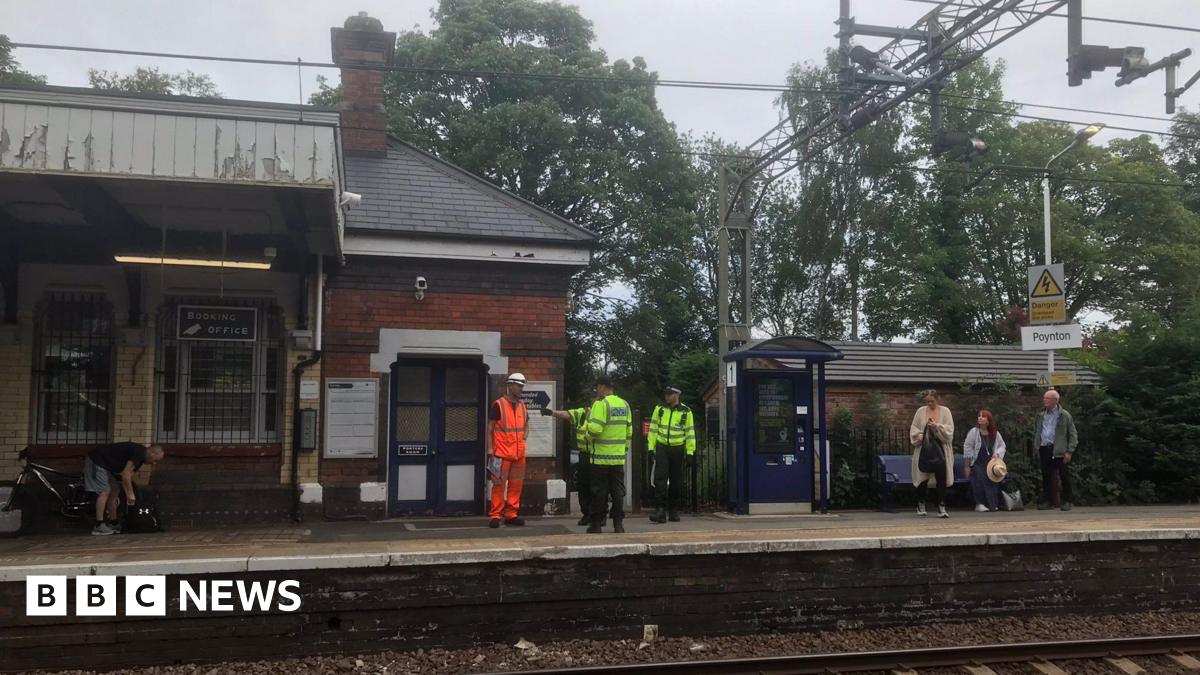
The tragedy unfolded near Poynton railway station in Cheshire, a quiet stretch of line that suddenly became the scene of unimaginable loss. Emergency services arrived swiftly, but nothing could be done. Both boys died at the scene from their injuries.
Inquests into their deaths took place at Cheshire Coroner’s Court on February 24, 2026. Senior Coroner Jacqueline Devonish heard harrowing evidence from witnesses, the train driver, police, medical professionals, and family members. For Joshua, the coroner concluded the death was one of misadventure. Despite his repeated threats to end his life—especially when drinking—there was no evidence he intended to take his own life that night. The coroner acknowledged that support services existed, but professionals had been unable to find an effective way to help him navigate his distress. Jenny Myers spoke powerfully at the hearing, insisting her son “did not want to die.” She said Joshua would have been terrified in those final moments, and that his death was neither planned nor desired. She went further, stating that Joshua had been “failed by every professional and service he came into contact with,” pointing to delays in CAMHS, inadequate responses from social services, and the traumatic handling of his police bail.
Jordan’s inquest followed separately the same day. The coroner recorded a verdict of accidental death, emphasizing that Jordan had acted solely to save his friend. He had shouted warnings, jumped back onto the track, and tried to push Joshua clear. The coroner addressed Jordan’s family directly: “I know that you wanted him to be hailed as a hero for what he did. Well he was a hero.” She commended his act of selflessness, noting that in those critical seconds, Jordan’s only thought was protecting his friend. Jordan’s mother spoke through tears, saying her son lost his life trying to save Joshua, and that his bravery deserved to be known. “We are proud of our son, but devastated beyond belief,” she said. “Jordan’s act of selflessness and his bravery should be known and commended.”
Friends who witnessed the events offered a poignant reflection: “They did everything together, they’ve died together as well.” The closeness of their bond made the double loss feel even more shattering. One friend described how the group often treated dark talk as meaningless banter when alcohol flowed, never imagining it could lead to such an outcome.
This incident shines a harsh light on the hidden struggles many teenagers face. Joshua’s story reveals how mental health issues, compounded by substance use, social media harassment, and involvement with the justice system, can spiral without adequate intervention. The long waits for CAMHS appointments, the perceived failures of multiple agencies, and the devastating impact of an allegation—even before any court process—left a vulnerable boy feeling cornered and hopeless. Jenny Myers’ words ring with frustration and grief: a child who repeatedly sought help, yet found doors closed or responses too slow.
Jordan’s actions, meanwhile, stand as a testament to the depth of teenage loyalty and courage. In the face of oncoming danger, he chose to run toward the threat rather than away. His attempt was not reckless bravado, but pure instinct to protect someone he loved. The coroner’s recognition of him as a hero resonates far beyond the courtroom, honoring a boy whose final act defined his character.
The wider implications are sobering. Railway fatalities involving young people often stem from a mix of impulsivity, alcohol, and untreated distress. This case underscores the urgent need for faster access to mental health support, better education around the lethal risks of railway trespass, and more compassionate handling of young people in crisis—whether from allegations, bullying, or inner turmoil. Communities in Cheshire and Stockport continue to mourn, holding candlelit vigils and sharing memories of two boys whose lives ended far too soon.
Joshua Myers and Jordan Everett were not defined by their final moments. Joshua was a boy who loved his family, struggled silently, and sought escape in the wrong places. Jordan was an aspiring pilot, a loyal friend, and, in the end, a hero whose selflessness will never be forgotten. Their story is one of profound tragedy, but also of unbreakable friendship and the desperate human impulse to save those we hold dear—even at the ultimate cost.
The pain for their families remains raw. Jenny Myers clings to the certainty that her son did not choose death; Jordan’s relatives hold tight to pride in a son who gave everything for his friend. In the quiet aftermath, the tracks near Poynton station stand as a silent memorial to two young lives extinguished in an instant, and to a friendship that refused to let go—even when the train lights appeared.