
😳 “He Told Me to Lie About My Age” — Two Victims Testify Against Athena Strand’s Killer in Chilling Court Hearing
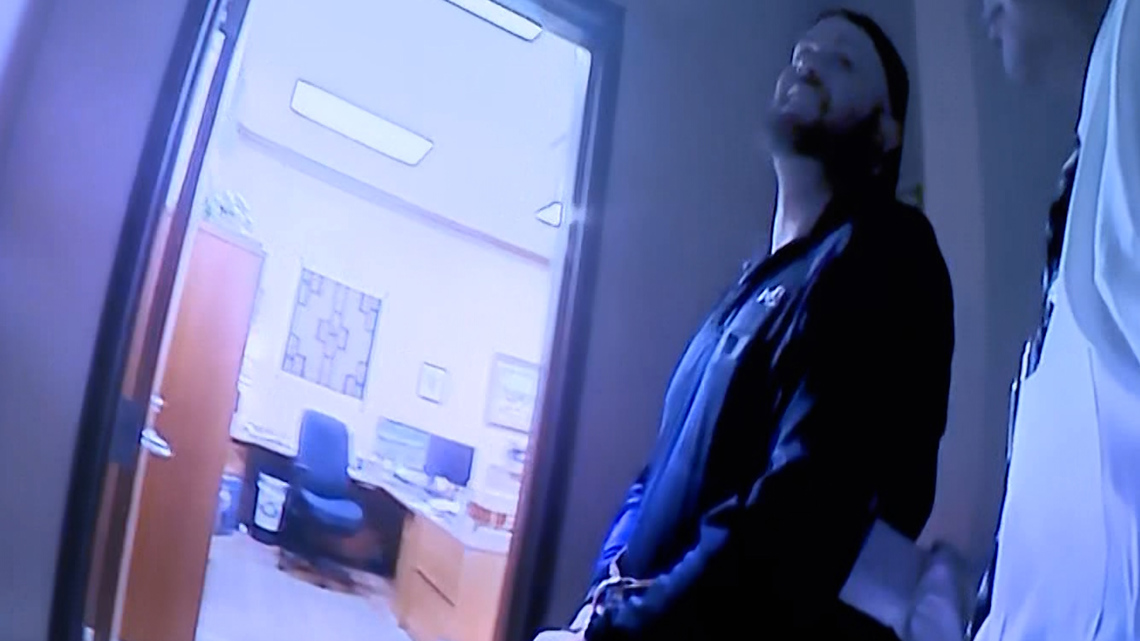
Tanner Lynn Horner stood silently in a Tarrant County courtroom as two brave women took the stand during the sentencing phase of his capital murder trial. Both described being sexually assaulted by him when they were just 16 years old — long before he kidnapped and killed Athena on November 30, 2022. One accuser said Horner knew her exact age, even instructing her to lie about it to others. The testimony landed like a bombshell, painting a portrait of a predator whose depravity stretched back more than a decade, culminating in the horrific murder of a trusting little girl delivering Christmas packages to her own driveway.
Horner, now 34, has already pleaded guilty to capital murder and aggravated kidnapping in Athena’s death. Prosecutors are seeking the death penalty, arguing that the full scope of his actions — including these prior alleged assaults — shows a man who poses an ongoing danger and deserves the ultimate punishment. The women’s accounts, delivered through tears and visible pain, added devastating weight to the prosecution’s case that Horner’s crimes against Athena were not an isolated aberration but the horrifying escalation of a long-suppressed pattern.

The first woman to testify met Horner through mutual friends in the summer of 2013. She was 16. He was 22. She told jurors that after a night of drinking — something Horner facilitated — she woke up to him sexually assaulting her. It happened twice that summer. On both occasions, she said she had been too intoxicated to consent. She expressed deep guilt in court for not coming forward sooner, believing her silence may have allowed Athena’s tragedy to unfold years later. “I have felt guilt due to the fact that if I had reported, things may not have happened to other people,” she said, her voice breaking.
A second woman took the stand with a similar story from 2014. She was also 16 when she crossed paths with Horner through band practices and mutual friends. She described how Horner pursued her romantically while fully aware of her age. He allegedly told her to lie and say she was 18 if anyone asked — including his own mother and bandmates. One night in December 2014, after drinking provided by Horner, she woke up to him raping her. She drifted in and out of consciousness during the assault. When she became fully aware and distressed, she called a friend to pick her up. The trauma stayed with her for years until Horner’s arrest for Athena’s murder finally gave her the courage to speak out.
These testimonies emerged during the punishment phase, where the jury must decide between life without parole or death by lethal injection. Prosecutors presented the women’s stories as evidence of Horner’s future dangerousness and lack of remorse. Both women had come forward after Horner’s 2022 arrest, with one triggering active sexual assault of a child charges against him in Tarrant County. The judge protected their identities by blurring their faces during the broadcast.
The details of Athena Strand’s final hours, already unbearable, took on even darker shading against this backdrop. On that November afternoon in rural Paradise, Texas, the bright-eyed first-grader excitedly approached Horner’s delivery van. Surveillance and vehicle footage showed her alive and uninjured as he lifted her inside. What followed was captured in horrifying audio: Athena repeatedly asking, “Are you a kidnapper?” Horner’s calm, manipulative responses. His chilling compliment: “You’re really pretty. You know that?” Then the threats, the covering of the camera, and nearly an hour of her brave resistance — crying for her mom, saying “no,” fighting back physically until he strangled her.
Forensic testimony revealed male DNA on vaginal and anal swabs from Athena’s sexual assault kit. Blood and semen were also found on Horner’s FedEx shirt and other clothing. Jurors heard how Horner searched online for “missing girl” and related terms the day after the murder. His shifting stories to investigators — first claiming an accidental backing over, then admitting to panic, and even blaming an “alter ego” named Zero — crumbled under the weight of evidence.
Yet the prior assaults added a layer of premeditation and predation that prosecutors hammered home. Horner wasn’t just a delivery driver who snapped in a moment of fear. According to the women’s accounts, he had a history of targeting underage girls, exploiting intoxication, and using manipulation. One accuser said he discussed rape fantasies with her. The pattern suggested a man who had long harbored dark impulses that finally erupted with fatal consequences for Athena.
Athena’s family sat through these proceedings with unimaginable strength. Her mother and father shared memories of their daughter’s final morning — hugs, laughter, ordinary love that would never return. They left the courtroom during parts of the graphic audio, unable to endure the sounds of their child’s final struggle. The purple ribbons — Athena’s favorite color — that have become symbols of her memory across Texas fluttered at vigils and on trees, a quiet testament to a life stolen too soon.
Horner’s defense team pushed back by presenting mitigation evidence. Experts testified about his troubled upbringing, possible fetal alcohol effects, autism spectrum traits, high lead exposure in childhood (measured at 24 times average levels), and limited emotional understanding. A speech-language pathologist explained that Horner genuinely seemed confused why inmates viewed him as a monster. His family members spoke of his struggles, with his great-aunt describing generational abuse and dysfunction.

But prosecutors dismantled the sympathy angle. They argued that none of Horner’s background excused the deliberate choices: covering cameras, driving with Athena for an extended period, the prolonged assault, the strangulation when initial attempts failed, and the callous disposal of her body in shallow water near the Trinity River. His letters from jail — including one apologizing to Athena’s family while focusing more on his own sleepless nights — came across as self-centered rather than genuinely remorseful.
The case has gripped North Texas and beyond. Paradise, a small community of fewer than 500 people, was shattered by the crime that unfolded on its quiet roads. FedEx faced scrutiny over driver screening. Parents across the country received painful reminders about stranger danger, even in seemingly safe rural areas and with familiar delivery uniforms. Community vigils, marches, and calls for justice kept Athena’s name alive as the trial unfolded.
As the women testified about their assaults, the courtroom atmosphere shifted palpably. Jurors wiped tears. Observers sat in stunned silence. The accounts humanized the long-term impact of Horner’s actions — not just on Athena and her family, but on other young lives marked by trauma and regret for not speaking sooner. One woman described reliving the pain “over and over and over again” on the stand. Their courage in coming forward, years later, provided crucial context for jurors weighing Horner’s fate.
Legal experts following the case note that Texas capital sentencing often hinges heavily on future dangerousness. The prior allegations, combined with the brutality of Athena’s murder and DNA evidence, strengthen the prosecution’s argument that Horner cannot be safely confined for life. Defense attorneys counter that his neurodevelopmental issues and prison environment would mitigate any ongoing risk.
Horner’s own words to investigators revealed a detached mindset. He claimed he “lost her” during the struggle, as if Athena simply slipped away rather than being overpowered by an adult man. He denied sexual assault in her case despite forensic findings. At one point, he spoke of an alter ego taking over, a narrative dismissed by prosecutors as another evasion of responsibility.
The trial has forced uncomfortable societal questions to the surface. How many warning signs existed before Athena? Could earlier reports from the teenage victims have altered the trajectory? What responsibilities do companies like FedEx have in vetting drivers who enter homes daily? And in the age of true crime awareness, how do communities balance vigilance with the reality that monsters can hide in plain sight?
Athena Strand should have been celebrating many more Christmases. She loved playing outside, receiving packages, and living with the boundless energy of a happy 7-year-old. Instead, her story became one of unimaginable horror — a trusting child excited about holiday Barbies who encountered pure evil on her own driveway. Her bravery in those final recorded moments, fighting and questioning her abductor, has inspired tributes describing her as a warrior.
As the sentencing phase continues, the jury carries an enormous burden. They have heard the audio, seen the evidence, listened to devastated family members, and absorbed the testimonies of two women whose lives were altered as teenagers. Their decision will not bring Athena back, nor erase the pain of Horner’s earlier accusers. But it will determine whether justice, in its imperfect human form, demands the ultimate penalty for a man whose actions spanned years and devastated multiple lives.
The purple ribbons continue to wave in Paradise and beyond. Athena’s smile, preserved in countless photos shown throughout the trial, remains a haunting reminder of innocence lost. Tanner Horner sits in court, his past catching up in the most public and painful way possible. Two women found the strength to speak about assaults from over a decade ago. Athena can no longer speak for herself — but the evidence, the audio, and the collective outrage do it for her.
Whatever the jury decides, one truth echoes louder than any courtroom argument: Athena Strand deserved to grow up. She deserved safety in her own home. And the man who took that from her had allegedly practiced his darkness long before he ever knocked on her family’s door.
The world watched a little girl’s life end in terror. Now it watches as accountability unfolds, one devastating testimony at a time. Justice for Athena — and for every silenced voice before her — hangs in the balance. No verdict can heal what was broken, but it can ensure that Tanner Lynn Horner never again has the opportunity to destroy another innocent life.
The little girl who only wanted her Christmas delivery never made it back inside. Her story, her fight, and the voices of those who came forward years later demand that her death not be in vain. In a Texas courtroom, the full weight of Tanner Horner’s alleged history is finally being laid bare — and a jury must decide how society answers the evil that preyed on the vulnerable for far too long.