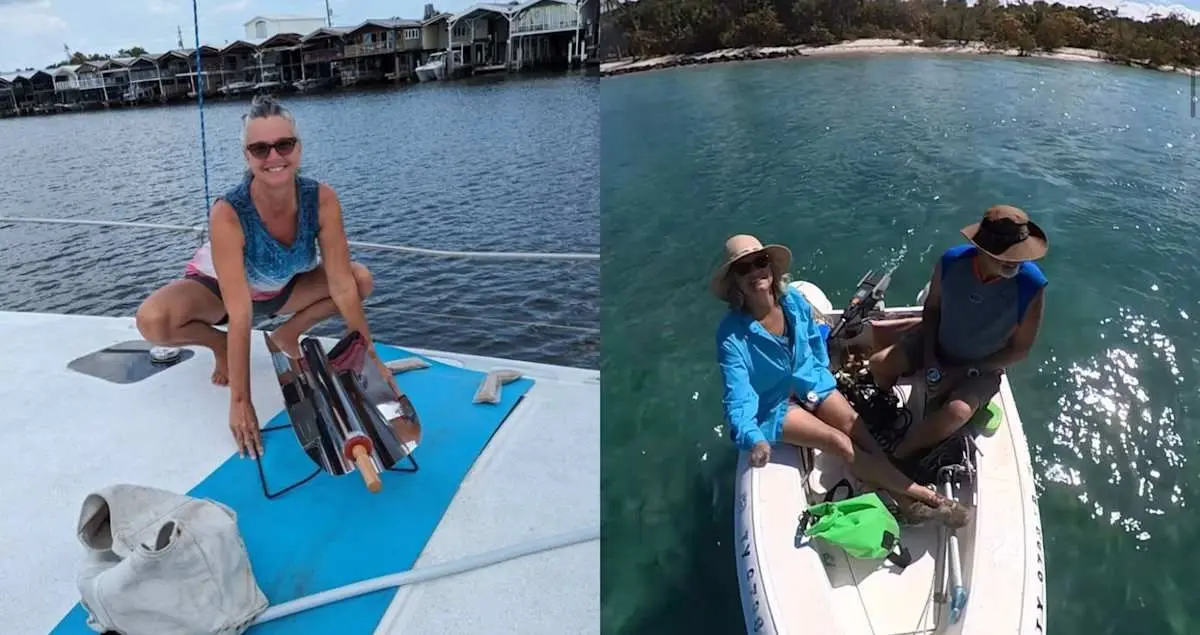
A single, seemingly minor inconsistency in Brian Hooker’s account of that stormy April night in the Bahamas has unraveled into the kind of evidence that turns a tragic accident narrative into a full-blown murder investigation. On April 8, just four days after his wife Lynette vanished at sea, Bahamian authorities arrested the 59-year-old Michigan man on suspicion of intentional murder. What began as a husband’s tearful report of a devastating boating mishap has rapidly morphed into a high-stakes probe involving the U.S. Coast Guard, conflicting stories, prior domestic violence allegations, and a tiny slip that prosecutors and police now view as damning.
The events unfolded on Saturday, April 4, 2026, near the picturesque Abaco Islands. Brian and Lynette Hooker, both in their mid-to-late 50s and hailing from Onsted, Michigan, were enjoying what many assumed was a romantic getaway aboard their yacht named “Soulmate.” That evening, the couple set out in a small 8-foot hard-bottom inflatable dinghy from Hope Town toward Elbow Cay. Conditions were far from ideal — choppy seas, high winds, and unpredictable currents that seasoned boaters know can turn deadly in seconds.
According to Brian’s initial statement to authorities, disaster struck suddenly. He claimed Lynette, who was wearing the boat’s engine safety lanyard (essentially the keys), fell overboard. The engine immediately cut out as the key went with her, leaving him powerless to maneuver. Strong currents, he said, swept his 56-year-old wife away into the darkness before he could reach her. Brian allegedly paddled the disabled dinghy for hours, finally reaching shore around 4 a.m. the next morning. Devastated and exhausted, he reported her missing and launched what quickly became an intense search operation involving local police, volunteers, and the U.S. Coast Guard.
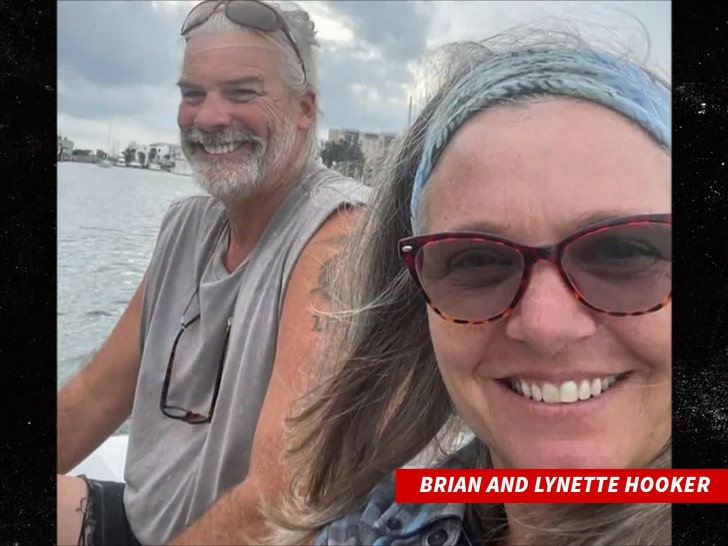
At first, the story seemed like a heartbreaking maritime tragedy — the kind that claims lives every year in the beautiful but unforgiving waters of the Bahamas. Friends described the Hookers as adventurous souls who loved cruising the Caribbean. Lynette was remembered as vibrant, with a warm smile and a passion for life’s simple pleasures. Brian appeared cooperative, even emotional, as search efforts intensified.
But cracks began to form almost immediately. Friends familiar with the couple’s boating habits pointed out a glaring issue: that tiny 8-foot dinghy was severely underpowered and undersized for night travel in rough conditions. One close acquaintance told reporters the vessel was “ill-equipped” for the seas they faced that evening, raising questions about why the couple would risk such a journey instead of waiting for calmer weather or using a larger tender.
Then came the tiny slip — the seemingly insignificant detail in Brian’s retelling that investigators seized upon as potentially fatal to his credibility. Reports suggest inconsistencies emerged between what Brian told police in formal interviews and messages or statements he shared with friends and family. In one version, details about Lynette’s exact position in the dinghy, the timing of events, or even the behavior of the currents didn’t quite align. A Facebook post or private message reportedly contained phrasing that clashed with his official account, creating a small but irreconcilable discrepancy that authorities could not ignore.
That inconsistency, combined with other red flags, prompted a swift escalation. The Royal Bahamas Police Force opened a criminal investigation. The U.S. Coast Guard followed suit, treating the case as potential foul play rather than a simple missing-person-at-sea incident. By Wednesday evening, April 8, officers took Brian into custody in Marsh Harbour on the Abaco Islands. He was later moved to Freeport on Grand Bahama, where he remains held as authorities weigh formal charges of intentional murder or causing harm resulting in death.
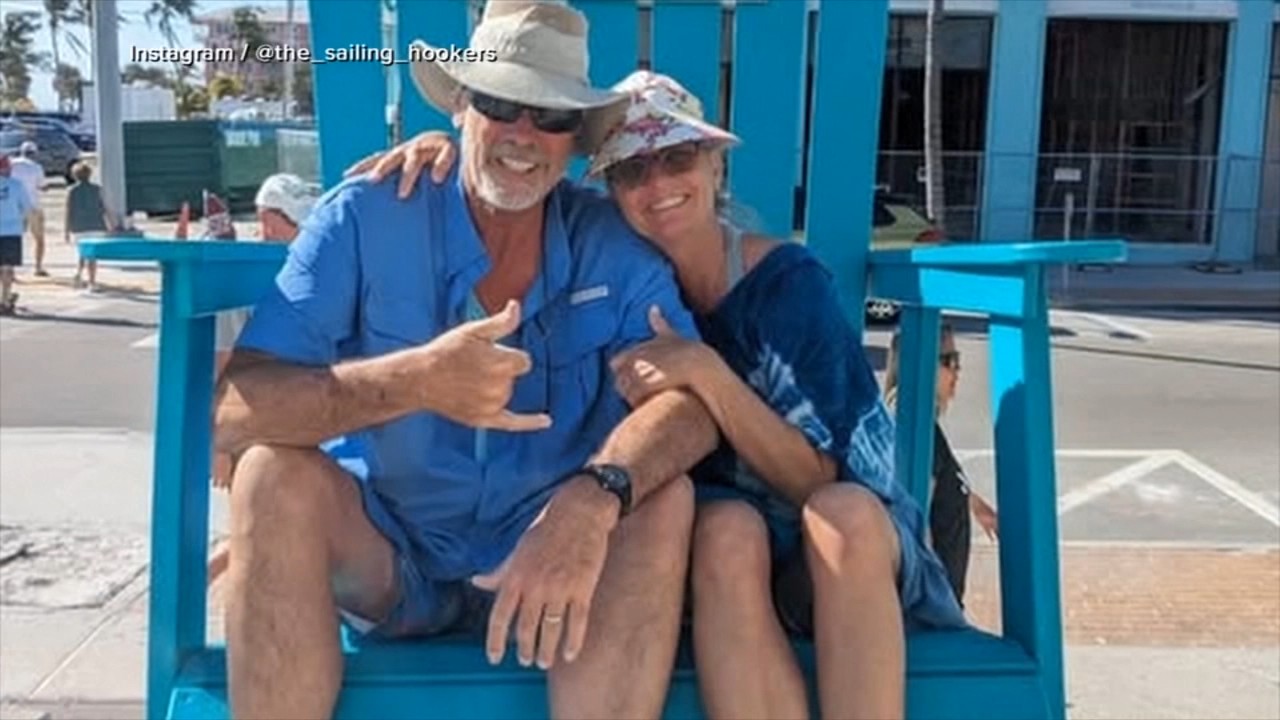
Brian’s attorney, Terrel Butler, has vigorously denied any wrongdoing. In statements to the media, Butler described her client as “categorically and unequivocally” innocent, insisting the disappearance was a tragic accident. She revealed that Brian broke down in tears during questioning and requested medical attention after an incident during his arrest. While being escorted in handcuffs to the couple’s boat for a search in choppy waters, Brian reportedly lost his footing, fell overboard himself, swallowed seawater, and injured his knee before police rescued him. The lawyer portrayed the fall as further proof of the dangerous conditions that night — conditions that could easily have claimed Lynette’s life without any foul play.
Yet investigators appear unconvinced. Sources close to the probe indicate that the focus has narrowed to the possibility that Brian “caused harm which resulted in the death” of his wife. Questions swirl around several key elements: Why paddle for hours in darkness instead of immediately raising an alarm via radio or phone if one was available? Why the discrepancies in the timeline and details? And crucially, what really happened in the moments before Lynette went overboard?
Adding fuel to the fire are troubling details from the couple’s past. Court records from Michigan reveal a 2015 domestic violence incident at their home in which Lynette was reportedly arrested after an alleged altercation involving Brian. While both parties have moved forward since then, Lynette’s daughter has publicly referenced “prior issues” in the marriage, including claims of choking and threats. In one emotional statement, the daughter suggested there was a history of Brian threatening to throw her mother overboard — words that now carry chilling weight in light of the Bahamas events.
Search efforts for Lynette continue, though hope dwindles with each passing day. The waters around the Abaco Islands are vast, with strong currents capable of carrying a body far from the incident site. Divers, helicopters, and boats have combed the area, recovering some items but not yet Lynette herself. The absence of her body has not stopped authorities from treating the case as a homicide investigation. In fact, the lack of immediate physical evidence of an accident — such as clear signs of a simple fall in rough seas — has only heightened suspicion.
The arrest has sent shockwaves through the tight-knit boating community and Lynette’s circle of friends and family back in Michigan. Many who once offered condolences to Brian now find themselves grappling with the possibility that the husband who claimed to be heartbroken may have played a far darker role. Social media has filled with tributes to Lynette — photos of her smiling on previous sailing adventures, messages celebrating her spirit, and anguished calls for justice.
For those following the case closely, the “tiny slip” has become symbolic. In high-profile investigations like this, it’s often not one massive lie that unravels a story, but a small, seemingly harmless inconsistency that investigators exploit to peel back layers of deception. Did Brian’s account shift slightly when recounting events to different people? Did a message to a friend contradict what he told police about the keys, the currents, or Lynette’s final moments? Whatever the precise detail, it was enough to transform sympathy into suspicion and prompt that decisive arrest on April 8.
Bahamian legal procedures add another layer of complexity. Unlike the U.S. system, suspects can be held for questioning with limited initial access to certain rights, though Brian’s attorney has been vocal in pushing for transparency and medical care. Authorities have until a set deadline — potentially extendable — to file formal charges. As of now, no charges have been officially announced, but the direction of the probe is unmistakable: intentional murder is on the table.
The yacht “Soulmate,” once a symbol of the couple’s shared dreams of Caribbean escapes, now sits as a silent witness under police scrutiny. Searches of the vessel and the dinghy continue, with forensic teams hunting for trace evidence — blood, fibers, signs of struggle — that could either exonerate Brian or seal his fate. The small size of the dinghy itself has become a point of contention; experts note that in rough seas, even a minor argument or sudden movement could lead to someone going overboard, but the question remains whether this was truly accidental.
Lynette Hooker’s loved ones face an agonizing wait. Her daughter and other family members have expressed a mix of grief, anger, and determination to uncover the truth. “We just want answers,” one relative reportedly said, echoing the sentiment of many who refuse to accept the simple “fell overboard” explanation without hard proof.
This case highlights the vulnerability of life at sea. Paradise can turn perilous in an instant, especially aboard undersized vessels at night. It also underscores how quickly public perception can shift when inconsistencies arise. Brian Hooker went from grieving husband to suspect in a matter of days, largely because one small detail in his story didn’t hold up under scrutiny.
As the investigation deepens, more details are likely to emerge — perhaps from forensic analysis, witness statements, or digital records such as phone data or boat electronics. The U.S. Coast Guard’s involvement ensures that American resources and expertise will aid Bahamian authorities, potentially accelerating the process.
For now, Brian remains in custody in Freeport, his knee injury a painful reminder of the night’s chaos — or, depending on one’s view, a convenient consequence of police procedures. His attorney continues to assert innocence, painting a picture of a devastated man caught in a nightmare of misunderstanding and dangerous waters.
The world watches as this tropical mystery unfolds. Was it a tragic accident exacerbated by poor conditions and a tiny, ill-equipped dinghy? Or did a marital dispute escalate into something far more sinister, with a “tiny slip” in the husband’s story exposing the truth?
Lynette Hooker deserved to return safely from that evening outing. Instead, her disappearance has left a void filled with questions, grief, and now the heavy machinery of a murder investigation. Whatever the courts ultimately decide, one thing is clear: that single inconsistency in Brian Hooker’s account has transformed a missing-person case into one of the most compelling — and heartbreaking — true-crime stories of 2026.
The search for Lynette continues. The search for answers has only just begun. And in the turquoise waters of the Bahamas, where beauty and danger have always coexisted, the truth may yet surface.