A Single Headache, a Quiet Nap, and a Scream That Echoed Through Mayfair: How John Stirling’s Sudden Death in Bridgerton Season 4 Part 2 Rewrites Love, Grief, and the Future of the Ton
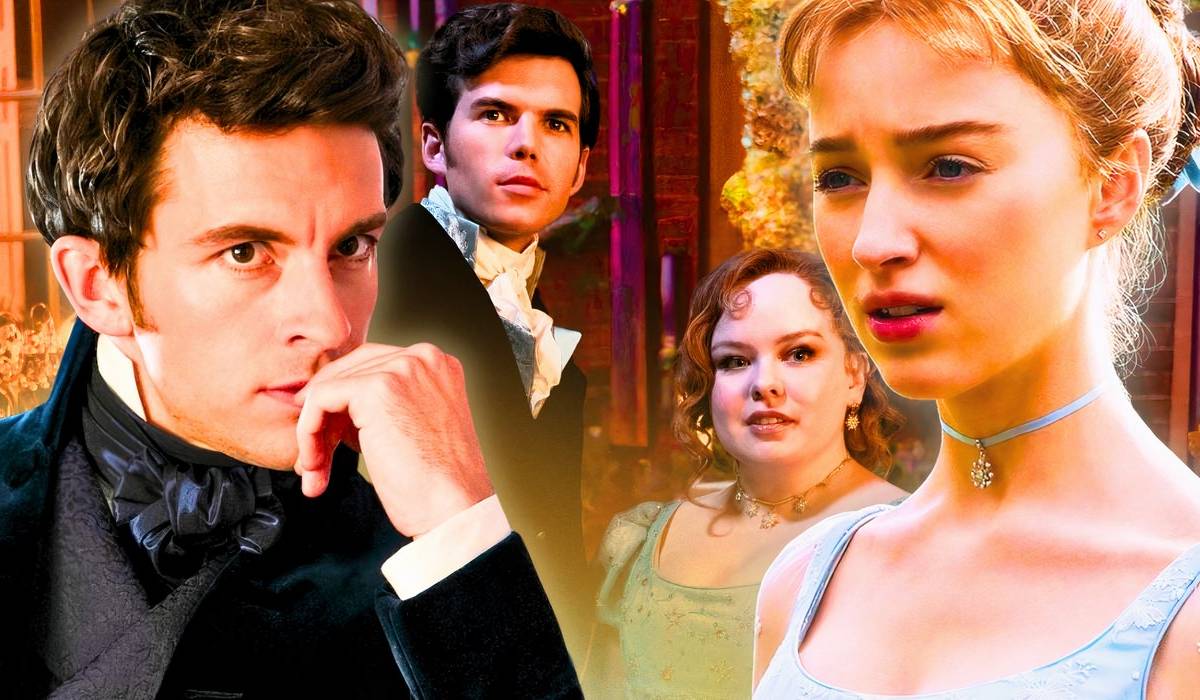
The candlelight in the Stirling drawing room flickers softly as John Stirling, Earl of Kilmartin, rubs his temple and offers his wife Francesca a gentle smile. “Only a small headache,” he reassures her, his voice warm with the quiet devotion that has defined their marriage. “Wake me before dinner.” He retreats to their bedroom for a brief rest, the kind of ordinary moment that has filled their days since their wedding in Season 3. Francesca nods, returning to her needlework, the domestic peace of their London residence wrapping around them like a familiar embrace.
Moments later, everything changes.
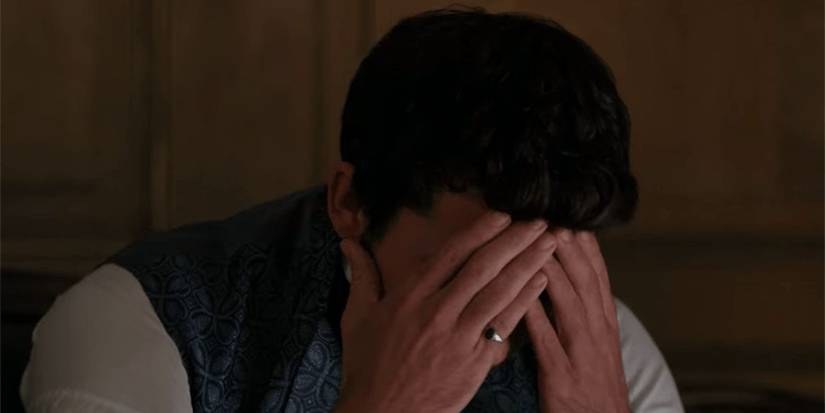
When Francesca enters the room to rouse her husband, the silence hits her first—unnaturally still, devoid of his steady breathing. She shakes his shoulder. Nothing. Her fingers press against his neck, searching for a pulse that is no longer there. The scream that tears from her throat is raw, primal, ricocheting through the elegant halls of their home and pulling his cousin Michaela Stirling rushing into the room. John Stirling is gone, dead in his sleep from what the show later confirms mirrors the books: a ruptured cerebral aneurysm, a hidden weakness in the blood vessels of his brain that struck without warning. Just shy of their second wedding anniversary, the beloved, steady presence who grounded Francesca’s quiet intensity vanishes in an instant.
This is the gut-wrenching pivot that lands at the end of Episode 6 in Bridgerton Season 4 Part 2, which dropped on Netflix on February 26, 2026, sending fans into a collective spiral of tears, theories, and stunned rewatches. While the season’s glittering centerpiece remains the long-awaited, fairy-tale romance between Benedict Bridgerton and Sophie Baek, John’s death injects a devastating dose of reality into the ton’s whirlwind of balls, scandals, and stolen kisses. It is not the dramatic duel or carriage accident fans might have feared—it is quieter, more intimate, and therefore infinitely more shattering. One moment a loving husband is complaining of a mild headache after a long day in Parliament; the next, Francesca is a widow, the Bridgerton family is reeling, and the carefully laid plans for heirs, estates, and futures are upended forever.
Showrunner Jess Brownell has spoken openly about the deliberate timing. “We felt like it was the right timeline to allow us to really get to know Francesca and John as a couple, but also to allow ourselves enough time to properly grieve John,” she explained. The creative team made sure actor Victor Alli knew his character’s fate from the very beginning. Alli learned the truth on the day of his chemistry read with Hannah Dodd, who plays Francesca. “I was like, ‘Oh, that’s what happens,’” Alli recalled with a laugh that quickly turned reflective. “And then I was like, ‘Cool.’ I had to try to forget about it and just get on with the scene.” By the final days of filming Season 4, however, the weight had settled in. “It’s pretty emotional,” he admitted. “But yeah, it was fun doing it anyway… I’m really grateful.”
For Dodd, receiving the scripts was an emotional earthquake. “I was literally in tears,” she shared. The cast had sensed something coming—speculation had swirled since Season 3—but the confirmation still landed hard. “We didn’t know when it was going to happen… Even last season, we were like, ‘It could happen this season.’ We did know it was going to happen this season.”
The death scene itself is filmed with heartbreaking restraint. No swelling orchestral score overwhelms the moment; instead, the camera lingers on Francesca’s face as realization dawns, her scream cutting through the quiet like a blade. Michaela bursts in, her own shock mirroring the audience’s. In the episodes that follow—particularly the funeral-heavy Episode 7—the ton gathers in mourning blacks, whispering about the cruelty of losing someone so young to something as mundane as a “headache.” Benedict steps up to deliver a poignant eulogy, his voice cracking as he speaks of how John’s steady love had anchored his sister in a world of chaos. Violet Bridgerton manages the flood of flowers and condolences with her signature grace, even as her own memories of losing Edmund resurface. The entire family feels the fracture.
Yet Francesca, ever the composed one, tries to hold herself together with almost superhuman poise. She throws herself into planning John’s memorial, managing the Kilmartin estate, and—most poignantly—clinging to the hope that she might be carrying his child. Her courses have stopped. “He left me this gift,” she whispers to her sisters, eyes shining with fragile optimism. The invasive examination demanded by lawyers handling the earldom’s succession delivers the second blow: there is no pregnancy. The news crushes her. In a raw, private moment, she collapses, convinced she has failed the man who loved her so completely. “I have nothing of him left,” she weeps to Violet, who gently reminds her that John received eight pieces of Francesca’s heart in the form of the family she gave him through their marriage into the Bridgertons.

Interwoven with this grief is the evolving presence of Michaela Stirling, John’s charismatic, globe-trotting cousin—played with magnetic, layered energy by Masali Baduza. The gender-swapped character (Michael in Julia Quinn’s novel When He Was Wicked becomes Michaela here) arrives as a breath of fresh Scottish air, bold where Francesca is reserved, adventurous where she is cautious. Their initial friction in Part 1 gives way to genuine friendship after John’s death. They bond over shared memories, late-night conversations by the fire, and the strange comfort of mutual loss. Michaela introduces Francesca to the idea of celebrating John’s life rather than merely mourning it—Scottish traditions of feasting, storytelling, and laughter through tears. At one point, Francesca resists, calling the proposed gathering a “circus,” but eventually softens. The two women grow close, holding hands in a moment charged with unspoken tension. Francesca pleads, “If you would like it, I shall stay,” and later confesses, “I feel very close to you, Michaela.”
But the season’s closing episodes deliver another twist: Michaela, despite promising to remain in London, suddenly departs. The camera catches her conflicted expression as she pulls away from Francesca’s touch, hinting at deeper, more complicated feelings she is not yet ready to confront. Francesca is left abandoned once more, staring after the one person who truly understood her pain. It is a masterful setup for what comes next, teasing the slow-burn, forbidden romance that book readers have anticipated for years—now reimagined with queer representation that feels both authentic and groundbreaking for the Regency era.
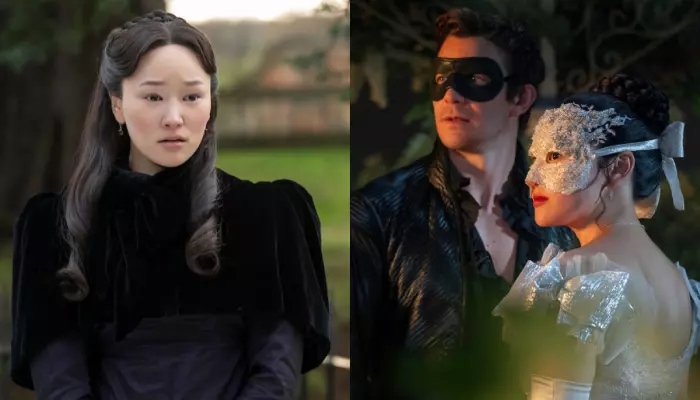
While Francesca’s world fractures, the season’s primary romance between Benedict and Sophie continues its Cinderella-infused ascent. Part 2 delivers the payoff fans have craved since the masquerade ball: stolen glances turning into passionate encounters, class barriers cracking under the weight of genuine connection, and Benedict’s artistic soul finally finding its muse in the resourceful, mysterious maid with a painful past. Their story glows with hope and possibility, a luminous counterpoint to the shadows swallowing the Stirling household. Yet even here, grief intrudes—Benedict supports his sister, confronts his own fears of loss, and ultimately receives his mother’s blessing to follow his heart, ring in hand, as he races toward a future with Sophie.
The contrast is deliberate and brilliant. Love in Bridgerton has always been messy, but Season 4 Part 2 forces characters—and viewers—to confront its fragility. One ordinary afternoon can erase a lifetime of plans. A headache can rewrite an entire bloodline. Brownell and the writers refuse to sugarcoat the pain, allowing Dodd to deliver some of her most nuanced, devastating work yet. From the stoic facade at the funeral to the private breakdowns, Francesca’s journey feels achingly human. Alli, though gone early in the narrative, leaves an indelible mark—his John was never flashy, never the rakish lead, but a steady, kind-hearted man whose quiet devotion made his loss feel profoundly personal.
Production details reveal the care taken with this storyline. Filming the death and funeral scenes required emotional safety nets for the cast. Alli has spoken about the strange experience of playing a character you know will die, yet investing fully in the joy of his final days. “It’s a nice journey and a nice character arc,” he reflected, “and so I was more excited to be joining the ton and exploring this story.” The costumes shift from the soft pastels of wedded bliss to the stark blacks of widowhood, the cinematography moving from warm candlelit intimacy to cooler, shadowed frames that mirror Francesca’s inner desolation. The score, usually lush and romantic, pulls back during key grief moments, letting silence and raw sound design carry the weight.
For fans of Quinn’s novels, the adaptation honors the source while making bold, modern choices. In When He Was Wicked, John dies early, leaving Francesca to navigate widowhood and an unexpected, guilt-ridden attraction to his cousin Michael. The show preserves the emotional core—the aneurysm, the timing near the second anniversary, the inheritance pressures—but swaps genders for Michaela, opening doors to queer storytelling that feels organic rather than forced. Brownell has confirmed that Seasons 5 and 6 will focus on Francesca and Eloise (in some order), with John’s death clearing the path for Francesca’s central arc. Will Michaela’s departure be temporary? How will the slow realization of attraction unfold against the backdrop of societal expectations? The final moments of Part 2—Francesca alone once more, yet subtly changed—leave viewers breathless with anticipation.
Social media erupted the moment the episodes dropped. #JohnStirlingRIP trended alongside #FrancescaDeservesTheWorld and #MichaelaStirling. TikTok filled with stitched reaction videos: fans sobbing over the scream scene, rewinding the hand-holding moment frame by frame, debating whether Michaela’s exit is self-protection or fear of scandal. Reddit threads dissected every clue, from John’s earlier headaches to Violet’s knowing glances. One viral post captured the collective mood perfectly: “I came for Benedict and Sophie’s spicy romance and stayed for the emotional evisceration of my favorite quiet couple.” Even casual viewers who avoided spoilers found themselves texting friends at 2 a.m.: “Did that just happen?”
The death resonates beyond the fictional ton because it taps into universal truths. How do we move forward when the person who made the world feel safe is suddenly gone? How do we honor love that was cut short without letting it define us forever? Francesca’s arc in these episodes models resilience without erasing pain—she plans celebrations of John’s life, leans on family, and begins, tentatively, to imagine a future that might include new love. It is messy, imperfect, and deeply relatable.
As the credits roll on Season 4, the Bridgerton universe feels richer, more layered, more human. The balls will continue, the gossip will flow, and Benedict and Sophie’s happily-ever-after promises sunshine after the storm. But in the quiet corners of Kilmartin House, a widow sits with her memories, a single headache having altered the course of everything. John Stirling may have left the screen, but his gentle legacy—his love for Francesca, his bond with Michaela, his place in the sprawling Bridgerton family—will echo through the next two seasons and beyond.
This is Bridgerton at its most powerful: not just escapism wrapped in corsets and candlelight, but a mirror reflecting life’s most brutal and beautiful truths. Love can arrive like fireworks or grow slowly in the spaces between ordinary days. Loss can strike without fanfare, leaving screams that echo long after the music fades. And sometimes, in the wreckage of grief, new connections spark—quiet, unexpected, and full of possibility.
The ton will mourn. The fans will replay those final scenes until the tears stop. And somewhere in the English countryside of 1826—or the writers’ room of 2026—Francesca Bridgerton is just beginning to discover that even after the deepest heartbreak, the heart can, against all odds, open once more.
The wait for Season 5 has never felt more agonizingly sweet.