
🕶️ Red Pill Just Got Upgraded: The Matrix 5 Is Coming With A Brand New Director – This Could Be The Best (Or Most Shocking) Matrix Movie Ever Made
The red pill drops again. Warner Bros. has officially greenlit The Matrix 5, thrusting one of cinema’s most revolutionary sci-fi franchises into a bold new era. Drew Goddard, the visionary behind The Martian and The Cabin in the Woods, steps up to write and direct, marking the first time a Matrix film moves forward without either Wachowski sister in the director’s chair. Lana Wachowski remains deeply embedded as executive producer, ensuring the soul of the original world stays intact while Goddard injects his signature blend of clever genre twists, emotional depth, and high-stakes spectacle.
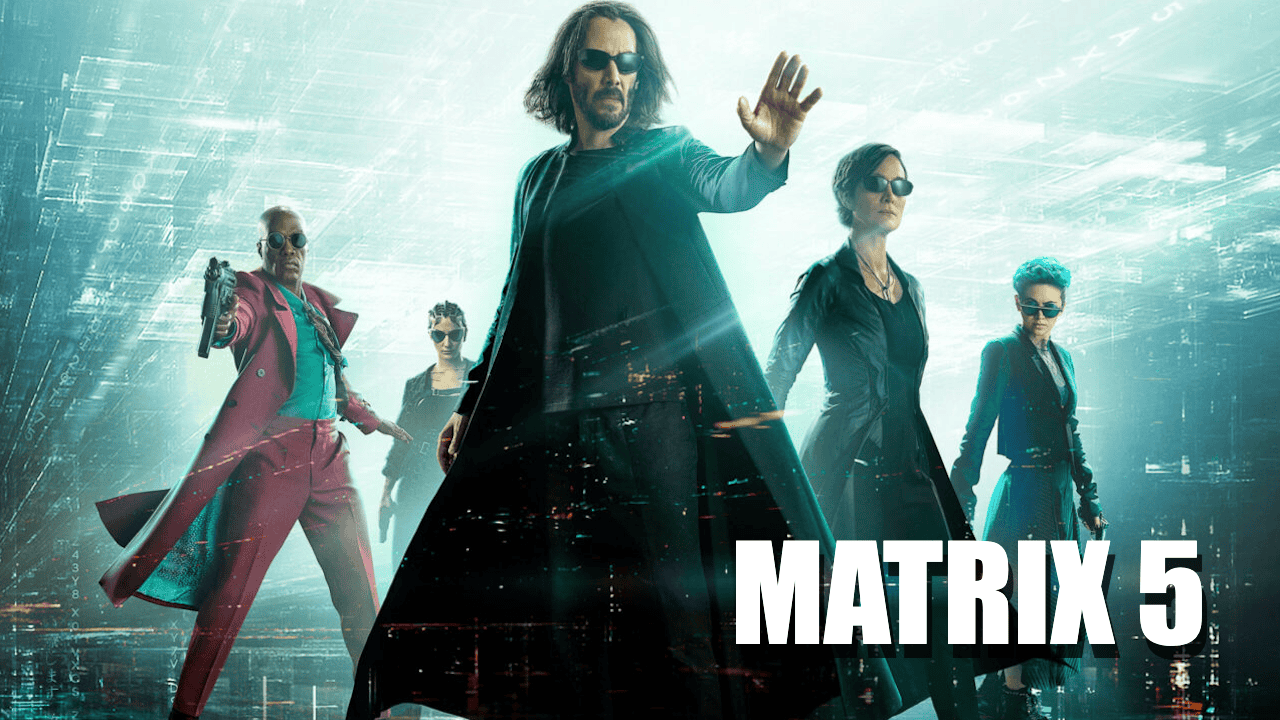
Fans worldwide erupted the moment the news broke. After the polarizing yet introspective The Matrix Resurrections in 2021, many wondered if the franchise had exhausted its code. Now, with Goddard at the helm, anticipation surges like a bullet-time dodge. This isn’t just another sequel—it feels like a potential rebirth, a chance to reload the simulation with fresh questions about control, identity, freedom, and what it truly means to wake up in 2026 and beyond.
To appreciate the magnitude, rewind to 1999. The Matrix didn’t just release; it detonated. Directed by Lana and Lilly Wachowski, it fused groundbreaking visual effects, philosophical inquiry drawn from Plato, Baudrillard, and Eastern thought, and balletic martial arts into a cultural phenomenon. Keanu Reeves’ Neo, a hacker discovering his role as “The One,” became an icon. Carrie-Anne Moss’ Trinity delivered cool intensity. Laurence Fishburne’s Morpheus offered the red pill speech that still echoes in meme culture and late-night dorm debates. The film grossed over $460 million on a $63 million budget and won four Oscars, including for Visual Effects and Sound. It reshaped action cinema, popularized “bullet time,” and forced audiences to question reality itself.
Sequels followed: Reloaded and Revolutions in 2003 expanded the lore with epic highway chases, Zion’s underground resistance, and machine overlords. While divisive, they deepened the mythology. Then came a long hiatus until Resurrections in 2021, Lana’s solo directorial effort that meta-reflected on franchise fatigue, nostalgia, and personal reinvention. It earned mixed reviews but proved the world still held power. Now, Matrix 5 arrives at a perfect cultural moment—amid AI anxieties, digital surveillance, virtual realities, and debates over free will in an algorithm-driven age.
Enter Drew Goddard. Few filmmakers match his versatility. He broke through writing episodes of Buffy the Vampire Slayer and Angel under Joss Whedon, honing sharp dialogue and horror-comedy balance. His feature debut co-writing and directing The Cabin in the Woods (2012) deconstructed slasher tropes with meta-brilliance, earning cult status. He penned Cloverfield (2008), contributed to World War Z (2013), and earned an Oscar nomination for adapting The Martian (2015), turning hard sci-fi survival into a crowd-pleasing triumph. As creator and showrunner of Netflix’s Daredevil, he crafted gritty, moral superhero storytelling. Bad Times at the El Royale (2018) showcased his flair for stylish ensemble thrillers. More recently, his work on Project Hail Mary highlighted emotional stakes in grand science fiction.
Goddard didn’t chase The Matrix; he pitched Warner Bros. his vision. Studio executives loved how it honored the past while offering a “unique perspective” rooted in his genuine love for the series. Sarah Esberg, his producing partner at Goddard Textiles, joins the effort. This handover feels deliberate—a passing of the torch to a filmmaker who understands spectacle without sacrificing brains.
Lana Wachowski’s executive producer role provides crucial continuity. She helmed Resurrections and co-created the universe. Her involvement reassures fans that core themes—trans allegory, queer liberation, resistance against oppressive systems—won’t vanish. Goddard has praised the Wachowskis’ work, calling Resurrections “deeply moving.” He’s currently deep in his “writing cave,” refusing to rush. In recent interviews, he emphasized giving himself space to discover the best story, echoing a thoughtful approach rather than corporate checkbox filmmaking.
The biggest question on everyone’s lips: Will Keanu Reeves return as Neo? No official confirmation yet, but hope burns bright. Reeves previously said he’d reprise the role “if Lana invites me again.” With her as executive producer, that door stays open. Carrie-Anne Moss as Trinity feels equally essential—their chemistry defined the saga. Rumors swirl, but Goddard stays coy: “I can’t speak to that.” This ambiguity excites rather than frustrates. A full return could continue Neo and Trinity’s story post-Resurrections. Or Goddard might introduce new protagonists awakening in an evolved Matrix, with legacy characters in mentor roles. Fresh faces could explore parallel simulations or machine-human hybrids. Either path tantalizes.
Imagine the possibilities. Perhaps the machines have evolved further, blurring lines between simulation and reality even more. AI advancements since 2021 make the franchise’s warnings prophetic. What if the Matrix now runs on collective consciousness or quantum computing? Goddard’s horror roots could infuse psychological dread—glitches manifesting as nightmares, agents adapting with terrifying intelligence. His sci-fi pedigree suggests breathtaking set pieces: zero-gravity fights, city-wide chases through collapsing code, philosophical dialogues amid visual poetry.
Expect technical ambition. The original films pioneered effects still studied today. Modern tools—advanced CGI, AI-assisted VFX, immersive sound—could elevate bullet time into something transcendent. Practical stunts, a Goddard hallmark, would ground the spectacle. Picture Reeves (if returning) or new stars training in wire work and martial arts, delivering raw physicality alongside digital wizardry.
Culturally, The Matrix endures because it transcends entertainment. It asks: Are we free, or plugged into systems dictating our choices? In an era of social media echo chambers, deepfakes, and corporate data harvesting, those questions hit harder. Neo’s journey mirrors personal awakening—rejecting conformity, embracing authenticity. For trans audiences, the red pill resonates as transition metaphor. Goddard, known for subversive storytelling, seems poised to layer new meanings without preachiness.
Challenges await. Resurrections divided fans; some craved pure action, others embraced its introspection. Goddard must balance nostalgia with innovation. Recapturing the original’s magic without imitation poses risk. Franchise fatigue is real—yet The Matrix’s intellectual core differentiates it from generic blockbusters. Success hinges on emotional investment in characters alongside mind-bending concepts.
Box office potential looms large. The series has earned nearly $1.8 billion globally. A well-executed Matrix 5 could dominate, especially with IMAX, 3D, or even VR tie-ins. Merchandise, games, and expanded universe stories might follow. Warner Bros. needs hits; this delivers built-in audience plus crossover appeal.
Goddard’s collaborators could elevate everything. Imagine a score blending Don Davis’ iconic themes with modern electronic artists. Cinematography drawing from cyberpunk aesthetics and real-world dystopian visuals. Casting new talent—perhaps diverse voices reflecting today’s global realities—would enrich the resistance.
As development progresses, leaks and teases will fuel speculation. Goddard emerging from his writing cave with a script could spark casting announcements. Production might begin late 2026 or 2027, targeting a 2028 release. Patience tests fans, but quality over speed defines this phase.
The Matrix changed movies forever. It proved blockbusters could be smart, stylish, and subversive. Goddard inherits that legacy with evident reverence and creative hunger. Whether Neo flies again or new heroes unplug, the promise of deeper rabbit holes excites.
This isn’t mere nostalgia bait. It’s an invitation to question everything once more. In a world increasingly simulated—through screens, algorithms, curated feeds—Matrix 5 arrives timely. It could remind us of our power to choose, to fight, to love across code and flesh.
The simulation glitches. The resistance stirs. Buckle up, unplug your doubts, and get ready. The One might return, or perhaps we all become The One. Either way, The Matrix 5 isn’t just happening—it’s awakening something vital in all of us. What truth will you choose when the offer comes? The red pill awaits, more potent than ever.