The ginger-haired titan from Belfast left the stage one final time on a quiet April evening in 2026, surrounded not by spotlights or roaring crowds but by the gentle hum of hospice monitors and the unwavering love of family and friends. Michael Patrick—known professionally as Michael Patrick and sometimes credited as Michael Campbell—slipped away at just 35 after a ferocious three-year battle with motor neurone disease (MND), the same merciless condition that had claimed his father when Michael was only eight years old. His wife, Naomi Sheehan, shared the news on Instagram with raw honesty and grace that captured the very essence of the man she called Mick: a force of joy, laughter, and unbreakable spirit who refused to let a terminal diagnosis dim his light.

“Last night, Mick sadly passed away in the Northern Ireland Hospice,” Sheehan wrote on April 8. “He was diagnosed with Motor Neurone Disease 1st February 2023. He was admitted 10 days ago and was cared for by the incredible team there. He passed peacefully surrounded by family and friends. Words can’t describe how broken-hearted we are.” She went on to paint a portrait that will linger with anyone who ever encountered his work or his presence: “It’s been said more than once that Mick was an inspiration to everyone who was privileged enough to come into contact with him, not just in the past few years during his illness but in every day of his life. He lived a life as full as any human can live. Joy, abundance of spirit, infectious laughter. A titan of a ginger haired man.” Closing with a quote from Irish writer Brendan Behan that Mick himself cherished—“The most important things to do in the world are to get something to eat, something to drink and somebody to love you”—Sheehan urged the world to embrace the simple, defiant pleasures of living: “So, don’t overthink it. Eat. Drink. Love.”
That philosophy defined Michael Patrick long before illness entered the frame. Born in Belfast in the early 1990s, he grew up in a city still echoing with the scars of the Troubles, yet he turned personal hardship into art that resonated far beyond Northern Ireland’s borders. The loss of his father to MND at such a tender age left an indelible mark, one that would later fuel both his writing and his astonishing resilience when the same disease came knocking on his own door. Yet those early years also instilled in him a fierce sense of humor and a storyteller’s eye for the absurdities of life. He studied science—specifically physics—at the University of Cambridge, an unlikely path for a future actor that nevertheless honed his sharp intellect and analytical mind. While there, he joined the legendary Cambridge Footlights comedy troupe, where his wit and physical comedy shone brightly among peers who would go on to shape British entertainment. The stage called louder than the lab, however, and after Cambridge he trained at London’s prestigious Mountview Academy of Theatre Arts, immersing himself in classical and contemporary performance while never forgetting his Belfast roots.
Patrick’s breakthrough came not in grand Hollywood fashion but through raw, autobiographical theatre that blended vulnerability with riotous laughter. In 2017, he co-wrote and starred in the one-man show My Left Nut alongside director Oisín Kearney. Developed through Fishamble’s Show in a Bag programme at the Dublin Fringe Festival, the play drew directly from Patrick’s own teenage experiences with a hydrocele—a swelling of the testicle that turned his adolescence into a minefield of embarrassment, medical visits, and teenage bravado. The title alone promised irreverence, and the show delivered: audiences howled at the ridiculousness of a young man navigating crushes, school bullies, and a fatherless household while his body betrayed him in the most mortifying way. Yet beneath the laughs lay deeper truths about grief, identity, and masculinity in a working-class Irish context. The production toured Ireland and the UK, stormed the Edinburgh Fringe Festival—where it won a Summerhall Lustrum Award—and earned a nomination for Best Show Under One Hour at the Dublin Fringe. It was later adapted into a critically acclaimed BBC Three television series in 2020, with Patrick appearing briefly despite being “too old” at thirty to reprise his teenage self. The series retained the show’s blend of crude humor and heartfelt honesty, cementing Patrick as a writer-actor unafraid to mine his own life for universal stories.
Television soon beckoned with roles that showcased his versatility. He popped up in the BBC NI comedy Soft Border Patrol, played in the DC Comics series Krypton, and took on more substantial parts in the gritty police drama Blue Lights—where he portrayed a character entangled in the complex social fabric of contemporary Belfast—and Steven Knight’s This Town, a raw exploration of music, ambition, and post-industrial Britain. His most widely recognized screen credit, however, came in Game of Thrones. In Season 6, Episode 5—“The Broken Man”—Patrick appeared as a Wildling rioter amid the tense alliance Jon Snow forged with the free folk north of the Wall. The episode crackles with the show’s signature tension: wildlings and Northerners clashing over old grudges while the threat of the White Walkers looms. Patrick’s brief but fiery performance as one of the rioters captured the chaotic energy of that uneasy alliance, his physicality and intensity adding authentic grit to the scene. For a young actor from Belfast, landing even a small role in the cultural juggernaut that was Game of Thrones was a dream realized—one that connected him to millions of fans worldwide and proved his ability to hold his own among dragons, direwolves, and political intrigue.
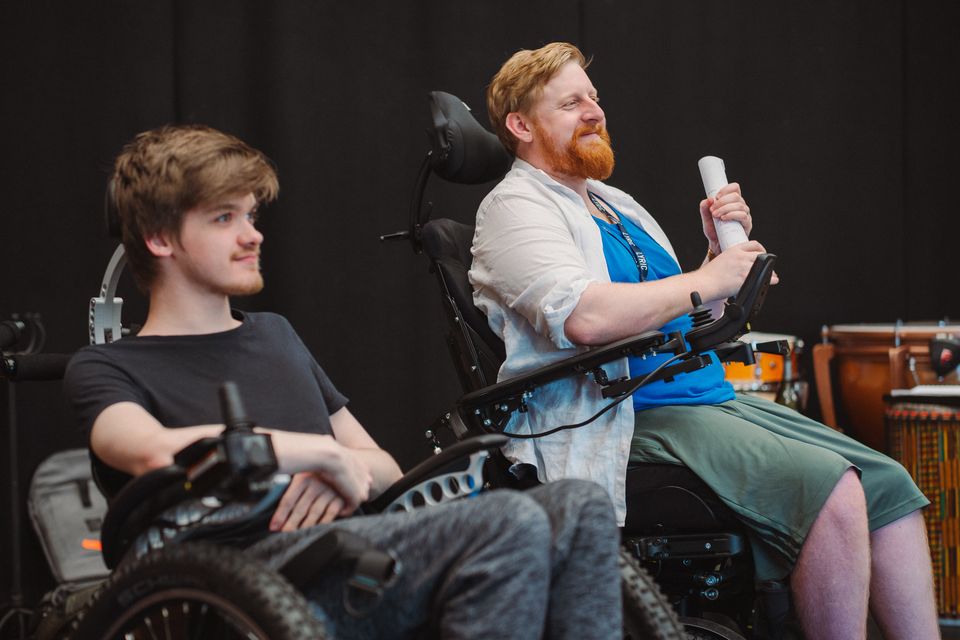
Yet it was on the theatre stage that Patrick’s talent burned brightest and, ultimately, most poignantly. He had long been a fixture at Belfast’s Lyric Theatre, beginning with his one-man show I, Banquo years earlier. Then, in 2024—mere months after his MND diagnosis—he delivered what many consider his crowning achievement: a groundbreaking adaptation of Shakespeare’s The Tragedy of Richard III. Directed with bold vision, the production cast Patrick as the scheming king in a wheelchair, the first time an actor with a visible disability had portrayed the role on the island of Ireland. Far from a gimmick, the choice transformed the play. Richard’s famous opening soliloquy—“Now is the winter of our discontent”—took on devastating new layers when delivered from a body that was itself betraying its owner. Patrick’s performance was electric: his voice retained its commanding power, his eyes flashed with the character’s cunning wit, and his physical limitations became part of the storytelling, turning deformity from metaphor into lived reality. Critics and audiences hailed it as legendary. The production earned Patrick the Judges’ Award at the prestigious Stage Awards in 2025—one of Britain’s highest theatrical honors—and the Lyric Theatre itself later paid tribute, calling him “part of the Lyric family for many years” and describing his Richard III as “one of the greatest performances ever on the Lyric stage.”
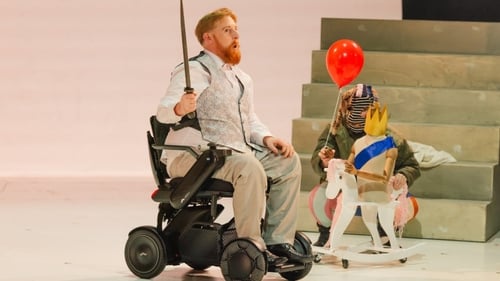
By then, MND had already begun its relentless assault. Symptoms first appeared subtly: a foot dragging during a performance, which Patrick initially blamed on ill-fitting shoes. Tests soon confirmed the worst. The diagnosis arrived on February 1, 2023, just as his career was accelerating. MND—also known as amyotrophic lateral sclerosis or Lou Gehrig’s disease—attacks the nerves controlling voluntary movement. Muscles weaken, stiffen, and waste away. Speech, swallowing, breathing—all eventually falter. There is no cure. Average life expectancy after diagnosis is two to five years, though it varies wildly. Patrick’s case was aggressive. His father had carried a rare genetic mutation (FUS gene) linked to familial MND; the same cruel inheritance now coursed through Michael’s veins. In a deeply personal interview published in October 2025, he spoke candidly: “People say you’ll be grand—I’ll not be grand, I’m dying.” Yet he channeled that stark truth into another one-man show, My Right Foot, which used dark humor to explore his declining mobility and the daily absurdities of living with a terminal illness. Even as he required a wheelchair, a tracheostomy for breathing support, and round-the-clock care, Patrick kept creating. He participated in clinical trials that briefly brought small victories—like the ability to wiggle his toes again—sparking hope not just for himself but for the wider MND community.
Throughout it all, Naomi Sheehan stood as his anchor. Their partnership was one of profound mutual strength. When the disease progressed to the point where a tracheostomy became necessary, friends organized a fundraiser to support them, and Naomi’s updates on social media blended practicality with tenderness. In one post she wrote of facing the procedure “with grace, humility, dignity and no doubt some dark humour”—words that perfectly echoed Michael’s own spirit. The couple’s love became a quiet testament to what it means to choose joy amid suffering. Patrick’s final Instagram post, uploaded on February 6, 2026, captured that defiant optimism. After three years with MND, he acknowledged the grim prognosis from his neurologist—one year remaining—but added simply, “still lots to live for and lots planned.” He detailed hospital stays, medical discussions, and the tracheostomy decision with characteristic honesty, never sugar-coating yet never surrendering to despair.
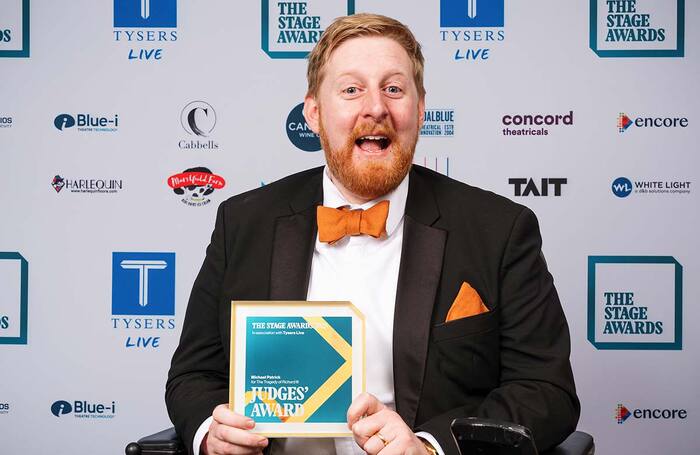
His advocacy extended beyond personal storytelling. The MND Association praised him as “a great advocate for motor neurone disease,” someone who used his platform to raise awareness and funds while humanizing a condition that too often remains hidden behind statistics. Colleagues at the Lyric Theatre remembered him as a creator who “lit up stages with his poignant storytelling,” exploring themes of death, grief, and resilience with bravery and comic flair. Tributes poured in from across the Irish arts scene, from fellow actors who had shared dressing rooms to writers who had collaborated with him on projects like The Alternative and The Border Game. Each spoke of the same man: generous, hilarious, fiercely talented, and utterly alive even as his body failed him.
In the broader tapestry of entertainment, Michael Patrick’s story stands as a powerful reminder that greatness is not measured by screen time or box-office receipts but by the courage to keep showing up. His Game of Thrones cameo may have been fleeting, but it introduced him to global audiences who later learned of his off-screen heroism. His Richard III redefined a Shakespearean classic for a new generation, proving that disability can deepen rather than diminish art. And through My Left Nut and My Right Foot, he turned private pain into public catharsis, inviting strangers to laugh and cry with him. In an industry often obsessed with youth and perfection, Patrick embodied something rarer: authenticity forged in fire.
As the Northern Ireland Hospice team and his loved ones cared for him in those final days, one can imagine the room filled not with solemn silence but with the echoes of stories told, jokes shared, and love expressed—the very ingredients Mick championed. Motor neurone disease may have silenced his voice eventually, but it could never extinguish the spark he carried. That spark lives on in the plays he wrote, the roles he inhabited, the awareness he raised, and the example he set for anyone facing their own winter of discontent.
Michael Patrick is survived by his wife Naomi Sheehan, his family, and a creative community forever changed by his presence. He was 35 years old. Yet in the words he and Naomi so cherished, his legacy urges us all to seize the moment: eat, drink, and above all, love fiercely while there is still time. In a world quick to forget the quiet warriors, Michael Patrick’s story demands we remember—one infectious laugh, one defiant performance, one full life at a time. His final bow may have come too soon, but the curtain never truly falls on a titan who taught us how to live.
News
One Reckless Decision After A House Party Took FOUR Young Lives In Leeds… The Driver Was Doing 95mph!! 😭
The sterile hum of machines in a Vancouver hospital room suddenly gave way to something far more powerful than any monitor beep or ventilator sigh. Thirty minutes earlier, in a…
🔥 19-Year-Old Shiloh Jolie Just Made Her Music Video Debut… And She Looks EXACTLY Like Angelina Jolie!! 😱💃
The spotlight has a new face — and it belongs to a 19-year-old who carries one of Hollywood’s most famous surnames without needing to lean on it. Shiloh Jolie, the…
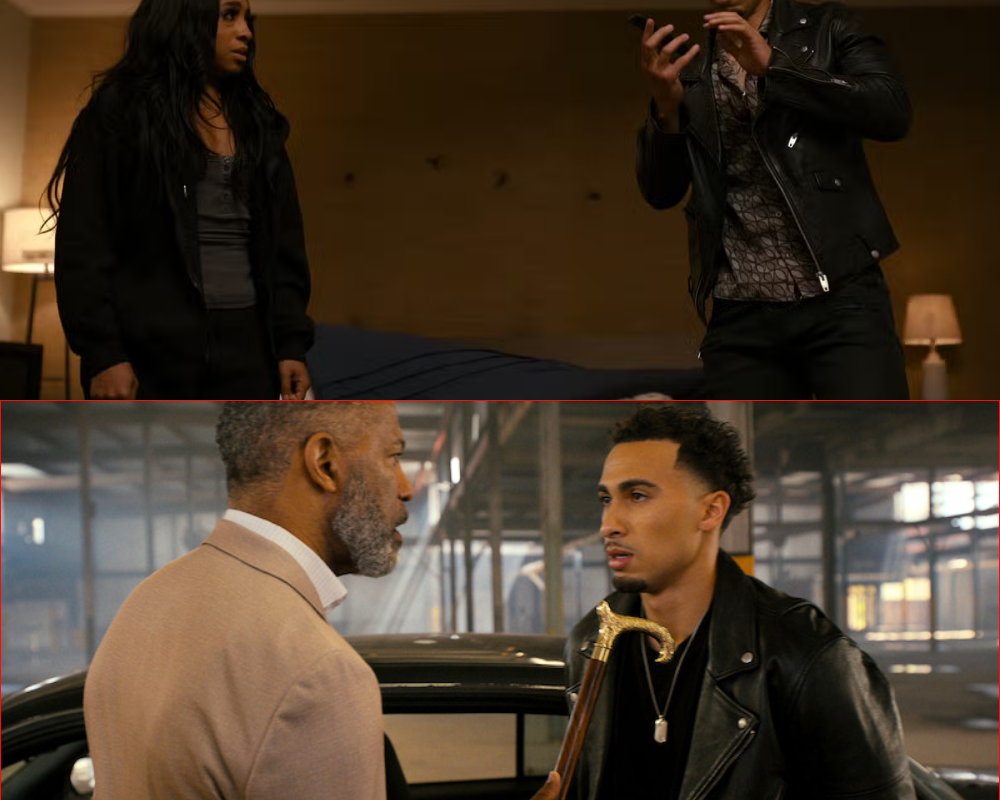
🚨 NO ONE Expected This… Horace Was Almost Killed Off In Beauty In Black Season 1 — Until Tyler Perry Said These Words!! 💣
The hospital room hummed with tension, monitors beeping softly in the background as Horace Bellaire lay weakened yet commanding, his presence still larger than the sterile white walls surrounding him….

🔥 18-Year-Old Wasn’t Even BORN When “It’s Your Love” Came Out… But He Just Sang It Better Than Anyone Expected on American Idol!! 😱💔
The lights dimmed on the American Idol stage during the Top 12 performance night, but the energy in the room was electric. It was 90s Night — a nostalgic throwback…

💣 AMERICAN IDOL HISTORY MADE… They Broke The Voting System & Sent 3 Home!! 😱
American Idol has just unleashed one of the most jaw-dropping elimination reveals in its history—and the fallout is still shaking the entire competition. After a historic voting delay that left…
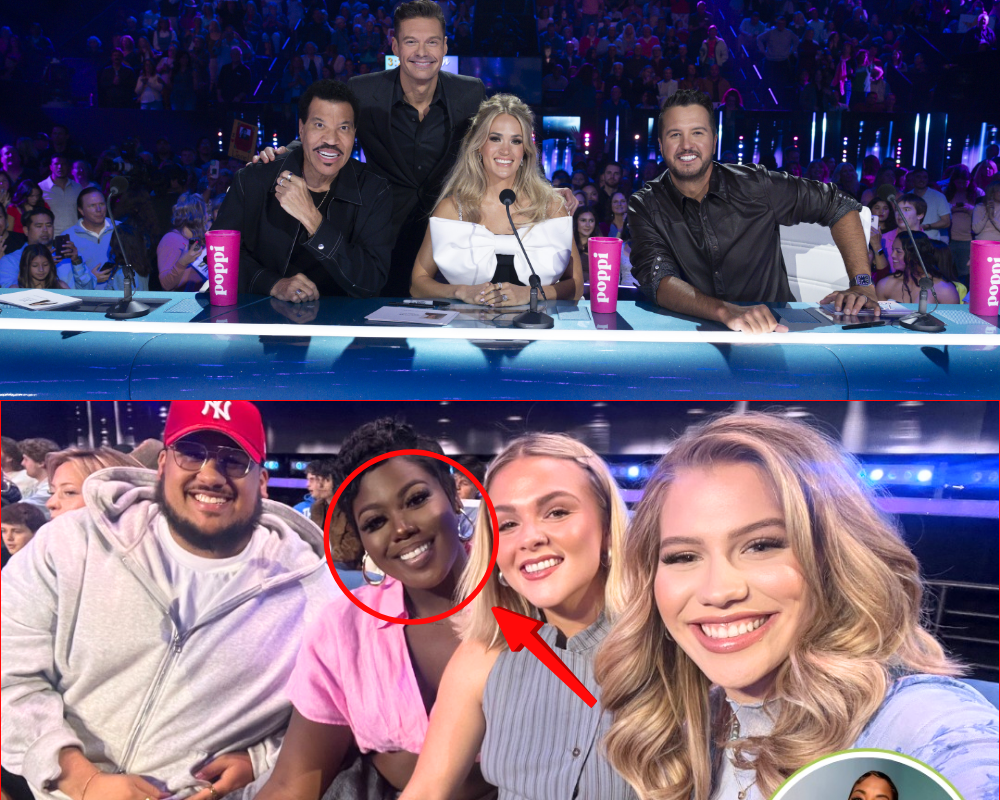
🔥 THE SONG LIST HAS OFFICIALLY DROPPED… And Some Dreams Are About To Be SHATTERED!! 😱
The song list has officially dropped, and the internet is losing its collective mind. After weeks of feverish speculation, leaked rumors, and late-night fan theories flooding social media, the producers…
End of content
No more pages to load