Firebreak (2026) on Netflix has taken the streaming world by storm, rocketing to the No. 1 spot globally just days after its February 20 release. This Spanish psychological thriller, originally titled Cortafuego, masterfully blends heart-pounding survival tension with deep emotional wounds, delivering a story that grips you from the first ash flake and refuses to let go until the final, haunting frame. Directed by David Victori (known for his work on Sky Rojo), the film stars the powerhouse Belén Cuesta as Mara, a grieving widow whose world shatters when her young daughter vanishes amid an encroaching wildfire. What begins as a quiet family farewell to a beloved cabin spirals into a nightmare of suspicion, fear, and redemption that will leave you questioning every assumption—and reaching for the pause button just to catch your breath.
The premise hooks immediately. Mara, still raw from the death of her husband Gustavo in that very forest cabin, returns with her 8-year-old daughter Lide (Candela Martínez), brother-in-law Luis (Joaquín Furriel), his wife Elena (Diana Gómez), and their son Dani (Mika Arias). The trip is meant to be closure: pack up memories, sell the property, and move on. Gustavo loved the woods—he crafted bear figurines there, found peace among the trees—but his passing has turned the place into a shrine of pain. As the family sorts through photos and belongings, burnt particles drift like eerie snow. A massive wildfire rages nearby, forcing an urgent evacuation. Authorities demand they leave, but tragedy strikes: after a heated argument where Mara forbids Lide from wandering into the forest to “say goodbye,” the hurt child slips away, collecting old family pictures and disappearing into the trees.
Panic sets in. Police Sergeant Revuelta and Corporal Baranda enforce strict protocols—no searches in the danger zone. The family refuses to abandon hope. They stay behind, scouring the area as flames creep closer, smoke thickens, and ash blankets everything. Enter neighbor Santiago (Enric Auquer), a reclusive forest ranger who offers help. He claims to have seen Lide, even gifts her a butterfly bracelet earlier. But suspicion mounts fast. Mara discovers drugs, psychedelics, and a hidden room in his home filled with strange items: a shovel, empty beds, ritualistic tools. Videos on his phone show him digging holes and lying in them—bizarre “exercises” to conquer fear of death. Worse, Gustavo had sought Santiago’s guidance before dying. Was there foul play? Is Santiago a predator hiding behind a helpful facade?
The tension escalates relentlessly. Dani accidentally frees a tied-up Santiago, leading to a brief, terrifying “kidnapping” where the man drives the boy away—only to release him unharmed near safety. Luis, protective and furious, unleashes brutal violence on Santiago. The group ventures deeper into the burning forest at night, dragging the bound ranger along as a reluctant guide. He insists he knows where Lide is. Amid crackling flames and choking smoke, Santiago escapes during chaos, follows a faint cry, and finds the girl trapped in a deep ditch—likely fallen while fleeing a real bear that chased her. Flashbacks reveal the truth: Lide encountered Santiago earlier, confided about her father, returned the bracelet in a moment of trust, then wandered alone after hearing voices. No abduction. No malice. Just a scared child lost in the wilderness.
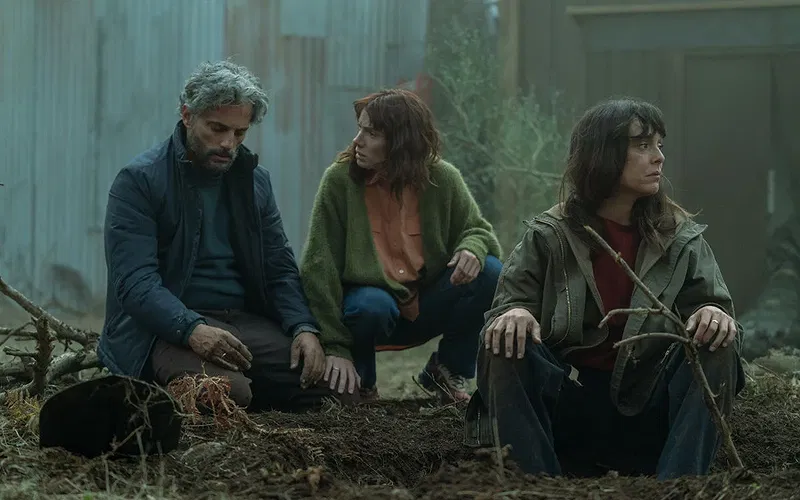
Mara and Luis arrive too late for clarity. In misunderstanding, they attack Santiago again. Lide, weak but alive, explains everything: the bear chase, the fall, Santiago’s rescue. The shift is seismic. Mara, overwhelmed by guilt for her accusations and violence, entrusts Lide to Luis for the hospital run and doubles back into the inferno to aid the injured Santiago. She finds him unconscious, apologizes profusely, and they share a raw, emotional embrace as flames roar around them. Mara collapses from exhaustion and smoke inhalation while Santiago limps toward the road for help. Luis, speeding away with Lide, spots the battered ranger hitchhiking but drives past—vengeance or fear winning out. A kind passerby eventually stops for Santiago.
At the hospital, Lide recovers from smoke inhalation, reunited with Luis, Elena, and Dani. The physical danger ends, but emotional scars linger. Fire crews locate Mara in the scorched woods. The blaze is contained; the cabin stands. A bear approaches her—eerily calm, almost protective—before vanishing into the haze. Mara, no longer terrified, returns to Gustavo’s workstation in the cabin without fear, suggesting a profound inner shift. She confronts grief head-on, no longer running from memories.
Santiago, traumatized and gravely injured, survives treatment. In a poignant final touch, he discovers an orange-flame vine flower blooming defiantly amid the charred landscape. He plans to give it to Mara—for Lide—symbolizing resilience, rebirth, and fragile hope after devastation. The film closes on this note of tentative healing, not tidy resolution. Mara’s ultimate fate remains ambiguous: she stays behind in the forest, isolated yet perhaps finally at peace. Did she fully reconcile with her family? Does she embrace a new beginning? The movie leaves it open, trusting viewers to feel the weight.
What elevates Firebreak beyond standard disaster thrillers is its psychological depth. The wildfire serves as both literal threat and metaphor—for grief’s consuming fire, for unchecked suspicion that burns bridges, for fear that blinds us to truth. Victori masterfully builds dread through sound design: distant crackles growing into roars, ash pattering like rain, labored breathing in smoke-filled air. Cinematography captures the forest’s beauty turning hellish—golden light through trees giving way to orange hellscapes. Performances anchor everything. Cuesta’s Mara is riveting: a mother whose protectiveness twists into paranoia, then redemption. Her arc from accusation to apology feels earned and gut-wrenching. Auquer’s Santiago is enigmatic yet sympathetic—his “death rituals” stem from compassion, helping others (including Gustavo) face mortality. The bear emerges as powerful symbolism: Gustavo’s spirit? A guardian? Or simply nature’s indifference? It chases Lide into danger but spares Mara, mirroring how fear can save or destroy.
Themes resonate deeply in 2026’s world of escalating wildfires and fractured trust. The film critiques snap judgments—how panic turns neighbors into monsters. Grief clouds judgment; Mara projects her loss onto Santiago, seeing threat where there’s aid. Redemption comes not from grand gestures but quiet apologies amid chaos. The orange-flame vine stands out: life persisting after destruction, a reminder that healing follows ruin if we allow it.
Critics and audiences agree: Firebreak is intense, manipulative in the best way, pulling heartstrings while delivering genuine shocks. It subverts expectations—no serial killer twist, no gratuitous gore—just raw humanity under pressure. Netflix’s surprise hit proves international thrillers can dominate globally when they prioritize emotion over explosions.
If you crave edge-of-your-seat suspense wrapped in profound character study, stream Firebreak now. But beware: once the ash starts falling, you won’t look away. The fire may end, but the questions—and the hope blooming in the ashes—will burn long after the credits roll.