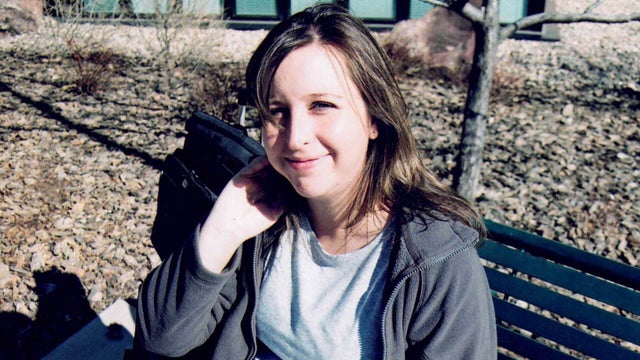
The garage door of the Krug family home in this quiet suburb north of Denver hung ajar like a half-forgotten confession, its mechanical hum silenced forever on the evening of December 14, 2023. Inside, amid the clutter of holiday decorations and half-unpacked grocery bags, Kristil Krug lay crumpled on the cold concrete floor, her life ebbing away in a pool of her own blood. She was 43, a brilliant engineer whose mind dissected complex systems with the precision of a surgeon, a devoted mother of three whose laughter could chase storm clouds from the Rockies’ peaks. A single, savage blow to the head had cracked her skull; a deep stab to the chest had pierced her heart—literally and figuratively. Her husband, Daniel Krug, 44, had called the police for a welfare check just hours earlier, his voice laced with feigned concern over a phone that went unanswered. But as Broomfield detectives pieced together the digital detritus of her final months, the facade crumbled: the stalker who had terrorized Kristil with vulgar texts, eerie surveillance details, and death threats wasn’t some shadowy ex from her past. It was Daniel himself, cloaked in the digital ghost of her college sweetheart, weaving a web of deception to manipulate, isolate, and ultimately destroy the woman he vowed to love.
This wasn’t a random act of violence or a crime of passion born in the heat of an argument. It was the culmination of an “insidious murder plot,” as prosecutors would later describe it—a months-long campaign of psychological warfare designed to gaslight Kristil into submission as their marriage frayed at the seams. For over two months, she had lived in a suffocating fog of fear, her days shadowed by anonymous messages that burrowed into her psyche like ticks. “I’ll get rid of him and then we can be together. So easy,” one read, a chilling promise aimed at her husband’s life. Kristil, ever the analytical thinker, documented it all in a meticulous “stalker log,” installed security cameras, carried a concealed handgun, and even hired a private investigator. She confided in friends, family, and police, her voice trembling with the hyper-vigilance of someone who knew the statistics: stalked women are exponentially more likely to fall victim to intimate partner homicide. Yet, the system she trusted—the very pillars of law enforcement and technology that should have shielded her—faltered at critical junctures. Warrants lingered in bureaucratic limbo; tech giants like Google, Verizon, and TextNow dragged their feet on subpoenas, their responses mired in weeks of delay. Evidence that could have unmasked Daniel arrived too late, after the blood had already dried.
In a Broomfield courtroom this year, after a grueling two-week trial that laid bare the grotesque intimacy of betrayal, Daniel Krug was convicted of first-degree murder, stalking, and criminal impersonation. Judge David Wood sentenced him to life in prison without parole, his gavel a final, hollow echo in a chamber thick with sobs from Kristil’s family. But justice, however cathartic, cannot rewind the clock. As Rebecca Ivanoff, Kristil’s cousin and a former prosecutor specializing in domestic violence, fights for “Kristil’s Law”—a push for mandatory 48-hour responses to stalking warrants from tech companies—the nation grapples with a sobering truth: in the digital age, love’s dark underbelly thrives in the shadows of our inboxes, and the tools to illuminate it are often just a subpoena away, gathering dust. This 2,278-word feature unearths the layers of deception, desperation, and systemic shortfall that conspired against one woman’s survival, a cautionary symphony that demands we listen before the next crescendo of silence.
The Architect of Dreams: Kristil’s World Before the Storm
:max_bytes(150000):strip_icc():focal(742x205:744x207)/daniel-krug-now-split-092625-150a045d63fd4fc8a39cdad8c6716f96.jpg)
Kristil Ann Krug was born on a crisp autumn day in 1980, in the heartland of Iowa, where cornfields stretched like golden promises under endless blue skies. From her earliest memories, she was a puzzle-solver, the girl who could assemble a model rocket from a kit while her siblings still fumbled with the instructions. Her father, a stoic farmer turned schoolteacher, instilled in her a reverence for precision; her mother, a librarian with a penchant for poetry, gifted her the wings of imagination. By high school, Kristil was dissecting engines in shop class and devouring quantum mechanics texts borrowed from the faculty lounge. She earned a full scholarship to the University of Colorado Boulder, where her analytical prowess propelled her into aerospace engineering—a field where her “super-analytical mind,” as colleagues would later eulogize, turned theoretical chaos into launch-ready clarity.
It was during that halcyon summer before freshman year that Kristil met Jack Anthony Holland, a lanky philosophy major with a disarming smile and a guitar slung over his shoulder like a talisman. Their romance was a fleeting idyll: bonfire nights on Pearl Street, hikes up Flagstaff Mountain where they’d debate existentialism over peanut butter sandwiches. It lasted just over a year, dissolving amicably as college’s divergent paths pulled them apart. Holland, or “Anthony” as he signed his sporadic check-in emails over the decades, would occasionally surface—a holiday card here, a “remember when” message there—harmless nostalgia that Kristil chalked up to wistful what-ifs. She moved on, building a life of calculated leaps: a master’s in engineering from CU, a job at Lockheed Martin where she optimized satellite trajectories, and, in 2007, a chance encounter at a Boulder tech conference that introduced her to Daniel Krug.
Daniel was 28 then, a rising star in financial analysis with the Colorado Department of Public Health and Environment, his spreadsheets as meticulous as his pressed khakis. He was the yin to her yang—methodical where she was intuitive, grounded where she soared. Their wedding that fall, in a sun-dappled garden overlooking the Front Range, was a testament to their synergy: Kristil in a lace gown that whispered of wildflowers, Daniel beaming as if he’d just balanced the state budget. Three children followed in quick succession: twins Ethan and Ella, born in 2010, bundles of curiosity who inherited their mother’s inquisitive eyes; and little Nora, arriving in 2013, a firecracker whose giggles could melt the sternest deadlines. The Krugs settled in Broomfield, a master-planned enclave of cookie-cutter colonials and community soccer fields, where minivans outnumbered Ferraris and Friday nights meant block parties under string lights.
From the outside, theirs was the American dream distilled: family vacations to Yellowstone, where Kristil sketched volcanic models in the dirt for the kids; PTA fundraisers where Daniel manned the grill with quiet efficiency; holiday cards boasting straight-A report cards and a golden retriever named Scout. Kristil thrived professionally, consulting on NASA’s Artemis program, her days a blur of algorithms and after-school pickups. But beneath the veneer, fissures formed. Daniel’s job, once a passion project tracking environmental grants, grew stifling—endless audits in fluorescent-lit cubicles that chipped at his self-worth. Kristil, sensing the strain, suggested counseling in early 2023, her voice gentle but firm: “We’re a team, Dan. Let’s recalibrate.” He nodded, but the sessions unearthed resentments: her long hours at Lockheed left him shouldering more childcare; her independence, once alluring, now felt like emotional distance. By summer’s end, whispers of separation hung in the air like summer heat, Kristil confiding to her sister over wine-soaked sister nights: “I love him, but I need space to breathe.”
The Phantom Suitor: Texts That Turned Love to Terror
It began innocently enough—or so it seemed—on October 2, 2023, as golden aspens painted Broomfield’s parks in fiery hues. Kristil’s phone buzzed during a rare quiet moment at her kitchen island, a text from an unknown number: “Hope its OK I looked u up. I go to boulder every few weeks and thought we could hook up. U game? -Anthony.” Her stomach twisted. Anthony? The name dredged up dusty memories of college fumblings, but the tone—crude, insistent—rang false. She blocked the number, chalking it up to a wrong digit or a prank from some long-lost acquaintance. But the messages didn’t stop; they metastasized.
By October 3, the barrage intensified. Vulgar propositions flooded in: “Bet ur still tight. Miss that.” Accompanying it, a grainy photo of Daniel at a soccer game, pulled from his Facebook profile, emailed from “a.holland@gmail.com.” Kristil’s heart hammered as she scrolled, her engineer’s brain cataloging patterns: the sender knew her routines, her husband’s face, intimate details that screamed proximity. November brought escalation. On the 9th, amid a flurry of work emails, came: “saw u at dentist. Hot in that scrubs.” She hadn’t been to the dentist in months—had she? Paranoia crept in, a fog that blurred her rearview mirrors during commutes. Responses to a classified ad she’d never posted arrived: sexually explicit photos, her number inexplicably listed as bait. “Ur plate expired, slut. Fix it or else,” another taunted, referencing her Subaru’s tag she’d meant to renew.
The pinnacle of dread struck on November 12, a Saturday morning when the kids were at soccer and Daniel was ostensibly at the office. The text was a novella of malice: “Ill get rid of him and then we can be together. So easy. Ur husband thinks hes safe but hes not. One bullet, done. Then u mine.” Kristil collapsed into a chair, sobs wracking her frame as she forwarded it to Detective Andrew Martinez of the Broomfield Police. “This isn’t a joke,” she pleaded in a follow-up call, her voice a razor-wire of resolve and ruin. “He’s watching us. I feel him everywhere.” Martinez, a veteran with a gentle baritone honed by too many midnight calls, took her seriously. That day, he drafted search warrants for Google, TextNow (the app behind the burner numbers), and Verizon, seeking subscriber data, IP addresses, and geolocation pings. Submitted on November 17, they vanished into the corporate ether.
Kristil’s life became a fortress under siege. She compiled her “stalker log”—a spiral notebook of screenshots, timestamps, and gut instincts that spanned 50 pages by December. Security cameras sprouted on the eaves like wary sentinels; a Glock 19 joined her purse’s contents, its weight a cold comfort during school runs. A private investigator, hired on her cousin Rebecca’s recommendation, tailed shadows that proved illusory. Undercover surveillance, greenlit by Martinez, yielded nothing but empty stakeouts. Friends noticed the change: the woman who once led book club debates on The Midnight Library now jumped at doorbells, her smiles brittle as autumn leaves. “I’m panicking,” she confessed to her sister during a frantic lunch at a Broomfield café, eyes darting to every passerby. “What if he hurts the kids? Dan’s trying, but I can’t sleep. I see him in every reflection.”
Unbeknownst to her, the puppeteer was closer than any specter. Daniel, ensconced in his cubicle at the state health department—a squat government building off Interstate 25—crafted his alias from the safety of public Wi-Fi. Posing as Anthony Holland, he mined Kristil’s old emails for fodder, scouring public records for her dentist appointment (gleaned from a shared family calendar) and DMV lapses. His motive? A toxic cocktail of control and desperation. As divorce loomed, Daniel feared losing the life he’d architected—the nuclear family facade that masked his insecurities. The stalking, investigators later theorized, was a bid to “scare her closer,” to recast himself as protector while eroding her resolve. When that failed, exposure loomed: Kristil’s log could unravel his ruse. In a post-arrest interrogation video, played for the jury, Daniel’s mask slipped momentarily. Sweating under fluorescent glare, he admitted paranoia: “I’m panicking and I’m doing a s— job of protecting my wife.” But denial followed: “It wasn’t me. Someone hacked the network.”
Misdirection and the Warrant Wilderness
Martinez’s warrants, dispatched with the urgency of a ticking bomb, encountered the molasses of modern bureaucracy. Google, inundated with tens of thousands of subpoenas in late 2023 alone, prioritized “emergencies” like active kidnappings but slotted stalking as routine. A clerical typo in the initial Google filing necessitated a December 6 resubmission—precious days lost to keystroke errors. Verizon, fielding 325,000 requests annually (75,000 flagged “emergency”), processed in FIFO fashion; Kristil’s wasn’t deemed emergent. TextNow, a shadowy app for disposable numbers, offered no comment, its silence a void in the record. By December 6, as a taunting email pinged Kristil’s inbox—”Hey gorgeous i cant visit u no more… My girlfriend dosnt want us talking witout her. She says u will let cops get me aftr u off him but she dont kno u likei do”—the noose of inaction tightened.
The detective, undeterred, chased the phantom. Hiring a PI, he pinpointed Holland in rural Utah, a 52-year-old welder with a salt-and-pepper beard and a life far removed from Boulder’s bohemia. On December 14—the day of the murder—authorities arrested Holland on a stalking warrant, cuffing him at his trailer as snow dusted the Wasatch Range. “I didn’t do it,” he protested, confusion etching his face. “I knew I was OK once the police officers left my house,” he’d later tell NBC’s Dateline, his voice a mix of relief and residual bewilderment. With Utah sheriffs’ aid, timelines shattered the illusion: Holland’s work logs and cell pings placed him 500 miles away during every threat. Physically impossible, the reports concluded. But by then, it was moot.
That same fateful afternoon, Daniel dialed 911 at 4:17 p.m., his tone a masterclass in measured alarm: “My wife’s not answering. She was supposed to pick up the kids. Something’s wrong.” Body cam footage captured the horror: officers breaching the garage to find Kristil, clad in yoga pants and a Lockheed hoodie, her eyes glassy in death’s repose. The blow—delivered with a hammer from the toolbox—had caved her temple; the stab, a kitchen knife plunged with familial familiarity. Daniel, feigning shock, collapsed into a neighbor’s arms, but cracks showed: no tears, just rote recitation of her schedule.
Exigent circumstances unlocked the digital floodgates. Re-contacted amid the homicide’s heat, Google, Verizon, and TextNow responded within an hour—a stark contrast to the weeks prior. IP addresses bloomed like damning fingerprints: every message originated from the public Wi-Fi at Daniel’s workplace, a nondescript node in the state complex. “If the information that we learned pursuant to exigency had been made available in mid-November, we would have known that every communication had originated at the same location—Dan’s work address,” lead homicide detective Justin Marshall testified, his voice laced with the bitterness of hindsight. “We wouldn’t have been as far behind.” Daniel’s interview that night devolved into deflection: “Maybe a hacker. The Wi-Fi’s open to anyone.”
The Trial: Unmasking the Monster Within
Arrested two days later on December 16, Daniel Krug entered a not-guilty plea, his arraignment a tableau of suburban surrealism: the financial analyst in an orange jumpsuit, his children’s drawings confiscated from his wallet. The charges—first-degree murder after deliberation, felony stalking, and misdemeanor criminal impersonation—carried the weight of premeditation, prosecutors arguing a plot hatched in the quiet hours of marital discord. The two-week trial in Broomfield District Court, unfolding this spring under Judge David Wood’s steady gaze, transformed the courthouse into a confessional.
Prosecutors, led by Assistant DA Elena Vasquez (no relation), unveiled a mosaic of malice. The stalker log, entered as Exhibit A, chronicled 200+ communications, their escalating venom a roadmap to madness. Screenshots projected on screens: the “So easy” threat, timestamped to Daniel’s lunch hour; the dentist sighting, corroborated by his shared Google Calendar access. Verizon metadata pinned geolocations to Broomfield’s grid, narrowing to the health department’s lot. A forensic dive into Daniel’s work laptop yielded deleted drafts—ghost texts mirroring the sent horrors—and browser history rife with “how to create anonymous email” tutorials. Body cam footage played to a gasping gallery: officers’ gloved hands parting the garage shadows, Kristil’s form illuminated in stark LED. “This was no impulse,” Vasquez thundered in closing. “This was a husband who stalked his wife to death.”
The defense, helmed by public defender Carla Reyes, countered with shadows of doubt. “Sloppy police work,” she argued, spotlighting the warrant delays as a cascade of failures that tainted the timeline. No DNA on the hammer, no eyewitness to the stabbing—physical evidence was circumstantial, they claimed, a house of cards built on digital whispers. Daniel took the stand on day 10, his testimony a tightrope of contrition and denial. “I loved Kris more than life,” he said, voice cracking as jurors—eight women, four men, a cross-section of suburban skeptics—leaned forward. “The stress… it broke me. But I didn’t send those. I didn’t hurt her.” Cross-examination unraveled him: Why delete the calendar sync? Why search “stalking laws Colorado” weeks before the first text? He stammered, sweat beading on his brow: “Coincidence. Panic.”
Witnesses wove the human tapestry. Rebecca Ivanoff, Kristil’s cousin, took the stand in a navy suit, her prosecutorial poise belying the tremor in her hands. “She called me every night, voice shaking: ‘Bec, he’s everywhere.’ She did everything right—logged it, reported it, armed herself. But the system… it operated as designed, and she still got killed.” Martinez testified to the warrants’ void, his regret palpable: “We begged for speed. Lives hang on those bytes.” Marshall hammered the exigency irony: “One hour post-murder; weeks pre. That’s not justice—it’s tragedy’s echo.”
Deliberation spanned 14 hours over two days, the jury’s foreman later revealing a single holdout swayed by the IP trail’s inexorability. Guilty on all counts, May 15, 2025. Sentencing followed swiftly, Wood’s robes a shroud as he intoned: “You betrayed the sacred bond of marriage, turning love’s language into lies and death.” Life, no parole—a cage for the man who’d once coached T-ball.
Echoes of Reform: Kristil’s Legacy in the Fight Against Digital Darkness
The verdict brought no solace, only a sharper lens on the fractures it exposed. Rebecca Ivanoff, now a Denver-based advocate, channels her grief into genesis: “Kristil’s Law,” a bipartisan bill before Colorado’s legislature mandating 48-hour responses to stalking subpoenas. “I’m looking at a system here that has a fundamental flaw that we can fix easily,” she told reporters outside the courthouse, her eyes steel behind tears. “Stalking isn’t prelude—it’s prophecy. Research shows these victims are 500% more likely to die at their partner’s hands. A 48-hour window? More than reasonable. It’s homicide prevention.”
Emily Tofte Nestaval, executive director of a Colorado legal nonprofit aiding the Krug children, echoes the urgency. Her organization, which provided pro bono counsel to Kristil’s family, has chronicled delays that doomed dozens. “We’ve seen it: a ping back in time, and lives pivot. For Kristil, it could have been arrest weeks early, safety planning that saves her.” Brian Mason, District Attorney for Colorado’s 17th Judicial District, amplifies the call: “When law enforcement sends subpoenas to tech companies for this evidence, it is imperative that these companies respond in a timely and thorough manner. Lives are literally on the line.”
The tech titans, cornered by scrutiny, offer measured mea culpas. Verizon, in a statement, acknowledged its FIFO quagmire: “Highly unlikely our data identifies the stalker without emergency flags.” Google, ever the behemoth, emphasized triage: “At Google, we recognize the critical importance of maintaining flexibility… particularly when assessing the presence of an ongoing emergency.” TextNow? Silence, a digital shrug that fuels Ivanoff’s federal ambitions—a model law for nationwide mandates, balancing victim rights with Fourth Amendment safeguards. “It helps everyone,” she insists. “Law enforcement gets leads; defense avoids wrongful pursuits, like poor Anthony’s nightmare.”
Holland, exonerated but scarred, fades into Utah’s anonymity, his brush with infamy a footnote in resilience. The Krug children—now 15, 15, and 12—navigate a world without their mother’s maps, shuttled between relatives in a home stripped of ghosts. Laura, Kristil’s sister, guardians them with fierce tenderness: “She taught them to question, to build. We’ll honor that—strong, analytical, unbroken.”
As winter blankets Broomfield in contemplative white, Kristil’s story lingers like a half-erased equation on a whiteboard. It compels us to interrogate the algorithms of affection: When does devotion curdle into domination? How do we arm the invisible against inbox intruders? Daniel Krug rots in Sterling Correctional, his appeals a whisper in the wind. But Kristil’s light—analytical, unyielding—illuminates the path forward. In her name, we demand faster pings, sharper safeguards, a digital dawn where threats dissolve before they draw blood. For in the end, love should compute to safety, not silence.