“She was only 13…”
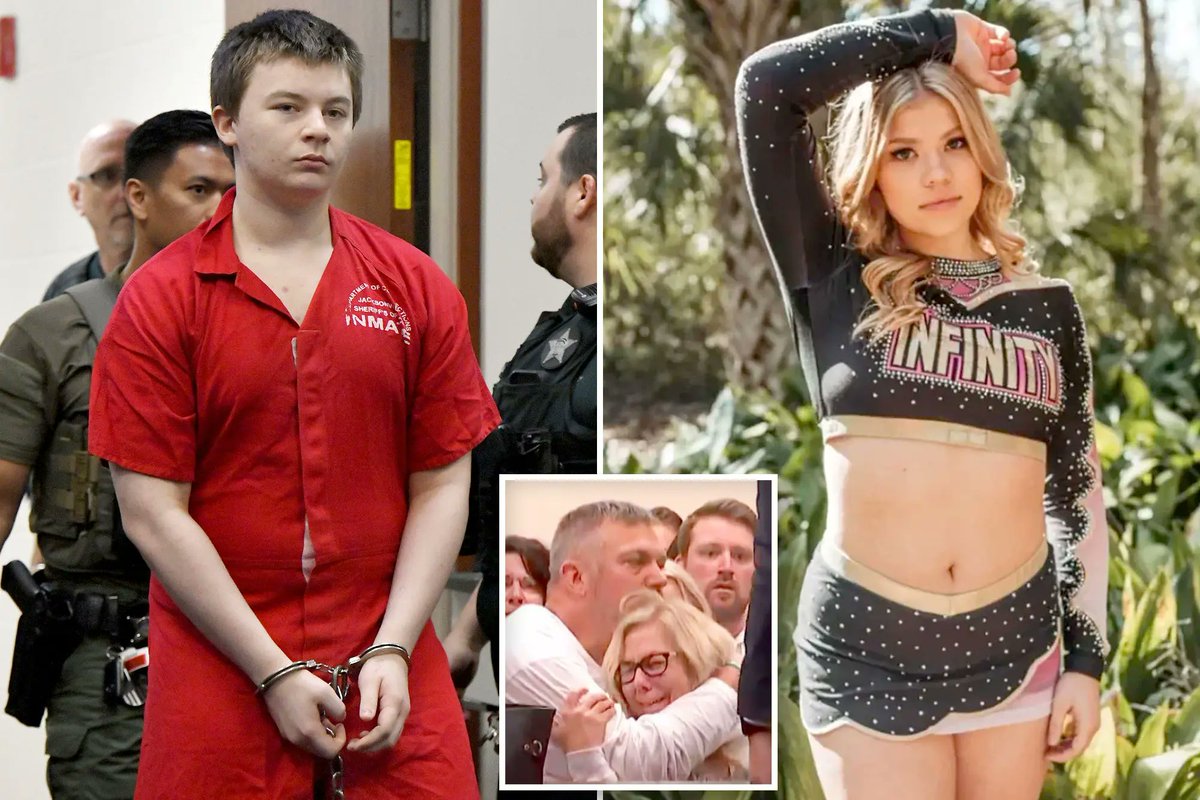
Those four words still echo through the quiet streets of Durbin Crossing in St. Johns County, Florida, a suburban enclave where families once felt safe letting kids roam on bikes and hang out late into the night. Tristyn Bailey was that quintessential bright-eyed middle schooler—pom-poms in hand during cheer routines, laughter spilling out as she posed for selfies with friends, dreams stretching far beyond the sunny Florida horizon. She loved aqua everything (her favorite color), had a contagious energy that lit up Patriot Oaks Academy, and was the youngest of the “Bailey 7”—a tight-knit family of parents and siblings who called themselves that in tribute to her unbreakable spirit.
But on Mother’s Day weekend 2021, that light was extinguished in the most unimaginable, horrifying way. In the early morning hours of May 9, 2021—around 1:50 a.m.—Tristyn was lured into a wooded area near her home by her classmate and neighbor, Aiden Fucci. What followed was a brutal, premeditated attack: 114 stab or cutting wounds across her head, neck, shoulders, arms, hands, back, and torso. Forty-nine of those were defensive wounds—proof that this 13-year-old fought desperately for her life against a boy she knew and trusted.
The crime scene was so gruesome that, years later during sentencing, Judge R. Lee Smith warned the courtroom before graphic evidence was presented. Medical examiner Dr. James Fulcher described the injuries in chilling detail: multiple deep stabs to vital areas, slashes that spoke of overkill, a young girl who suffered a painful, terrifying death at the hands of someone she considered a friend. Her body was discovered later that Mother’s Day by a resident walking near a retention pond—her pink vape, cellphone, a $20 bill, and a gold-toned ring scattered nearby like discarded pieces of her last moments.
Aiden Fucci was 14 at the time. He and Tristyn attended the same school, lived in the same neighborhood, even hung out at a mutual friend’s house earlier that night. Surveillance video captured them walking together around 1:14 a.m. Fucci later gave conflicting stories to investigators—first claiming they separated after an argument, then admitting he pushed her down. But evidence mounted quickly: his changing timeline, a knife found on him (initially handed to his father by police before being recovered), violent drawings and “satanic” images on his phone, and chilling witness statements.
Friends recounted how Fucci had openly fantasized about murder. One testified he told them in May 2021: “Expect me to kill somebody this month.” He described a plan—walk at night, drag someone into the woods, stab them, pretend innocence, and keep killing. Another said he nicknamed knives “Picker” and “Poker” and pretended to stab people playfully. Prosecutors called it a thrill kill—no robbery, no sexual assault, no personal grudge. Just a “desire to kill and watch someone die,” as court findings later summarized.
The timeline unfolded with heartbreaking speed:
- May 8-9, 2021: Tristyn at a friend’s house. Around 12:25 a.m., an incoming call from Fucci’s number. By 1:14 a.m., video shows them walking together.
- Early morning May 9: Bailey family realizes she’s missing. They report her gone around dawn.
- Later that day: Body found. Fucci arrested around 3:30 a.m. initially on second-degree murder, upgraded to first-degree premeditated murder on May 27 due to the brutality and evidence of planning.
Fucci was tried as an adult. He initially pleaded not guilty, but on February 6, 2023—just as jury selection was set to begin—he changed his plea to guilty on first-degree murder. Sentencing hearings in March 2023 were emotional marathons. Victim impact statements poured in—hundreds of pages from family, friends, classmates. Tristyn’s siblings spoke of shattered childhoods; her parents of a future stolen. One friend wrote how Tristyn inspired him to embrace life fully: “What would Tristyn want me to do today?”
Judge Smith described the crime as “heinous, atrocious and cruel,” with no motive beyond depravity. He sentenced Fucci to life in prison, with a possible review after 25 years under Florida juvenile sentencing laws (no death penalty eligibility). Fucci showed little remorse during proceedings, though he offered a brief apology.
The Bailey family—Forrest and Stacy, siblings Teegan, Sophia, and others—fought through grief to keep Tristyn’s legacy alive. They wore aqua ribbons, held vigils, created the Tristyn Bailey Memorial Fund for scholarships and awareness. In statements, they pleaded: “Her legacy is not lost nor overshadowed by these proceedings.” They shared photos of her cheering, smiling, living—reminding the world she was more than a victim. “Tristyn Bailey Strong” became their mantra.
Fucci, now 18, serves his sentence after multiple transfers—Suwannee Correctional, then Reception and Medical Center West Unit, and Cross City Correctional Institution by early 2025. His appeal, filed post-sentencing, challenged aspects like psychologist testimony and sought leniency. In 2025, the Fifth District Court of Appeal upheld the life sentence, affirming he “lured the victim to a secluded place in the woods,” stabbed her over 100 times, and inflicted 49 defensive wounds. Only a minor clerical correction (public defender fee) was made.
The case shocked the nation—not just for the brutality, but the ages involved. A 13-year-old cheerleader betrayed by a classmate’s dark impulses. It sparked conversations about youth violence, warning signs in troubled teens (Fucci’s prior fantasies, drawings), mental health in schools, and neighborhood safety in idyllic suburbs.
Tristyn’s family continues advocacy—tough talks about red flags, mental health resources, community vigilance. Four years on (as of 2025-2026), vigils mark anniversaries; her story features in documentaries like “Murder Under the Friday Night Lights.” Her light refuses to fade—through scholarships, awareness, the unbreakable “Bailey 7” bond.
This isn’t just a crime story; it’s a tragedy of lost innocence, a family’s enduring fight for remembrance, and a stark warning: sometimes the monster next door is a kid with a smile and a hidden darkness.
You won’t forget Tristyn Bailey. Her story demands we remember—not the horror alone, but the vibrant girl who deserved every tomorrow.