Heartbreak Amid the Glitter: Utah Mom’s Deadly Act in Vegas Hotel Shatters Family After Years of Bitter Custody Warfare
Las Vegas, the city of lights, dreams, and endless possibilities, became the backdrop for an unimaginable nightmare on February 15, 2026. In a quiet room at the Rio Hotel & Casino, far from the buzzing slot machines and neon glow of the Strip, authorities discovered the bodies of 38-year-old Tawnia McGeehan and her 11-year-old daughter, Addi Smith. What at first seemed like a tragic double suicide quickly unraveled into something far more sinister: investigators believe McGeehan, embroiled in a nine-year custody battle with her ex-husband, shot her young daughter before turning the gun on herself. The pair had traveled from their home in West Jordan, Utah, for a high-stakes cheer competition—a weekend meant for flips, cheers, and triumph that ended in blood and heartbreak.

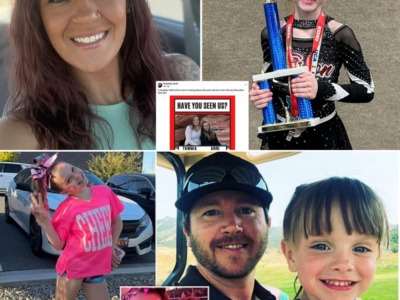
Addi, a bright-eyed sixth-grader with a passion for cheerleading, was the innocent epicenter of this storm. Described by coaches and teammates as a “ray of sunshine” with an infectious smile, she was a star athlete for Utah Xtreme Cheer, competing in events that demanded precision, teamwork, and unyielding spirit. Photos circulating on social media show her in glittering uniforms, mid-air during stunts, her face alight with joy. But behind that facade of youthful exuberance lay a family fractured by years of legal wrangling, accusations, and enforced distance. The custody fight between McGeehan and Addi’s father, Brad Smith, had stretched on since their 2015 divorce, turning what should have been a nurturing childhood into a battlefield of court orders, mediated emails, and police-supervised handovers.
The discovery sent shockwaves through the competitive cheer community and beyond. Utah Xtreme Cheer, where Addi had honed her skills, posted a heartfelt tribute on Facebook: “With the heaviest hearts, we share the devastating news that our sweet athlete Addi has passed away. We are completely heartbroken.” Teammates and coaches, who had grown concerned when mother and daughter failed to appear at the competition that Sunday morning, were left reeling. Emily Morgan, a former coach, told reporters, “Addi was a very kind and loving kid. She was the kind of kid that everybody loved.” The Utah Fusion All-Stars, another group Addi had been part of, echoed the sentiment: “She was absolutely loved in our gym… her sweet smile and light that she brought to her teams.” Even the Utah Cinderella Pageant, where Addi had shone as a participant, mourned: “Addi’s bright smile and kindness will never be forgotten.”

But as tributes poured in, darker details emerged from court documents obtained by outlets like the Daily Mail and the New York Post. The 2015 divorce had ignited a protracted war over Addi’s upbringing, with McGeehan emerging as the primary custodian. As the petitioner in the divorce, she retained decision-making authority over key aspects of Addi’s life—education, medical care, extracurriculars—while Smith was granted visitation rights under strict, court-mandated protocols designed to minimize conflict. These rules, outlined in a 2024 court filing, read like a manual for co-parenting in a minefield: during school days, handovers were to occur in the parking lot with cars parked at least five spaces apart, Addi walking unaccompanied between them. On non-school days, exchanges happened outside the Herriman Police Department in Utah at precisely 9 a.m., under the watchful eyes of law enforcement.
Filming these interactions was explicitly forbidden, a clause likely born from past disputes where emotions ran high and accusations flew. Communication was funneled through a court-approved app called Family Wizard, where parents logged significant events—school reports, sports schedules, doctor’s appointments—and emergencies were handled via text only. Disputes over parenting decisions were to be resolved methodically: first through email exchanges, then by deferring to neutral third parties like Addi’s teachers, pediatrician, or therapist. If those failed, mediation was required before escalating to court. The parents were barred from attending the same school events or being in proximity during Addi’s activities, a stipulation that must have cast long shadows over milestones like cheer competitions or school plays.
This rigid framework, while intended to protect Addi from parental strife, highlighted the depth of the rift. Sources close to the family, speaking anonymously to media, suggested the battle had taken a toll on all involved. McGeehan, a devoted “dance mom” who shuttled Addi to practices and competitions, reportedly felt the weight of single parenthood amid ongoing legal pressures. Smith, fighting for more time with his daughter, navigated a system that often favors stability over equal access. Custody experts note that such prolonged disputes can erode mental health, leading to desperation. “These battles aren’t just about time—they’re about control, validation, and fear of loss,” says Dr. Elena Ramirez, a family psychologist specializing in high-conflict divorces. “When they drag on for years, the emotional strain can become unbearable.”

The weekend in Vegas was supposed to be a highlight. Addi and her team had qualified for a prestigious cheer event, one that drew squads from across the West. McGeehan, ever the supportive parent, booked a room at the Rio—a sprawling resort known for its suites, casino floors, and proximity to the action. But something snapped. On Saturday night, February 14—Valentine’s Day, a date laced with ironic tragedy—McGeehan allegedly fired the fatal shots. The next morning, when Addi didn’t join her teammates for warm-ups, alarm bells rang. Coaches shared a missing persons flyer on social media, pleading for information. Family members, unable to reach them, contacted the Las Vegas Metropolitan Police Department (LVMPD) for a welfare check.
Officers arrived at the room around 10:45 a.m. on Sunday but, hearing no response to knocks, did not initially force entry—a decision that has sparked debate among critics who argue for more aggressive protocols in missing persons cases involving children. It wasn’t until nearly four hours later that hotel security, perhaps tipped off or conducting a routine check, entered and found the grim scene. Both had sustained gunshot wounds; a note was recovered, its contents shielded from the public but likely offering some insight into McGeehan’s final thoughts. LVMPD Homicide Lieutenant Robert Price confirmed in a press briefing: “Preliminary evidence points to the mother shooting her daughter before taking her own life.” No motive was publicly stated, but the custody history loomed large.
In West Jordan, Utah—a suburban enclave of tidy homes and community parks—the news landed like a bomb. Neighbors tied blue ribbons—Addi’s favorite color—around trees and mailboxes, symbols of solidarity in grief. “It’s hard to wrap your head around,” one resident told local reporters. “They seemed like a normal family—Addi always waving from the car, Tawnia cheering at games.” Vigils sprang up, candles flickering against the winter chill as friends shared stories of Addi’s kindness: the way she encouraged struggling teammates, her love for animals, her dreams of becoming a veterinarian or professional cheerleader. The cheer community, tight-knit and resilient, organized support groups, counseling sessions, and fundraisers for affected families. “We’re not just a team; we’re family,” said a Utah Xtreme spokesperson. “Losing Addi breaks us all.”
Broader conversations have erupted about the hidden dangers of custody disputes. According to the American Psychological Association, high-conflict divorces affect millions of children annually, often leading to anxiety, depression, and behavioral issues. In extreme cases, parental alienation or perceived loss can trigger violence. “We see this pattern too often,” notes Ramirez. “One parent feels cornered, and tragedy ensues.” Advocacy groups like the National Parents Organization call for reforms: mandatory mental health evaluations in custody cases, better mediation resources, and early intervention to prevent escalation.
Mental health resources have flooded in response. The 988 Suicide and Crisis Lifeline, Huntsman Mental Health Institute, and SafeUT hotline have been promoted heavily, reminding those in crisis that help is a call away. “No one should suffer in silence,” urges a statement from NAMI Utah. For cheer parents, the incident hits close: the pressure of competitions, travel, and performance can amplify underlying stresses. “We push our kids to excel, but we must watch for signs of burnout in ourselves too,” says a veteran coach.
As the investigation continues—autopsies pending, ballistics analyzed—the note’s secrets may never fully surface. What drove McGeehan to this point? Was it a culmination of years of legal fatigue, personal demons, or something more? Brad Smith, now facing the ultimate loss, has remained private, but friends say he’s devastated. The custody battle, once a private hell, is now public fodder, a cautionary tale etched in tragedy.
Addi’s legacy endures in the hearts she touched. In Vegas, the lights shine on, but for one family, the darkness is profound. This story isn’t just about loss—it’s a wake-up call to cherish, communicate, and seek help before it’s too late. In a world of glitter and games, real lives hang in the balance.