A quiet moment on a podcast recently cracked open a door to one of Hollywood’s most enduring, low-key mentorships. Jonathan Lipnicki, the wide-eyed six-year-old who stole hearts in 1996’s Jerry Maguire, sat down on Pod Meets World and spoke with unguarded warmth about Tom Cruise. Nearly thirty years after they shared the screen, Cruise remains a steady, responsive presence in Lipnicki’s life—offering advice, opening doors, and proving that some connections in show business are built to last.
Lipnicki, now 35, relocated from the relentless pace of Los Angeles to Oklahoma, yet he stays active in acting with projects lined up for 2026. His voice still carries that familiar earnestness as he recounts how Cruise, the superstar who could easily vanish into his own orbit, has consistently shown up. “I’m always going to look up to that guy, you know? He has been incredible to me,” Lipnicki said during the February 23, 2026, episode. The words landed softly but carried weight, reminding fans that behind the blockbuster persona lies a man who remembers the kid from set.
Jerry Maguire arrived in theaters on December 13, 1996, directed by Cameron Crowe and produced under TriStar Pictures. The romantic dramedy follows sports agent Jerry Maguire (Cruise) as he experiences a crisis of conscience, gets fired, and rebuilds his career with single mother Dorothy Boyd (Renée Zellweger) and her young son Ray (Lipnicki). The film grossed over $273 million worldwide, earned five Oscar nominations—including Best Picture and Best Actor for Cruise—and delivered lines that became cultural shorthand: “You had me at hello,” “Show me the money!” Most indelible of all was the tender bond between Jerry and Ray, a relationship that mirrored genuine affection off camera.
Lipnicki landed the role of Ray Boyd after a whirlwind audition process. He had been acting for only six months when he read for the part. Initially passed over, he credits Cruise with intervening. During a recent People magazine interview, Lipnicki revealed that Cruise advocated for him, pushing the team to bring him back for another look. The chemistry between the two proved immediate and electric. On set, Cruise treated the child actor with patience and playfulness, turning long shooting days into fun. Scenes like the living-room heart-to-heart, where Jerry and Ray talk openly about love and loss, were largely improvised to capture authentic connection. Lipnicki later described Cruise’s energy as unlike anything he’d felt before—“this presence, this drive, this kindness and understanding.”
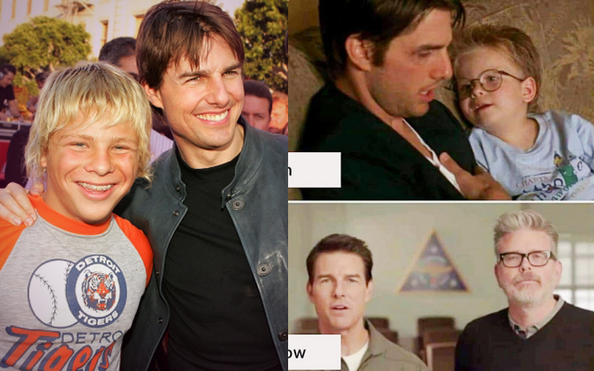
The film’s success catapulted Lipnicki into the spotlight. He followed Jerry Maguire with high-profile roles: George Little in Stuart Little (1999) and its 2002 sequel, Tony Thompson in The Little Vampire (2000), and Murph in Like Mike (2002). Young Artist Awards recognized his work, and for a stretch in the late ’90s and early 2000s he ranked among the most recognizable child stars. Yet child stardom carries unique pressures—puberty under public scrutiny, typecasting risks, the challenge of transitioning to adult roles. Lipnicki navigated it by stepping back periodically, focusing on personal growth while keeping a foot in the industry.
What sets his story apart is the quiet continuity with Cruise. More than fifteen years after Jerry Maguire wrapped, Lipnicki, then in his twenties and seeking guidance, reached out to Cruise’s agents. The response came almost instantly: an invitation to meet at Cruise’s house. “They’re like: ‘When can you meet with Tom?’ And I was like: ‘Wow, really?!’” Lipnicki recalled on the podcast. He drove over, sat down with the A-lister, and received straightforward counsel: work hard, be kind, show up early, stay late, respect the audience. Cruise emphasized delivering the best possible product every time, a philosophy that has defined his own career—from doing his own stunts in the Mission: Impossible series to pushing boundaries on every project.
The advice stuck. Lipnicki carried it forward as he auditioned, built relationships, and weathered dry spells. In 2022, when Top Gun: Maverick was casting, Lipnicki hit a wall getting noticed through conventional channels. He emailed Cruise directly: “Hey, I don’t know if you think I’m right for this, but if you think I’m right, I’d love to audition for it.” Cruise responded quickly and arranged the audition. Though Lipnicki didn’t land the part—“It didn’t go my way, it wasn’t meant to happen”—the opportunity itself meant everything. “He didn’t have to, and he did,” Lipnicki said. “He responds very quickly… He’s been really supportive.”
That responsiveness stands out in an industry where power dynamics often favor distance. Cruise, now 63 and riding high after Top Gun: Maverick‘s billion-dollar success and ongoing Mission: Impossible installments, could easily let old connections fade. Instead he maintains them, offering doors to someone he met when that person was barely in elementary school. Lipnicki describes the dynamic without sentimentality: it’s professional respect mixed with genuine care. He hasn’t spoken to Cruise “in a little bit,” but the line remains open.
:max_bytes(150000):strip_icc():focal(999x0:1001x2)/tom-cruise-jonathan-lipnicki-jerry-maguire-022325-f72fb706fe6947fc8d60cb601cd1fb53.jpg)
Fans have reacted with warmth and nostalgia. Social media clips of the podcast episode spread quickly, with comments praising Cruise’s character. “This is why Tom Cruise is beloved,” one viewer posted. “He remembers people.” Others reflected on their own ’90s childhoods—rewatching Jerry Maguire on VHS, quoting “You complete me,” feeling the tug of grown-up responsibilities mirrored in the film’s themes. The story resonates because it counters cynicism about Hollywood: amid tabloid drama and fleeting alliances, a simple, sustained kindness endures.
Lipnicki’s journey adds depth. After the peak of child fame, he faced the familiar post-adolescent challenges—fewer roles suited to his look, the need to redefine himself. He appeared in smaller projects, explored producing, and prioritized life outside the spotlight. Moving to Oklahoma brought balance: quieter days, community, space to pursue acting on his terms. Teasing 2026 projects hints at a deliberate comeback, one informed by lessons from mentors like Cruise.
The bond between Jerry and Ray was never just scripted. Off screen, Cruise made sure the young actor felt safe, valued, heard. That foundation allowed Lipnicki to reach back decades later without hesitation. In return, Cruise offered time, access, encouragement—small acts that accumulate into something profound.
In an era when celebrity feels increasingly transactional, this relationship reminds us of mentorship’s quiet power. A six-year-old boy meets a movie star on set. Thirty years pass. The boy grows into a man still chasing dreams; the star, now a legend, still answers the call. No fanfare, no public spectacle—just consistent support that says, “I see you, and I’m here.”
As Lipnicki builds his next chapter, that support lingers like the best scenes in Jerry Maguire: heartfelt, unpretentious, real. It proves some connections transcend the closing credits, proving that in Hollywood—and in life—the most meaningful stories often unfold long after the lights come up.