🌙 She Volunteered to Help Migrants Out of Pure Kindness… Then This Afghan Asylum Seeker Ended Her Life in Horror 😢 Maria’s Story Will Shock You
Her name was Maria Ladenburger, a 19-year-old medical student from Germany whose bright future was violently extinguished along a quiet riverside path in Freiburg. What happened to her on the night of October 15-16, 2016, was not just a random crime. It became one of the most emotionally charged and politically explosive cases in modern German history — a tragedy wrapped in irony, failed systems, and a nation’s painful reckoning with its ideals of compassion and security.
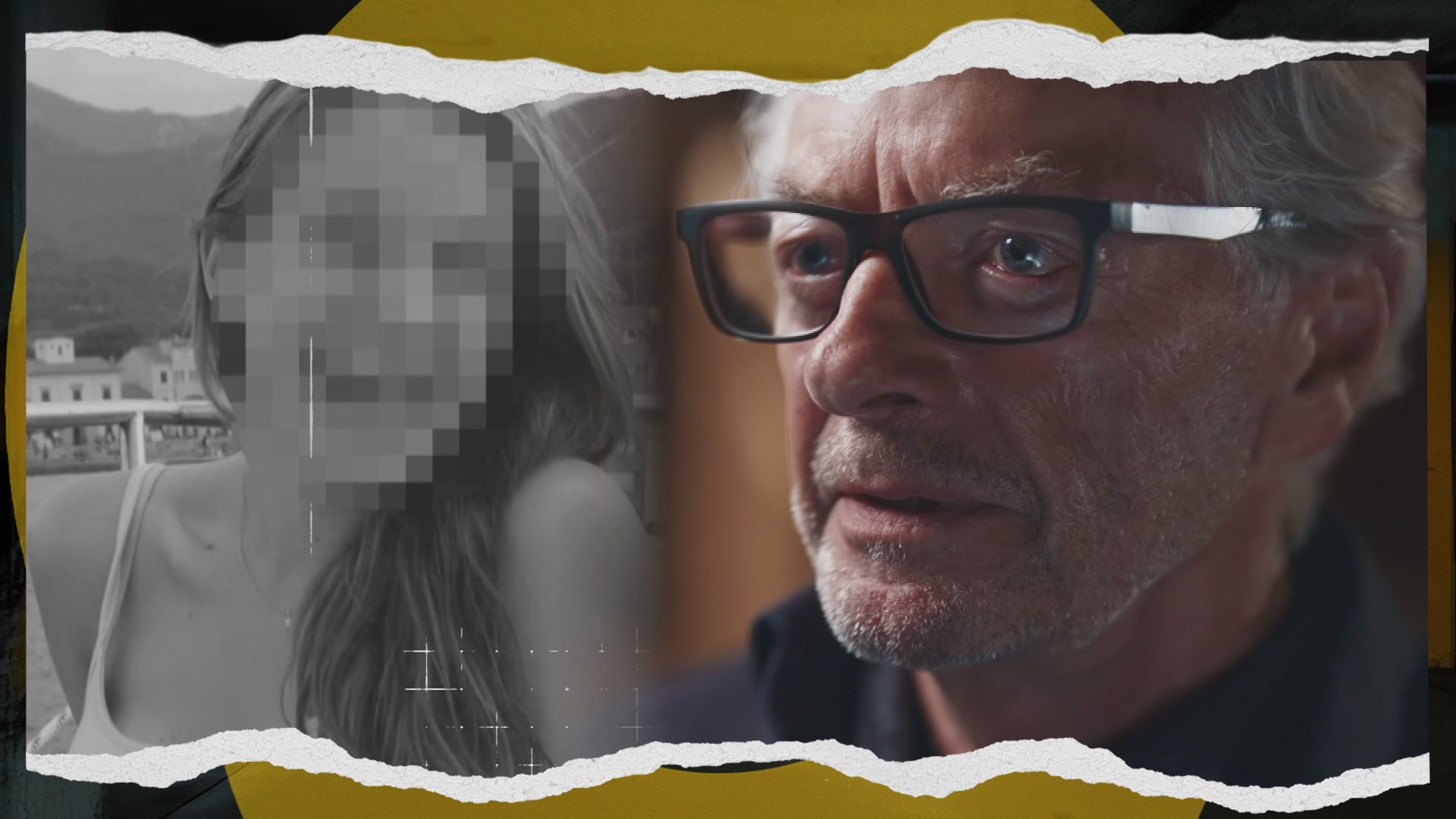
Maria was the kind of young woman people naturally gravitated toward. Born on December 6, 1996, she grew up in a privileged yet values-driven environment. Her father, Clemens Ladenburger, held a senior legal position with the European Commission in Brussels. Her family was deeply involved in humanitarian work and the church. Rather than becoming detached from the world’s suffering, Maria embraced it. She volunteered extensively with refugees, spending her time translating, helping with integration, and offering genuine human connection to those who had fled war-torn countries. To her, helping migrants wasn’t abstract policy — it was personal duty.
Freiburg im Breisgau, with its historic university, bicycle-friendly streets, and proximity to the Black Forest, seemed like the perfect place for a driven young student like Maria. She thrived in her medical studies, balancing demanding classes in anatomy, biochemistry, and clinical practice with her volunteer work at local refugee support centers. Friends remembered her as warm, empathetic, and full of life — the type of person who made others feel heard and valued. On that fateful Saturday night, she attended a party organized by the medical faculty. It was a rare chance to unwind after weeks of intense academic pressure. Laughter, music, and dancing filled the evening. No one imagined it would be her last.
Around 2:30 a.m. on October 16, Maria climbed onto her bicycle and headed home along the scenic path beside the Dreisam River. The route was familiar to her — about five kilometers through areas she had ridden many times before. The gentle sound of flowing water, the cool autumn air, and the partial cover of trees offered a peaceful contrast to the noisy city streets. But that night, peace turned into horror.
Hussein Khavari, an Afghan asylum seeker who had entered Germany in late 2015 claiming to be a 17-year-old unaccompanied minor, was lurking near the path. He had been drinking and using drugs. According to evidence presented in court, he ambushed Maria, knocked her off her bicycle, and dragged her into the bushes. What followed was a prolonged and savage assault. He raped her, beat her, strangled her — reportedly using her own scarf — and bit her in the struggle. When he finally left her unconscious and barely alive on the riverbank, Maria slipped into the shallow waters of the Dreisam and drowned. Her body was discovered the next morning by a passerby. The nation was stunned.
The investigation that followed was one of the largest in the region’s recent memory. Police formed a special commission, interviewed over a thousand people, and chased hundreds of leads. A single hair caught on a blackberry bush near the scene, combined with DNA evidence from Maria’s scarf and clothing, proved decisive. CCTV footage from a nearby tram also helped identify the suspect. On December 3, 2016, Khavari was arrested. The DNA match was irrefutable.
As details emerged, public shock turned into outrage. Khavari was not the vulnerable child refugee he had claimed to be. Investigations later revealed he was likely in his early twenties. More damning was his criminal past in Greece. In 2014, on the island of Corfu, he had attacked a young woman, pushing her off a cliff in an attempted murder and robbery. He was sentenced to ten years but served only about 18 months before being released early, reportedly due to prison overcrowding. He then traveled through Europe and entered Germany’s asylum system without his criminal record being properly flagged or shared across EU borders.
The irony cut deep. Maria had dedicated her free time to helping people exactly like the man who killed her. She volunteered at refugee centers, offering kindness and practical support to newcomers. Her family’s values emphasized service and humanity. In their public statement after her death, they asked that donations be made to refugee aid organizations instead of flowers at her funeral — a heartbreaking testament to the principles Maria lived by, even as the circumstances of her murder challenged those very ideals for many Germans.
The case ignited fierce national debate at a sensitive time. Germany was still processing the 2015 migrant crisis, when Chancellor Angela Merkel’s government welcomed over a million asylum seekers under the slogan “Wir schaffen das” — “We can do this.” Supporters argued that one horrific crime should not tarnish the vast majority of migrants who sought safety and contributed peacefully. Critics, including the rising Alternative for Germany (AfD) party, pointed to this case as evidence of reckless policy, inadequate vetting, and cultural incompatibilities that authorities had downplayed.
Media coverage itself became controversial. Public broadcasters initially hesitated to emphasize the perpetrator’s migrant background, fearing it would fuel xenophobia. When they did report, accusations flew from both sides — some claiming a cover-up, others warning against politicizing a tragedy. The case exposed raw nerves in German society about integration, safety for women, and the limits of empathy in the face of violence.
The trial began in 2017 and concluded on March 22, 2018, at the Freiburg Regional Court. Khavari confessed to the killing but contested some details of the sexual assault. Prosecutors built a meticulous case. Bite mark evidence, DNA, and crucially, data from Khavari’s iPhone Health app played a starring role. The step counter and movement logs contradicted his timeline and showed sustained physical activity consistent with a violent struggle. Experts determined he should be tried as an adult. The court found him guilty of rape and murder. He received a life sentence with a finding of “particular severity of guilt,” meaning he would serve at least 15 years before any parole consideration, with the possibility of indefinite preventive detention afterward. The presiding judge described his lack of empathy as extreme.
Maria’s family sat through the proceedings with dignity. They did not call for vengeance or broad condemnation of migrants. Instead, they focused on remembering their daughter’s light — her curiosity, her desire to heal others as a doctor, and her unwavering belief in helping those in need. Yet for many ordinary Germans, the murder represented something larger: a failure of the state to protect its citizens while extending open arms to the world.
In the years following, the case prompted policy changes. Authorities improved information-sharing between European countries on criminal records. Asylum age assessments became stricter. Cities like Freiburg added more lighting and surveillance along popular paths. Women’s safety in public spaces gained renewed attention. The tragedy also fueled ongoing political polarization around immigration that continues to shape German elections and public discourse.
Maria Ladenburger was not a political figure. She was a daughter, a student, a friend, and a volunteer who believed in a better world. At just 19, she had already chosen a path of service — studying medicine to save lives and volunteering to ease suffering. Her death did not come at the hands of some abstract force of history. It came from one man’s brutal choices — a man who had slipped through cracks in a strained European asylum system.
The Dreisam River still flows peacefully past the spot where her life ended. Cyclists still use the path, though many now glance warily at the bushes. Memorials of flowers and notes appear regularly, honoring a young woman whose empathy outshone the darkness that took her. For Germany, Maria’s story remains a painful mirror — reflecting both the genuine generosity of its people and the hard limits of trust when systems prioritize volume over vigilance.
Her murder was not inevitable. It resulted from a series of individual decisions and institutional shortcomings: an early release in Greece, poor cross-border data sharing, questionable age claims, and perhaps an overconfidence that goodwill alone could overcome all risks. The case forced a conversation many preferred to avoid: how to remain a compassionate society without becoming a vulnerable one.
Today, Maria’s name still surfaces in debates about migration, women’s safety, and national identity. She has become a symbol — not by choice, but by the cruel circumstances of her death. The kind-hearted medical student who helped refugees became the victim whose story challenged the optimism of an entire nation’s welcome policy. Her short life of promise and service, cut short in such a horrifying way, continues to provoke strong emotions precisely because it humanizes the statistics and forces uncomfortable questions.
The cobblestones of Freiburg still echo with student footsteps. The university halls still fill with aspiring doctors dreaming of healing. But for those who remember Maria Ladenburger, there is an added layer of sorrow and resolve — a reminder that empathy must walk hand in hand with wisdom, and that no society can afford to ignore the shadows even as it reaches toward the light.