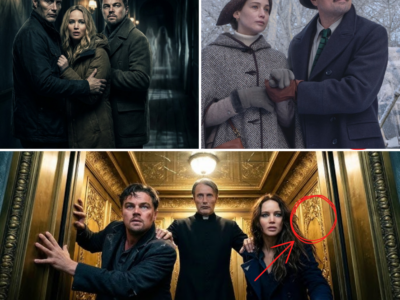
Horror fans, brace yourselves. Martin Scorsese – the master behind Taxi Driver, The Departed, and the mind-bending Shutter Island – is diving headfirst into pure psychological horror with his latest project, and early whispers suggest it could be one of the most unsettling films of the decade.
What Happens at Night stars Leonardo DiCaprio and Jennifer Lawrence as a married American couple who journey to a remote, snow-blanketed European town to adopt a baby. What begins as a hopeful new chapter quickly spirals into a nightmare when they check into an eerie, isolated hotel and cross paths with a mysterious faith healer played by Mads Mikkelsen. Expect a slow-burn descent where reality fractures, secrets surface, and the line between hope and dread dissolves in the freezing darkness.
The story, adapted from Peter Cameron’s novel of the same name, follows an unnamed couple whose trip to claim their child becomes a haunting exploration of marriage, identity, grief, and the unknown. As they navigate the town’s odd inhabitants – including a chanteuse, a shady businessman, and Mikkelsen’s enigmatic Brother Emmanuel – the hotel itself seems to whisper their deepest fears. Nothing is as it seems in this baffling, frozen world. The more they fight for the baby, the less they understand about each other, themselves, and the fragile nature of life.
Scorsese’s return to psychological territory after the epic scope of Killers of the Flower Moon has Hollywood buzzing. Production kicked off in late February 2026 in the Czech Republic, with snowy Prague and surrounding areas doubling for the remote European setting. First-look images show DiCaprio sporting a mustache and a weary expression, while Lawrence appears fragile yet determined – visual cues that hint at the emotional and mental unraveling to come.
At its core, the film promises the kind of tension Scorsese does best: not cheap jump scares, but a creeping, atmospheric dread that gets under your skin and stays there. The snowy isolation amplifies every whisper, every lingering glance, every unexplained sound in the hotel corridors. Cinematography is expected to lean into gothic visuals – vast white landscapes that feel suffocating rather than beautiful, dim lighting that turns ordinary rooms into psychological traps, and long, unbroken takes that force viewers to sit with the growing unease.
DiCaprio and Scorsese’s collaboration is legendary, spanning classics like Gangs of New York, The Aviator, The Departed, Shutter Island, The Wolf of Wall Street, and The Revenant. Their chemistry has delivered some of cinema’s most intense performances. Pairing DiCaprio with Jennifer Lawrence – who proved her dramatic range in Silver Linings Playbook, Winter’s Bone, and Mother! – creates electric potential. Lawrence’s character reportedly grapples with a serious illness (rumored to involve cancer in early reports), adding layers of vulnerability and desperation to the couple’s already strained marriage.
Mads Mikkelsen as the faith healer Brother Emmanuel is perhaps the most intriguing wildcard. Known for his chilling roles in Hannibal, Another Round, and The Hunt, Mikkelsen brings an unsettling charisma that can make viewers question whether his character is a savior, a charlatan, or something far more sinister. Will he heal or destroy? Is his power real, or a projection of the couple’s crumbling psyches? Supporting players Patricia Clarkson and Jared Harris round out an ensemble capable of delivering nuanced, unforgettable supporting turns that deepen the sense of unease.
Screenwriter Patrick Marber, celebrated for Closer and Notes on a Scandal, adapts Cameron’s novel with a focus on psychological ambiguity. The book’s dream-like quality – where reality blurs and characters question their own perceptions – seems tailor-made for Scorsese’s style. Expect themes of infertility, loss, the ethics of adoption, and the terror of confronting truths we’d rather bury. In Scorsese’s hands, these intimate struggles become universal nightmares.
The production’s move to Apple Original Films (in partnership with Studiocanal) has sparked speculation about a high-profile release strategy. While some early buzz mentions Netflix as a potential platform for maximum reach, the project carries the prestige of Apple’s awards-season ambitions. A late 2026 or early 2027 rollout feels likely, positioning it perfectly for awards conversations while delivering the kind of elevated horror that transcends genre.
What makes this project so exciting – and terrifying – is Scorsese’s rare foray into gothic psychological horror. He has always excelled at portraying fractured minds (think Travis Bickle or Teddy Daniels in Shutter Island), but here he layers that expertise over a snowy, isolated setting that feels almost supernatural. The hotel becomes a character itself: creaking floors, fogged windows, endless whiteouts outside that mirror the characters’ internal chaos. Sound design will likely play a huge role – distant howls of wind, muffled voices in adjacent rooms, the soft crunch of snow underfoot that suddenly stops.
Early set reports describe intense, immersive filming days where the cast was encouraged to stay in character even between takes. DiCaprio reportedly drew from real-life experiences of doubt and marital strain to fuel his performance, while Lawrence has spoken in past interviews about her fascination with stories that explore female vulnerability and resilience. Their on-screen chemistry, already teased in first-look photos, crackles with both love and underlying tension – the perfect foundation for a marriage horror story.
Comparisons to classic psychological thrillers are inevitable. Think The Shining’s overwhelming isolation mixed with the marital paranoia of Who’s Afraid of Virginia Woolf?, filtered through Scorsese’s unflinching lens. Unlike modern horror that relies on gore or sudden shocks, What Happens at Night seems poised to weaponize silence, suggestion, and slow revelation. Every conversation with the faith healer could plant seeds of doubt that bloom into full-blown terror by the third act.
For DiCaprio, this marks another deep dive into complex, tormented masculinity. His character must navigate not only the practical hurdles of international adoption but also the emotional minefield of watching his wife suffer and questioning their shared future. Lawrence, meanwhile, gets to explore a role rich with physical and psychological fragility – a chance to showcase the raw intensity that earned her an Oscar at such a young age.
Mikkelsen’s involvement elevates the mystical element. Brother Emmanuel arrives like a figure from folklore – equal parts healer and trickster. Scenes between him and the couple are expected to crackle with philosophical tension: Does faith require belief, or can it exist in the gray areas of desperation? His performance could become the film’s defining chill, the kind audiences debate long after the credits roll.
Beyond the stars, the film’s technical team promises excellence. Scorsese’s longtime collaborators, including cinematographer Rodrigo Prieto (who shot Silence, The Irishman, and Killers of the Flower Moon), are rumored to be involved, bringing their signature ability to make environments feel alive and oppressive. Costume and production design will likely emphasize period-leaning details mixed with timeless dread – heavy coats dusted with snow, dimly lit hotel lobbies that feel both luxurious and decaying.
The novel’s dream-like structure gives Scorsese room to experiment with narrative form. Flashbacks, hallucinations, and shifting perspectives could blur the audience’s understanding just as much as the characters’. This approach rewards multiple viewings, turning What Happens at Night into the kind of film that spawns endless online theories and late-night discussions.
As production continues in the Czech winter, the cold seems to be seeping into every frame. Set photos and leaked behind-the-scenes glimpses show DiCaprio and Lawrence trudging through snow, faces etched with exhaustion and quiet panic. Mads Mikkelsen, often filmed in darker, more shadowed lighting, exudes an almost otherworldly presence – exactly what a faith healer who may or may not possess real power should feel like.
If Scorsese sticks to his reputation for meticulous detail, audiences can expect a film that lingers. The kind where small gestures – a hand that trembles too long, a smile that doesn’t reach the eyes, a door left slightly ajar – carry more weight than any explosion. It’s horror built on human frailty rather than monsters, which often proves far more disturbing.
The project also arrives at a fascinating cultural moment. With adoption stories, fertility struggles, and mental health conversations dominating public discourse, What Happens at Night has the potential to spark meaningful conversations alongside its scares. Scorsese has never shied away from uncomfortable truths, and this film seems ready to interrogate the illusions we build around family, healing, and self-knowledge.
Whether it ultimately lands on Apple TV+, Netflix, or a theatrical run (or a hybrid release), one thing is clear: Martin Scorsese stepping back into psychological horror territory with this powerhouse cast is appointment viewing. Leonardo DiCaprio and Jennifer Lawrence reuniting under his direction already guarantees strong performances. Adding Mads Mikkelsen as the enigmatic healer tips the scales toward something truly memorable.
Early buzz calls it a “haunted marriage drama” and a “frozen dreamscape.” Those descriptions only scratch the surface. What Happens at Night promises to be cold, claustrophobic, and psychologically ruthless – the kind of film that makes you question what you just watched and leaves you checking the shadows in your own home long after the screen goes dark.
Scorsese rarely disappoints when he aims for the soul rather than the spectacle. If the final cut delivers on the novel’s baffling ambiguity and the cast’s immense talent, this could easily become one of Netflix’s (or Apple’s) most talked-about and rewatched releases in years.
The nights are getting longer. The snow is falling heavier. And somewhere in a remote European hotel, a couple is learning that adopting a child might force them to confront the darkest parts of themselves.
What happens at night, indeed.
News
🥵 “Welcome to Prison” – Horace’s Savage Checkmate Leaves the Bellarie Family in Ruins | Beauty in Black Season 2 Ending Explained 😱
The tension in the opulent Bellarie boardroom was thick enough to cut with a knife. Kimmie stood at the head of the table, her posture radiating quiet power, as the…

😱 Tragic: 7-Year-Old Girl with Autism Drowned in Golf Course Pond Hours After Being Left with New Specialist Childminder – Family Devastated
The small market town of Skellow in Doncaster, South Yorkshire, woke up to unimaginable grief on March 30, 2026. Seven-year-old Nyla May Bradshaw, a bright-eyed girl whose smile could light…

😱 Dan Levy Emotional on Fallon, But the Real Reason Catherine O’Hara Died Will Shock You… Cancer Battle Hidden? ❤️😢
As the studio audience fell into a respectful hush on The Tonight Show Starring Jimmy Fallon, Dan Levy sat under the bright lights, his face a mix of warmth and…

🩸 “Just a Few Drinks” – The Shocking Confession That Has an Entire Town Furious After Teen Rico Montes Was Found Dead 😡
A single text message, innocent and full of teenage optimism, became the final words Rodrigo “Rico” Montes ever sent to his mother — and it continues to echo through the…
😲 Robin Williams Called the Director Begging for Hagrid Role… J.K. Rowling Said NO Because He Wasn’t British! 😂🧙♂️
Robin Williams, the man who could make the world laugh and cry in the same breath, once set his heart on stepping into the massive boots of Rubeus Hagrid. It…

😭🙏 “He Was Here The Whole Time”: Family Demands Answers After Eric Valencia Found Dead in Azusa Police Car 3 Days After Release – Video Shows Everything 😢
DEAD IN A POLICE CAR: Family Demands Answers After Eric Valencia Found Lifeless in Unlocked Azusa Patrol SUV Three Days After Release – Chilling Surveillance Video Raises Disturbing Questions The…
End of content
No more pages to load