
⚔️ Mortal Kombat II Just Cast a Real-Life Giant as Shao Kahn… Martyn Ford’s REAL Size Destroy the Screen in Mortal Kombat II — No Green Screen Magic Needed!
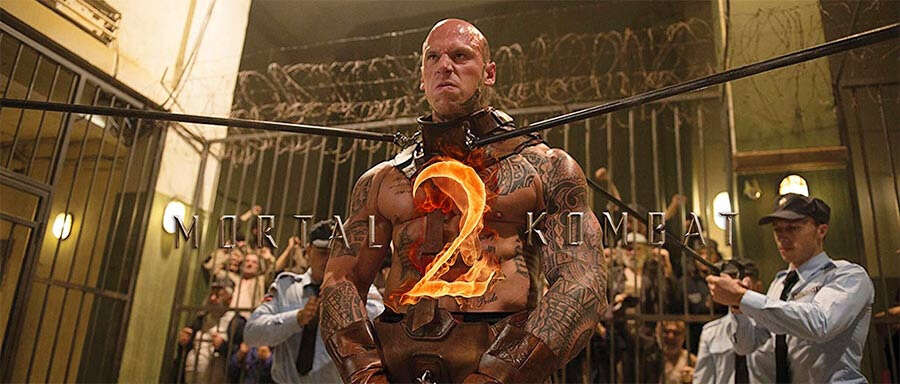
Martyn Ford Towers as the Ultimate Outworld Tyrant in Mortal Kombat II: A Game-Changing Casting That Redefines Epic Villainy
Picture this: a colossal figure strides into frame, shoulders broad enough to eclipse the sun, a skull-helmet glinting under blood-red skies, and every step sending tremors through the battlefield. No need for heavy CGI trickery or forced perspective shots. This is Shao Kahn, the Emperor of Outworld, brought to ferocious life by Martyn Ford in Mortal Kombat II. Fans of pulse-pounding sci-fi action and superhuman showdowns are losing their minds—and for good reason. This isn’t just another video game adaptation throwaway villain. Ford’s portrayal feels ripped straight from the arcade cabinets of the ’90s, amplified for the IMAX era, where raw physical dominance meets layered menace.
At 6’8″ and built like a human siege engine—former bodybuilder, fitness icon, and all-around imposing presence—Ford barely required movie magic to channel the legendary final boss. Standing around that towering height, he’s already the walking embodiment of the character fans remember as the hammer-wielding conqueror who laughs in the face of defeat. “I wanted Shao Kahn to feel physically intimidating the moment he appears on screen, like a true final boss ripped straight out of the games,” Ford has shared in interviews, capturing the essence of what makes this casting electric. Social media exploded with praise calling it one of the most game-accurate decisions in the franchise’s cinematic history. For enthusiasts who crave superpowered clashes, interdimensional warfare, and villains who command the screen with god-like authority, Ford’s Kahn delivers on every level.
Let’s rewind to understand why this matters so deeply in the world of high-octane fantasy action. Mortal Kombat has always been more than button-mashing fatalities and pixelated gore. Since its 1992 debut, the series blended martial arts mastery with supernatural realms, ancient prophecies, and larger-than-life deities. Shao Kahn emerged in Mortal Kombat II as the ultimate threat: a ruthless emperor who merges realms through conquest, wields soul-stealing sorcery, and crushes opponents with a war hammer that could level cities. Voiced with that iconic, booming taunt—”You weak pathetic fool!”—he wasn’t just a boss; he was the nightmare fuel that kept players coming back for “one more round.” Previous live-action attempts, like Brian Thompson’s take in the 1997 Mortal Kombat: Annihilation, leaned into camp and CGI limitations. Ford? He brings authenticity rooted in sheer physicality, elevating the sequel to a new stratosphere of spectacle.
Ford’s journey to this role reads like a superhero origin story itself. Born in 1982 in Britain, the actor started as a professional bodybuilder, packing on muscle to reach weights north of 350 pounds while maintaining a lean, athletic frame that could shift dramatically for roles. His social media following ballooned to millions, drawn to his “Nightmare” persona from the Undisputed franchise and gritty turns in blockbusters like F9: The Fast Saga and Kingsman: The Golden Circle. But Mortal Kombat II demanded more than size. Director Simon McQuoid pushed Ford to internalize the emperor’s presence—slow, deliberate movements that ooze controlled power rather than brute flailing. In heavy prosthetics and armor, Ford transformed the costume into an extension of menace, not a hindrance. “Slow everything down in such an overpowering costume,” he recalled, crediting McQuoid for unlocking that graceful dominance. The result? A Kahn who glides through chaos like a force of nature, glowing red eyes piercing souls before the hammer falls.
This approach resonates powerfully with sci-fi and superpower aficionados. Think Thanos in the MCU or Darkseid in animated epics—villains whose aura alone wins battles. Ford infuses Kahn with that same mythic weight. No cartoonish over-the-top laughs here; instead, a calculated tyrant whose every growl carries centuries of conquest. In one red-carpet reflection, Ford called playing Shao Kahn “the pinnacle of all bad guys,” highlighting the thrill of embodying the ultimate antagonist who audiences love to hate. He dove deep into the lore, drawing parallels to historical conquerors and biblical giants like Goliath, whom he also portrayed in House of David on Prime Video. Both figures tower literally and figuratively, demanding empathy beneath the armor. “Every story needs a bad guy,” Ford noted, “and Shao is that ultimate villain… We wanted to create realism and depth… not something cheesy or cartoonish.”
The physical transformation alone warrants a deep dive. Ford committed to grueling prep, emerging from prior projects to bulk up further while honing martial precision. Hours in the makeup chair tested endurance—prosthetics, helmet, shoulder pads embedded into a torso rig that amplified his already massive silhouette. Yet he powered through stunt sequences blending brutal hand-to-hand combat with fantasy flourishes: soul magic crackling from his gauntlets, portals ripping open for Outworld invasions, and hammer swings that shatter arenas. Co-stars like Joe Taslim (returning as Bi-Han/Sub-Zero) and Karl Urban (stepping in as the cocky Johnny Cage) raved about sharing scenes with this living colossus. Urban’s meta, quip-filled Cage contrasts perfectly with Kahn’s stoic tyranny, setting up fireworks in the tournament arcs.
Fans flooded forums and Reddit with awe. “This Shao Kahn design actually looks scary,” one post declared, evoking that first arcade encounter. Comparisons to Nathan Jones’ Reiko in the 2021 film highlight Ford’s edge—not just physique, but acting chops that deliver menace with nuance. “Ford seems able to do both,” enthusiasts pointed out, praising his range beyond silent giant roles. For a fanbase starved for faithful adaptations after mixed video game-to-film efforts, this hits like a flawless Fatality. The 2021 Mortal Kombat rebooted the saga with grounded fights and lore drops; Mortal Kombat II escalates to full realm-merging war, with Kahn as the orchestrator pulling strings across Edenia, Earthrealm, and beyond.
Delving deeper into the character’s evolution, Shao Kahn represents the dark mirror to Mortal Kombat’s heroes. Where Liu Kang (Ludi Lin) and Kitana (Adeline Rudolph) embody honor and rebellion, Kahn stands for unchecked ambition fused with arcane power. His backstory—usurping Edenia, claiming Sindel and Kitana—unfolds with tragic undertones in the sequel, humanizing the monster without softening his edge. Ford explored this duality, finding “realism and depth” that makes Kahn more than pixels. In action set pieces, expect callbacks to classic fatalities: the emperor’s laugh echoing as he absorbs souls or crushes skulls. Practical effects blend with VFX for a visceral punch, appealing to viewers who dissect every frame for lore Easter eggs.
The broader Mortal Kombat cinematic universe gains massive momentum here. Simon McQuoid’s direction, building on the first film’s success, leans into tournament spectacle with higher stakes. Jeremy Slater’s script weaves in fan-favorites like Quan Chi and expanded Outworld politics. Ford’s Kahn anchors it all, a gravitational force that elevates supporting players. Tati Gabrielle’s Jade, Jessica McNamee’s Sonya Blade—they all face this immovable object, forcing superhuman growth. For superpower enthusiasts, the film explores themes of destiny versus domination, much like Dune or The Boys, but with bone-crunching flair.
Behind the scenes, Ford’s dedication shines through sacrifices. Post-Red Sonja and other demanding gigs, he dialed in nutrition and recovery to maintain that emperor physique. Interviews reveal the mental toll of isolation in the helmet—limited vision, muffled sound—yet it fueled authenticity. “Your physical stature is a character in itself, but you also have to find ways to emote,” he explained. Slow, controlled grace under pounds of armor creates an aura of inevitable victory, terrifying foes and thrilling audiences. This isn’t stunt-casting; it’s a masterclass in embodying legend.
Looking ahead, Ford’s performance opens doors for the franchise. Rumors swirl of spin-offs exploring Outworld lore or Shaolin monk origins. With Mortal Kombat II delivering strong box office vibes and fan acclaim, Kahn could become the Thanos of fighting-game cinema—recurring, evolving, always one step ahead. Sci-fi fans craving epic scale will devour the realm-hopping visuals, where superhuman abilities collide in blood-soaked glory. Ford isn’t just wearing the helmet; he’s redefining what a video game villain can achieve on screen.
Yet the real magic lies in accessibility. Newcomers to the lore get a bombastic entry point, while veterans spot nods to arcade taunts, classic movesets, and hidden lore. Ford’s voice—deep, commanding, unfiltered—delivers lines that echo in theaters. No dubbing needed; the man owns every syllable. Paired with practical stunts and martial arts choreography from the series’ veteran team, fights feel raw and consequential. One sequence reportedly pits Kahn against a coalition of Earthrealm defenders in a multi-phase boss battle translated to film, complete with environmental destruction and power-ups.
In the pantheon of entertainment blockbusters, Mortal Kombat II stands tall by honoring its roots while innovating. Martyn Ford’s Shao Kahn isn’t a side note— he’s the event. Towering physically, menacing psychologically, and magnetic in presence, this casting proves that sometimes the best special effects are real muscle, sweat, and commitment. For lovers of interdimensional battles, god-tier powers, and villains who steal the spotlight, Ford delivers the emperor we’ve waited decades to witness. Grab your tickets, steel yourself for the tournament, and prepare to chant “Kahn! Kahn!” as Outworld’s ruler claims his cinematic throne. The realms are merging, and resistance is futile. This is Mortal Kombat at its most colossal—and it’s only the beginning.